
Home » 2013 (Page 10)
Yearly Archives: 2013
A Monster a Day from the Fairytale Traveler
Christa Thompson, aka the Fairytale Traveler, has been cataloging a monster a day in honor of Halloween. Some of my favorites so far:
The Pooka: a menacing shapeshifter (who can also be benevolent)
The Banshee: a harbinger of death.
The Headless Horseman: the terror of Sleepy Hollow.
The Dullahan: the original Irish headless horseman.
Fantasy: Urban or Contemporary?
Scott Eder has recently discovered that he is an author in the “contemporary fantasy” genre. Previously, he had been under the impression that what he wrote was “urban fantasy.”
In his guest post at Christine Amsden’s blog, he explains what he now perceives as the difference between the two.
Sunday Inspiration: Enemies
“Since it is so likely that they will meet cruel enemies [in real life], let them at least have heard of brave knights and heroic courage. Otherwise you are making their destiny not brighter but darker.”
—C. S. Lewis
Interview: Tradition
Into the Wonder: Thank you for agreeing to meet with me, Mr. Fountain.
Mr. Fountain: My pleasure. Can I offer you something to eat?
ITW: I think I’ll pass. You’ve lived in the United States for some time, I take it?
Mr. F: There was no such thing as “the United States” when I got here. Just a jumble of colonies up and down the coast.
ITW: And you came over because…?
Mr. F: Where I come from, we have a saying: “Where your ancestors do not live, you cannot build your house.”
ITW: I’m sorry. I don’t think I follow.
Mr. F: Let’s just say there were plenty of folk arriving on these shores that could use an ancestor or two.
ITW: You’re an ancestral spirit?
Mr. F: Oh, maybe not in any literal sense. But yes, that’s an apt description. You might say I’m a symbol of the past. A lot of culture got lost in the Middle Passage. If I can help folk remember the old ways, get in touch with who they are, where they come from…well, that just does my heart good.
ITW: That’s very commendable.
Mr. F: There’s a reason for tradition, young man.
ITW: Yes, sir.
Mr. F: You don’t want to throw it away on a whim. Might just throw away something you need if you’re not careful. Sit up straight, son! Have some respect for yourself.
ITW: Yes, sir.
Mr. F: That’s better. So many folk these days suffer from a lack of proper upbringing. I could tell you about a pooka I know, but I won’t belabor the point.
ITW: Of course not. But speaking of pookas, it seems like there are a lot of different types of fae. Do you all get along.
Mr. F: Son, you really are new to all this, aren’t you?
ITW: Well, it’s just that…
Mr. F: Let me tell you, most of us get along just fine if we’re left alone. You start trying to get us organized and before long you’re going to have a goat rodeo on your hands. That’s why there’s no central government among Our Kind. Whenever one of our chiefdoms grows too big, it either splits up or they find a way to share power so no one faction can lord it over the others.
ITW: You’re talking about the faery Courts?
Mr. F: That’s more of a Eurocentric thing, but you’ve got the idea. The nunnehi have a different arrangement, but it serves the same purpose. I’m not sure what the jogaoh do; I’ve never traveled that far north. Personally, I try to ignore all of them.
ITW: And they don’t object?
Mr. F: They know better than that. I have something of a reputation, you might say.
ITW: You seem very passionate about your beliefs.
Mr. F: Have you ever met one of Our Kind who wasn’t passionate about something?
ITW: Not really, but I’ve only met a few.
Mr. F: Well, let me tell you. You don’t want to push a fae’s buttons. Ever.
ITW: No, I don’t believe I do…. Thank you once again for your time, Mr. Fountain. This was very helpful. I wish there were a way I could repay you.
Mr. F: Don’t worry, son. I’ll think of something.
Classical Timeline
Just sighted: interactive timelines for classical philosophy and early Christianity. Check out ClassicalTimeline. Although still in beta, it looks like it could be very cool.
Have Scientist Finally Tracked Down the Yeti?
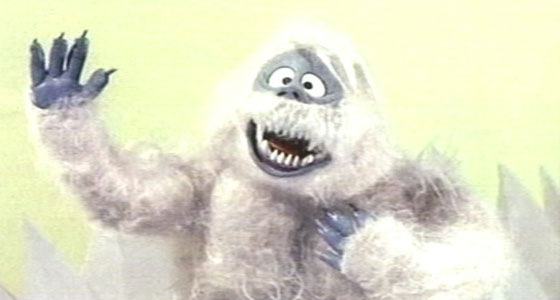 Research by a leading British geneticist on some unidentified hair samples from the Himalayas suggests a possible answer to the mystery of the Yeti or “Abominable Snowman.” Bryan Sykes, a professor of genetics at Oxford University, found a 100% match with DNA recovered from the remains of a Norwegian polar bear dating back 40,000–120,000 years. Sykes says,
“But we can speculate on what the possible explanation might be. It could mean there is a subspecies of brown bear in the High Himalayas descended from the bear that was the ancestor of the polar bear. Or it could mean there has been more recent hybridization between the brown bear and the descendant of the ancient polar bear.”
This will, no doubt, come as a shock and a bit of a disappointment to Yeti and Bigfoot enthusiasts.
Elf-shot
The people of the British Isles tended to blame unexplained illnesses on the malevolent work of elves. As early as the tenth century, medical books discuss elves afflicting both humans and livestock with death and disease via “elf-shot.” In Scots Gaelic, this phenomenon was called a saighead sithe (“faery arrow”). In Irish Gaelic, it was a gae sídhe (“faery dart”).
Elf-shot might be compared to the supposed druidic ability to “send” misfortune by putting a curse on an object (say, a handful of straw) and then throwing it at the intended victim. Elf-shot does the same thing, but delivers the magical “payload” via arrows or darts. In fact, people appealed to the neolithic flint arrow heads they sometimes found on their land as evidence of the activity of elves.
Elf-shot “payloads” can be quite diverse. Apparently many types of curses and hexes could be embedded on the projectile. Some of the more commonly encountered types of elf-shot curses are:
- Sudden shooting pains, which might be diagnosed as rheumatism, arthritis, muscle stitches, cramps, etc. The Old English medical text Wið færstice provides a remedy for this sort of elf-shot.
- Sudden paralysis. We call cerebrovascular accidents “strokes” because they were formerly believed to be the result of the stroke of an elf or faery’s hand.
- Sluggishness, hard breathing, and loss of appetite associated with the opening of the peritoneum in livestock (as described in America Bewitched by Owen Davies, p. 39).
- Bad dreams (referred to in German as Alpdrücken, “elf-pressure”). Also, the phenomenon known as sleep paralysis was often explained as the work of elves, demons, etc.
- Blackleg (aka black quarter, quarter evil, or quarter ill), an acute infection of cattle, sheep, and goats characterized by crepitant swelling of the muscles of the infected part (see T. Davidson, “The Cure of Elf-Disease in Animals” in the Journal of the History of Medicine and Allied Sciences 15/3 [1960]: 15:282–91).
- Tumors. Like paralysis, tumors were often considered a curse inflicted by elves.
- Death of animals as suddenly as if they had been struck by lightning (referred to in Swedish as skot “shot” and in Danish as elleskud “elf-shot”).
Though several years old, Richard Scott Nokes discussed elves, faeries, and elf-shot in a nice, brief post at his Unlocked Wordhoard blog. He makes some interesting observations about how we deal with unexplained illness today—and how we may not be quite as far removed from our ancestors as we might like to think.
Sunday Inspiration: Dragons
Fairy tales do not tell children the dragons exist. Children already know that dragons exist. Fairy tales tell children the dragons can be killed.
—G. K. Chesterton
Interview: “Faery”
Into the Wonder: Your name is Danny…?
Danny: If it’s all the same to you, Professor, sir, I’ll just stick with Danny.
ITW: Your Kind seem to be a bit touchy about names.
D: Yeah, well. You try living amongst folk who can…do things…if they know your name.
ITW: Fair enough.
D: Oh, your everyday name is usually pretty safe. Not much magic in it, at least compared to your true name. But if you’re really gonna share this little talk with the whole Topside world…
ITW: Yes, I see your point. And is that why Your Kind object to the word “faery”?
D: That’s part of it, I suppose. It’s not really a bad word, so to speak. Just a little forward, you know? Say your boss is named Charles. You don’t just go around calling him Charlie—not to his face, anyway!
ITW: And Your Kind consider yourselves our bosses?
D: I ain’t never said that! Oh, the Gentry’ll take that attitude, I admit. But most of us don’t. We got more sense than that. But anyway. Yeah, “faery” just don’t sound right. We’ll use the word to describe our animals, our magic, stuff like that. But ourselves? Forget it!
ITW: You prefer “fae.”
D: Most of us, anyways. A fella down in South Carolina explained it to me once. You see, fae comes from an old French word, faé. “Enchanted.” I don’t exactly know how you spell it, though.
ITW: Don’t worry, I’ll spell-check it later.
D: Thanks. So, if you look at it scientifically, faery relates to fae the same as witchery relates to witch or knavery relates to knave.
ITW: So it’s not a person. It’s a concept? A characteristic?
D: You got it. It’s the whole shebang. It ain’t just Our Kind; it’s the realm we share with all kinds of magical creatures.
ITW: But it’s also those creatures themselves, right?
D: Right. Call one of Our Kind a faery, you’re lumping him in with everything in the Wonder: the plants, the animals, the whole deal, you see? How’d you like it if I called you by the same name I called your dog?
ITW: That’s very helpful. So it’s fine to talk about faery dogs or faery horses…
D: Some of my best friends are faery dogs and horses.
ITW: Just not…uh…faery faeries.
D: Bingo.
ITW: Thank you, Danny, for taking the time to visit. Is there anything else you’d like to say?
D: Just that Our Kind are just like Topsiders. We can be some of the friendliest, most helpful folk you’d ever want to meet. But we can also be cruel, selfish, petty, and destructive. You’ve got to take the good with the bad.
ITW: That’s a lesson all of us could learn.
Into the Wonder
None of this made any sense. Maybe she was right, and Danny had drugged her. Maybe she was having some kind of seizure. This had to be a dream. To be sure, it was a very lifelike dream complete with nausea and asthma attacks, but still just a dream. Right? Until somebody woke her up, there wasn’t much she could do but go with it.
“So…what’s all this stuff about faeries?” she said.
“I’d rather you not use that word,” Danny said. “It’s not really politically correct. A while back, some of us wanted to say ‘eldritch Americans,’ but it never caught on. ‘The Fair Folk’ or ‘Our Kind’ is better. Most just say ‘fae,’ or else refer to each other according to their kindred.”
Taylor stared at him blankly.
“You see, Our Kind comes in a lot of different tribes or families: kindreds. I guess you could say they’re like Topsider ethnic groups. For example, I’m a pooka. Bryn is a huldra. That sort of thing.”
“O-o-o-kay.”
“I know this is hard to take in all at once.”
You can say that again! Taylor thought.
“But,” she began, “…and I don’t mean to be rude or anything… Faeries don’t exist!”
“We get that a lot,” Danny shrugged. “And ‘eldritch Americans’ or ‘fae,’ if you don’t mind.”
“All right, ‘fae.’ But…people like you…are supposed to be tiny! And have little butterfly wings!”
Danny smiled—then winced. His cheek was starting to turn purple. Taylor had given him a serious bruise with that tree branch back in Macon!
“One thing you gotta to know about Our Kind, Taylor: Between the shapeshifting, the size-shifting, glamours, and all the other spells and whatnot, powerful fae can pretty much look however they want. And as for the tiny bodies and the wings and all, that’s what we want you to think! It makes us look like a joke, you see? Something nobody would take seriously. Get enough people believing that Our Kind are nothing but faery godmothers, or tiny women in mini-dresses, or jolly toymakers who live at the North Pole…”
“Or the tooth faery….”
“Never let one of Our Kind anywhere near your teeth!” Danny said, suddenly serious.
“Okay,” Taylor agreed, startled at Danny’s abruptness. “Good advice. Thanks.”
 Darrell J. Pursiful