
Home » 2014 (Page 17)
Yearly Archives: 2014
Sunday Inspiration: The Secret of Life
The secret of life isn’t what happens to you, but what you do with what happens to you.
—Norman Vincent Peale
Five Griffins and Griffin-like Creatures
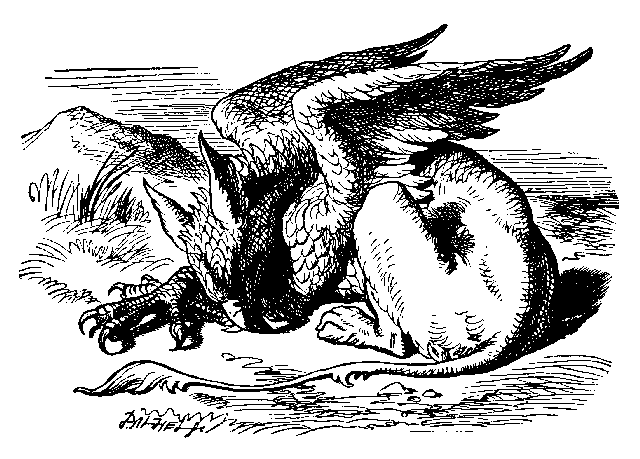 There is something about a majestic eagle in flight that fills most of us with wonder. And there is also something awe-inspiring about a powerful lion on the prowl. It doesn’t surprise me that mythology is full of fantastic beasts that combine the characteristics of these two powerful hunting beasts.
I’ve been pondering how to work a griffin into an upcoming novel, simply because large flying things are cool, and griffins are among the coolest. So I’ve done a little bit of research on griffins and other part-bird part-lion creatures from mythology and heraldry. Here are some of my favorites.
Griffin
The griffin of Greek mythology was said to hail either from the far north or from Ethiopia, “Ethiopia” being a Greek word meaning “too far away to verify, but you can take my word for it.” It is described as a creature with the head, wings, and talons of an eagle and the hindquarters of a lion. It has long, external ears and, sometimes, a snake-like tail. They are often seen guarding treasure, and they seem to be particularly fond of gold.
In medieval times, griffins came to be associated with Christ. Since they combined aspects of a lion, the “king of beasts,” and an eagle, the “king of birds,” it was deemed appropriate that they symbolize Christ, the “king of kings.” These creatures are also said to mate for life, even to the point of not seeking a new mate if the first one dies.
There are a number of magical properties associated with the relics of griffins. Their talons change color in the presence of poison, making them ideal to fashion into drinking vessels. Furthermore, the feather of a griffin is said to be able to restore sight to the blind.
Griffins are especially fond of horse meat.
Alce
The alce may have been the earliest form of griffin, although its name comes from medieval heraldry. Simply put, it is a wingless griffin. The ancient Scythians, inhabitants of the region north of the Black Sea, depicted wingless griffins in their art.
According to folklorist Adrienne Mayor, they may have been inspired by the fossil skeletons of Protoceratops and other beaked dinosaurs they found while mining for gold in the Tian Shan and Altai Mountains of Central Asia.
Hieracosphinx
Another creature that combines raptor and felid characteristics is the hieracosphinx of Egypt. Like the alce, the hieracosphinx is a wingless creature. It combines the body of a lion with the head of a falcon. In artistic depictions, the distinct coloring of a falcon’s face is plain to see on this creature.
The presence of a hieracosphinx is sometimes interpreted as an evil omen.
Opinicus
Like “alce,” “opinicus” is a fairly modern term. Most ancient and medieval peoples would have classified this creature as simply a griffin. Opinici can be distinguished from true griffins by their lack of external ears, cat-like rather than bird-like forelimbs, and short camel-like tail. The opinicus is more of a scavenger than are griffins proper.
Hippogriff
Harry Potter notwithstanding, the hippogriff is a joke—literally! They were first mentioned by the Latin poet Virgil, but only received their name in the 16th-century poem Orlando Furioso by Ludovico Ariosto where, it should be noted, it was a swift steed ridden by magicians.
But the hippogriff is also an impossibility, the offspring of a mare and a griffin. Since horse is one of a griffin’s favorite foods, the idea of a griffin and a horse mating was remarkable. Mention of such a creature would have likely been the Classical equivalent of “when pigs fly,” “hen’s teeth,” or (more to the point) “horsefeathers.”
Sunday Inspiration: Comparisons
Don’t compare your beginning with someone else’s middle.
—Jon Acuff
Celtic Mythology Reading List
Dan McCoy suggests the Five Best Books on Celtic Mythology over on his Norse Mythology blog. Plenty of folks are interested in both mythologies, so it makes sense that an expert in one would have credible opinions about the other.
There’s a ridiculous number of introductory books on Celtic mythology out there. Figuring out which ones are the best can be a daunting task. This already difficult quest is further complicated by the fact that most of these books have extremely generic titles like “Celtic Myths and Legends” or “Celtic Mythology.” At first glance, they all appear to be more or less identical.
But anyone who’s well-acquainted with this field will tell you that nothing could be further from the truth. Some are far superior to others in terms of the scope and accuracy of the information they present, as well as in writing style. Some are written for scholars or an educated audience, while some are written for a more general audience and are written in a more entertaining and engaging way.
Boo! Five Bogeymen to Run Away From
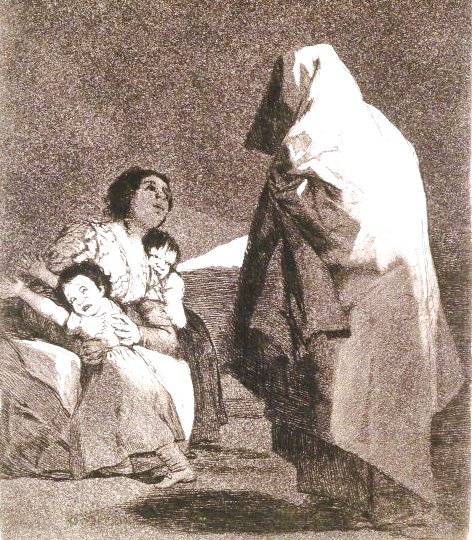
Francisco de Goya, “Que viene el Coco” (Here Comes the Bogeyman), 1797–98
In addition to the powerful, awe-inspiring sídhe nobles, wild satyrs, and helpful little folk, the world of Faerie is also inhabited by a variety of creatures whose purpose seems to be striking fear in the hearts of children. These are the bogeymen, also known as bogles, boggarts, boogers, bugaboos, etc.
The word “bogeyman” is derived from Middle English bogge or bugge. It is thought to be related to other words such as Scots bogle, Norse puki, and Gaelic púca. Whatever these creatures are called and whatever their appearance, they are the bane of children, especially those who misbehave! They might also lure people beyond the bounds of civilization—deep into the woods or too close to the water. They thus serve as cautionary tales to keep people in line be they young or old.
Here are five bogeymen that have inhabited the nightmares of children around the world.
1. El Hombre del Saco
Also known as el hombre del costal. Both mean “the sack man” or “the bag man.” This is a bogeyman found in many Latin countries including Brazil, Portugal, and Spain. He is portrayed carrying a sack in which he carries off naughty children.
2. El Coco (or el Cuco, el Cucuy)
El Coco is known in many Spanish-speaking countries. He is described as a ghost with a pumpkin head, an evil monster that hides under children’s beds at night and kidnaps or eats them when they don’t obey their parents or go to sleep at bedtime. In Latin America, el Coco more often takes the form of a small humanoid with glowing red eyes that hides in closets or under the bed.
3. Grindylow
Grindylows feature prominently in Harry Potter and the Goblet of Fire. The grindylow of folklore is an aquatic bogeyman from England (Yorkshire and Lancashire, to be specific). This creature is associated with marshes, bogs, and lakes. They are said to grab little children if they come too close to the water’s edge and drag them away Some have suggested that the name “grindylow” is related to the name of the monster Grendel from the Beowulf saga. .
4. Nalusa Falaya
The nalusa falaya or “Long Black Being” is a bogeyman from Choctaw legend who is also called impa shilup or “Soul-eater.” He is somewhat similar to Bigfoot as he is described as a hairy, manlike creature with wizened face, small eyes, and pointed ears. Some describe him as slithering on his stomach like a snake. These creatures call to unwary travelers in the woods. He sometimes frightens hunters. Seeing a nalusa falaya is said to be so horrifying that it will cause one to faint. While unconscious, the nalusa falaya transfers some of his own evil into his victim, making him aggressive and malevolent.
5. Abu Rigl Maslukha
For my money, this is one of the creepier bogeymen out there because his malevolence is rooted in his own experience of suffering. This Egyptian Arabic creature’s name means “the Man with the Burnt Leg.” The Abu Rigl Maslukha is a monster that got burnt when he was a child because he did not listen to his parents. Now, he hunts down naughty children to cook and eat them.
Large Flying Beasties
Speaking of dragons, I’ve been trying to nail down the physiology of some large mythological flyers for possible inclusion in my third Into the Wonder novel. I’ve come across the following rules of thumb that may prove helpful to others trying to imagine dragons, griffins, and other creatures in something like a realistic way:
- Birds have a wingspan of roughly 2 times their head-body length (falcons average around 2.5)
- Bats have a wingspan of roughly 5 times their head-body length
- Pterosaurs had a wingspan of roughly 6 times their body length (first dorsal to last sacral vertebra)
Within these parameters—and assuming the creature is not too heavy to fly at all!—a smaller ratio (like a finch) provides greater maneuverability while a larger ratio (like an albatross) provides greater endurance.
Furthermore, you can make a guess about the weight of a flying creature, or at least avoid something impossible, by taking wing loading into account. This has to do with how much weight and pressure a wing can manage. For birds, five pounds of body weight per square foot of wing surface is about the limit.
Some cool sources I found along the way:
The Anatomy of a Dragon
The British Library has compiled a treasury of medieval images of dragons in honor of Saint George’s Day.
Dragons are near-ubiquitious in medieval manuscripts. They take pride of place in bestiaries and herbals, books of history and legend, and Apocalypse texts, to name a few. They serve as symbols, heraldic devices, and even as ‘just’ decoration, and their physical characteristics can vary widely. Cinematic and literary depictions of dragons today are fairly consistent; they are almost always shown as reptilian, winged, fire-breathing creatures (in a word, Smaug). But this was by no means a constant portrayal in the medieval period.
Let’s have a look at a very common medieval trope – of the dragon as the nemesis of a saint or angel. Below we can see dragons facing off against St George (again), St Margaret, and the Archangel Michael. All these examples are drawn from late 15th century manuscripts, but their dragons are very different, and range from a lizard-y animal with duck-like feet to a winged leonine creature and a demon.
Robert E. Howard
Be sure and read Philip Overby’s tribute to Robert E. Howard.
Faeries and Folklore at Fantasy Faction
Leo Elijah Cristea has started a new series of posts on “Faeries and Folklore,” so, obviously, I’m going to link to it!
Sunday Inspiration: Laughter
A day without laughter is a day wasted.
—Charlie Chaplin
 Darrell J. Pursiful