
Home » Mythology (Page 18)
Category Archives: Mythology
Spriggans: Unpleasant Cornish Sprites
 Spriggans are a type of faery being from Cornish mythology. They are associated both with storms and stone ruins. By most accounts, they are closely related to pisgies (aka pixies). In fact, some suggest they are the same sort of being, with pisgies more mischievous and spriggans more outright malevolent. Others say spriggans came originally from Brittany, where they were called korreds. If this is so, their affinity for winds suggest they may be descended from the Crion family of korreds, those most firmly associated with whirlwinds. Spriggans send storms to blight crops.
These fae are also closely associated with the cromlechs or standing stones that dot the Cornish countryside. Like all fae, they love to cause mischief to those who offend them. They sometimes steal away mortal children, leaving their ugly changelings in their place.
They are often found at old ruins, cromlechs, and barrows guarding buried treasure and generally acting as faery bodyguards. As guards to both standing stones and hidden treasures, they correspond very closely to the Breton korred. They are also busy thieves and expert kidnappers of children.
Spriggans serve as slaves or warriors of more powerful fae. Some believe they are the ghosts of former giants, as they have the ability to swell to enormous size. They are also said to have a giant’s strength. They are often charged with guarding buried treasure.
In addition to their sour disposition, these fae are described as being grotesquely ugly. Like their korred cousins, spriggans love music and dance. Though their appearance and temperament are often distasteful, it is said that their music is quite beautiful.
Thor in Marvel and Myth
Karl E. H. Siegfried has provided a very thorough discussion of how the recent Thor movies have handled the Norse myths surrounding their central characters. It’s very much worth the time to ponder the changes the film-makers (and Stan Lee and Jack Kirby before them) have made to the source material. In short, Marvel’s Thor (and Odin, Loki, etc.) have been largely stripped of what first made them significant. Instead, they are used to project something more in keeping with the Judeo-Christian values espoused by most North American moviegoers.
Incidentally, Lars Walker wrote something quite similar (albeit from a Christian point of view) when the first Thor movie came out a few years ago.
Daoine Sídhe: Celtic Fae Nobility
The daoine sídhe (Scots Gaelic, daoine sith) are said to be the descendants of the Tuatha Dé Danann (“People of the Goddess Danu”), a race of deities that figures prominently in Irish mythology.
These gods are, in fact, common to various Celtic cultures. Danu herself was known as Dôn in Wales, for example. Both names go back to a Proto-Celtic form Danona. Likewise, the earliest Celts worshipped deities named Lugus (Lugh, Lleu), Noudans (Nuada, Nudd), Ogmios (Ogma, Eufydd), etc. They arrived in Ireland in the distant, mythic past. Some legends say they arrived in flying ships. At any rate, they brought with them several powerful magical artifacts: the Lia Fail or “Stone of Destiny” that helped select successive kings of Ireland, the spear of Lugh, the sword of Nuada, and the cauldron of the Dagda. After defeating the indigenous Fomorians, they became the undisputed rulers of Ireland.
It is said that only iron weapons could injure them. The Tuatha Dé Danann were eventually defeated by the Iron-Age Milesians—the ancestors of the contemporary Irish—and driven to the Otherworld, which homeland they access via the ancient burial mounds that dot the Irish countryside. They continue to live, it is said, as invisible beings. In Irish thinking, the Otherworld is closer to this world at dawn and dusk. This is thus a special time at which sightings of these fae are more likely.
The descendants of the Tuatha Dé Danann are known by a bewildering diversity of names, including:
- Daoine sídhe or aes sídhe, both meaning “people of the mounds.” The simple term sídhe is also commonly seen.
- “Still-moving people” or “people of peace,” alternate interpretations of the term daoine sídhe.
- Daoine uaisle, meaning “lordly ones” or “gentry.”
- Cloan ny moyrn (“children of pride/ambition”) or adhene (“themselves”), names favored on the Isle of Man.
- The Fair Folk, the Good Folk, or the Good Neighbors.
All of these terms are euphemisms to avoid using the straightforward Gaelic term siabhra (Irish) or siabhrach (Scottish) “faery.” Use of this term is thought to be far too forward for mortals to use with impunity lest the sídhe take notice of the perceived slight.
By all accounts, the daoine sídhe are powerful magicians. In early Irish manuscripts, they are described as “gods and not gods.” They are generally described as stunningly beautiful, although they can also be hideous monsters. It is likely a duine sídhe can look like whatever he or she wants to. In addition, these fae are often accomplished shapeshifters.
Cymbees: African Water Spirits
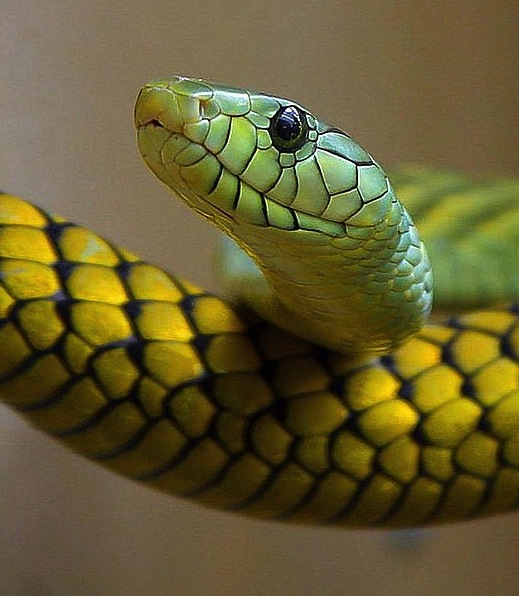 Cymbees are water spirits that hail from western and central Africa. They live in unusual rocks, gullies, streams, springs, waterfalls, sinkholes, and pools, which areas they effectively “adopt” as territorial guardians. They are said to be able to influence the fertility and well-being of people living in their territory. At the same time, they can and will cause trouble if they are not treated with respect.
The word “cymbee” is a phonetic spelling of the Kikongo word simbi (pl. bisimbi), heard among enslaved Africans in the American South in the 1800s. The same sort of being is called a kilundu or kalundu in the Kimbundu language of Angola.
There are several firsthand reports of a belief in cymbees in North America, especially in the South Carolina Lowcountry. The region around Lake Moultrie was apparently home to a large concentration of cymbees.
Robert Wilson, a white Charlestonian born in 1838, compared cymbees to the kelpies or undines (i.e., merfolk) of European mythology. Another white observer, Henry Ravenel, described them as “guardian spirits of the water.” He goes on to say,
I have never been able to trace the word to any European language and conclude it must be African. If anyone disturbs the spring, the Cymbee would be angry. If it was destroyed or much injured from any cause, the Cymbee would leave it, and the waters would dry up. The Cymbees were proportionate in size to the spring. (“Recollections of Southern Plantation Life” The Yale Review [summer 1936] 776)
Each fountain or spring has its own cymbee, each having a different size, appearance, and habits. Some like to appear at noon; others at night. Some have a human appearance (though they may be web-footed like a goose); others take the form of snakes; others still are described as a kind of mermaid. Yet others might assume the form of a gourd or even of wood or pottery. As Ravenel explains, their size is relative to that of their domain—the larger the spring, the taller and more robust the cymbee.
Although they were often creatures to be feared, cymbees also fulfilled an important cultural role among enslaved Africans. As Ras Michael Brown explains, cymbees also served the people of the early Lowcountry as spiritual benefactors.
Brown argues that nature spirits allowed those who were either strangers to the area or lacked ties with named ancestors to “still have access to the agents of Other Worldly powers and to feel attached to the land where they lived” (“West-Central African Nature Sprits in the South Carolina Lowcountry,” Paper presented at the Southeastern Regional Seminar in African Studies, Fall 2000 Meeting, University of Tennessee, Knoxville).
The existence of cymbees in the Lowcountry reveals the concerns of slaves over maintaining community as well as their spiritual and material survival. As such, they were vital features of the cultural landscape.
Pookas: Shapeshifting Irish Tricksters
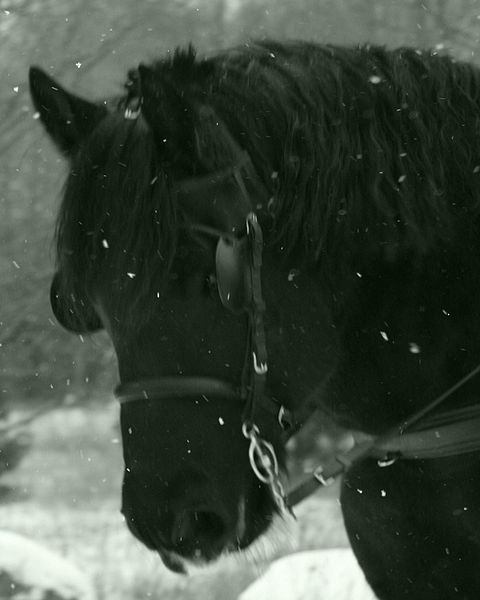 The word “pooka” (or phouka, puka, etc.) derives from Gaelic púca, meaning “spirit, ghost, or goblin.” Originally an earth-spirit associated with fields and herds, these beings are best known as trickster figures, either malevolent or simply mischievous. The worst among them have been accused of crimes including child molestation, kidnapping, and murder.
Pookas often pass through the mortal realm invisibly, but they are also accomplished shapeshifters. A pooka’s animal form is almost always a type of animal that lives in close proximity to humans: cats, dogs, horses and ponies, goats, cattle, rabbits, etc.—another indication of their original agrarian connection. In Waterford and Wexford, however, they have been known to take the form of a huge eagle. No matter the form, its fur or feathers are almost always dark.
As an agricultural spirit, pookas are associated with Samhain, the Gaelic harvest festival when the last of the crops are brought in. The pooka is acknowledged to have a right to anything that remains in the fields after November 1, “the pooka’s day.” Thereafter, pookas might render crops inedible or unsafe—perhaps by spitting or defecating on them. In some locales, reapers leave a small share of the crop to placate the hungry creature.
Pookas can also be helpful to farmers. In at least one story, pookas helped a poor farmer by milling his grain for him in the dead of night.
The Border Region has a variety of pooka known as a brag. These beings are noted for their kindness to animals. They still enjoy playing tricks on humans, however.
Nunnehi: The Fair Folk of the American Southeast
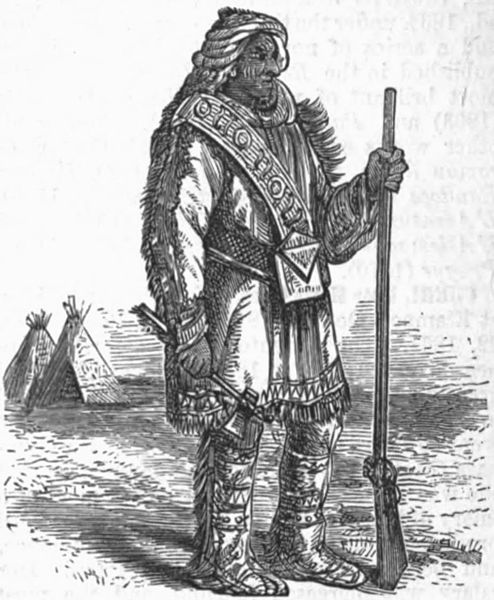 The nunnehi are the principal Fair Folk of the American Southeast. They are helpful spirit warriors who dwell in rocks and hills. They prefer to live on the tops of mountains and hills. Like the daoine sídhe of Ireland (and many other Old World fae), they are said to enjoy dancing and music. It is said that, the closer one came to singing nunnehi, the farther away they seemed to be. They were able to become invisible at will, but when they permitted themselves to be seen, they looked exactly like other Native Americans. They wore traditional Cherokee clothing and spoke the Cherokee language in the Overhill (i.e., Tennessee) dialect.
The Cherokee name for these beings can be rendered nunnehi, nvnehi, or gunnehi. Whatever the form, the name means “people who live anywhere.” The singular form is nayehi.
Although nunnehi is a Cherokee word, the Creeks had a legend of similar beings, said to have once inhabited the Ocmulgee Indian Mounds in Macon, Georgia. In Revolutionary times, the Creeks still claimed that, when forced to encamp there, they heard at dawn the sound of Indians singing and dancing, as if going down to the river to purify themselves and then return to the old townhouse (James Mooney, Myths of the Cherokee [Dover, 1995 (reprint)] 475). Robbie Ethridge writes,
James Adair, and eighteenth-century trader and writer, reported that every Indian knew of the Ocmulgee Old Fields. These old fields, too, were haunted. In fact, according to Adair, one could hear ghost warriors dancing at night. Adair claimed he never heard or saw the ghosts even though he had often camped there. His Chickasaw companions explained that was because he was an “obdurate infidel in that way.” (Creek Country [University of North Carolina Press, 2003] 52)
The Creek also describe an ancient battle in which their warriors emerged from a mound and defeated a Cherokee war party—an exact parallel to similar legends told by the Cherokees themselves about the nunnehi who lived beneath Nikwasi Mound near Franklin, North Carolina.
The nunnehi are generally quite hospitable to mortals, especially those who are in trouble. There are a number of stories of nunnehi helping lost travelers and returning them safely to their homes. In 1838, it is said, the nunnehi invited members of the Cherokee nation to retreat to their domain at Pilot Knob, North Carolina, and thus escape forcible deportation to Oklahoma. Other nunnehi are said to have migrated to Oklahoma as a sort of vanguard for humans forced to walk the Trail of Tears.
Elf-shot
The people of the British Isles tended to blame unexplained illnesses on the malevolent work of elves. As early as the tenth century, medical books discuss elves afflicting both humans and livestock with death and disease via “elf-shot.” In Scots Gaelic, this phenomenon was called a saighead sithe (“faery arrow”). In Irish Gaelic, it was a gae sídhe (“faery dart”).
Elf-shot might be compared to the supposed druidic ability to “send” misfortune by putting a curse on an object (say, a handful of straw) and then throwing it at the intended victim. Elf-shot does the same thing, but delivers the magical “payload” via arrows or darts. In fact, people appealed to the neolithic flint arrow heads they sometimes found on their land as evidence of the activity of elves.
Elf-shot “payloads” can be quite diverse. Apparently many types of curses and hexes could be embedded on the projectile. Some of the more commonly encountered types of elf-shot curses are:
- Sudden shooting pains, which might be diagnosed as rheumatism, arthritis, muscle stitches, cramps, etc. The Old English medical text Wið færstice provides a remedy for this sort of elf-shot.
- Sudden paralysis. We call cerebrovascular accidents “strokes” because they were formerly believed to be the result of the stroke of an elf or faery’s hand.
- Sluggishness, hard breathing, and loss of appetite associated with the opening of the peritoneum in livestock (as described in America Bewitched by Owen Davies, p. 39).
- Bad dreams (referred to in German as Alpdrücken, “elf-pressure”). Also, the phenomenon known as sleep paralysis was often explained as the work of elves, demons, etc.
- Blackleg (aka black quarter, quarter evil, or quarter ill), an acute infection of cattle, sheep, and goats characterized by crepitant swelling of the muscles of the infected part (see T. Davidson, “The Cure of Elf-Disease in Animals” in the Journal of the History of Medicine and Allied Sciences 15/3 [1960]: 15:282–91).
- Tumors. Like paralysis, tumors were often considered a curse inflicted by elves.
- Death of animals as suddenly as if they had been struck by lightning (referred to in Swedish as skot “shot” and in Danish as elleskud “elf-shot”).
Though several years old, Richard Scott Nokes discussed elves, faeries, and elf-shot in a nice, brief post at his Unlocked Wordhoard blog. He makes some interesting observations about how we deal with unexplained illness today—and how we may not be quite as far removed from our ancestors as we might like to think.
 Darrell J. Pursiful