
Home » Uncategorized (Page 9)
Category Archives: Uncategorized
In Honor of St. Nicholas’s Day
Here’s a little Greek exercise I did a couple years ago:
Μάμμη ἐπατήθην ὑπ᾽ ἐλάφου.
περὶ προτὰς χείμονος ἔβαινεν.
περὶ Ἁγίου Νικολάου ένδιαζεις;
πάππος γε κἀγὼ πιστεύομεν.
If it isn’t grammatically perfect, well, that may not be straying too far from the source material.
Thanksgiving 2014
I’m thankful for
- Twenty years of marriage to the smartest, kindest, most wonderful woman in the world
- A healthy, happy, and mostly well-adjusted teenager
- The privilege of taking care of parents who have always taken care of me
- Able and dedicated coworkers
- A small but enthusiastic Taylor Smart fan club
- Homeowner’s insurance
- The end of political campaign ads for another two years
- The Academy for Classical Education
- Google Books
- The Bibb County Public Library
- Zydeco music
- Pepakura and the geniuses who design and build it
- The Christmas light show at Callaway Gardens
- The University of Kentucky men’s basketball team
- Indoor plumbing
- Faith
- Hope
- Love
What are you thankful for?
In Memoriam Jack Birdwhistell
I met Jack Birdwhistell maybe once, when my wife and I went to Georgetown College for her homecoming several years ago. But I have heard so many “Doc” stories, I feel like he was my campus minister, too!
I commend you this brief memoir of Doc Birdwhistell written by Joshua Hearne. This section in particular rings true with everything I’ve heard about the man:
So, though I was reluctant to be there, I found myself in the student center of Georgetown College one fall morning. As I added items to my list of reasons not to attend the school, I was interrupted by an older gentleman who didn’t look much like my mental image of a college professor. He introduced himself as “Doc” Birdwhistell and said that he taught some classes in the religion department. Before I even had the time to dismiss internally this big man’s overtures, he said that he had read something about me and had a few questions for me. Instantly, I was certain that he knew how I had secretly lost my faith and that he was going to harangue me even while he continued to shake my hand with his surprisingly huge and somehow slightly bony right hand.
“Mr. Hearne,” he began, “I heard that you played John the Baptist in a production ofGodspell back in Ashland.” I told him that I had, even while I was wondering where in the world he might have heard that. “I love that show,” he exclaimed, before asking “Was it as fun to kick in the doors singing as I always thought it would be?” We spent the next hour talking about a number of things that didn’t really matter all that much, but were pleasant conversation nonetheless. Eventually, he excused himself because he had work to get done. Though I’m sure he didn’t come down from his office in the chapel just to talk to me about high school musicals and nothing in particular, it sure felt like it that day. I ended up going to Georgetown, even though I was still without my faith, because I figured I could get along with Christians like Doc who seemed to think not only that Christians could study and struggle with doubt, but even that they should do both.
Banana Pudding Discipleship
Mike Ruffin is making me hungry.
Occasionally I am brought up short by the realization that some people have never had real banana pudding. If you are wondering what I’m talking about, you are one of those people.
My heart breaks for you.
Hengel: Christology and New Testament Chronology
Tim Henderson has posted his summary of the next essay from Martin Hengel’s Between Jesus and Paul: “Christology and New Testament Chronology.”
Pete Enns: Paul Is the Crazy Uncle of Us All!
Do go read Pete Enns’s latest at Huffington Post: “3 Reasons Why Apostle Paul Is the Crazy Uncle No One Wants to Talk About (and 2 Reasons Why We Need to Get Over That).” If you’re in my CHR 150 class, read it twice. It will save you some time and heartache in a couple of weeks.
Hengel: Between Jesus and Paul
Tim Henderson has begun a review of the six essays included in Martin Hengel’s, Between Jesus and Paul. Hurray! The first is “Between Jesus and Paul: The ‘Hellenists’, the ‘Seven’ and Stephen (Acts 6.1-15; 7.54-8.3),” from which the volume gets its name. I’ll gather links to all of Tim’s summaries here for ease of reference.
Want to Build a Better Brain?
Learn a foreign language! From The Guardian:
The Swedish MRI study showed that learning a foreign language has a visible effect on the brain. Young adult military recruits with a flair for languages learned Arabic, Russian or Dari intensively, while a control group of medical and cognitive science students also studied hard, but not at languages. MRI scans showed specific parts of the brains of the language students developed in size whereas the brain structures of the control group remained unchanged. Equally interesting was that learners whose brains grew in the hippocampus and areas of the cerebral cortex related to language learning had better language skills than other learners for whom the motor region of the cerebral cortex developed more.
Bori: Jinn of the Hausa People
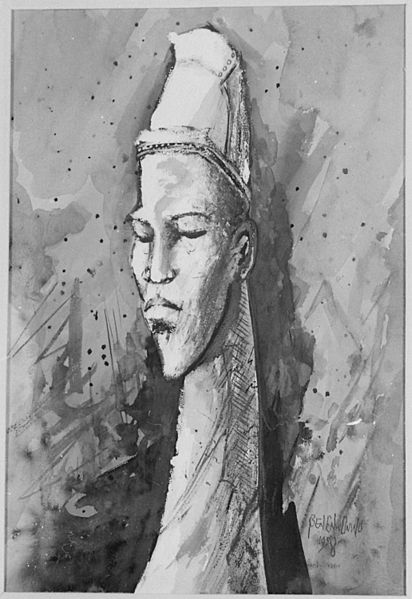
Ben Enwonwu, Head of Hausa, 1958
Bori are a type of supernatural being found among the Hausa of northern Nigeria.They are frequently identified as jinn, but are in fact are a distinct kindred that existed in Nigeria long before Islamization. They are called aljanu (“jinn,” singular, aljan) or iskoki (“winds,” singular, iska).
Bori are revered for their healing powers—though they also inflict diseases. Although they can be benevolent toward humans, their presence is deeply dreaded. They are dangerous spirits, and no one treats with them unless the bori itself thrusts it upon them.
As with other intermediate spirits from West Africa such as abosom, loa, and orishas, bori often deal with the mortal world through “riding” willing human hosts, almost always women. Among the Hausa, a particular dancing-rite is involved in inducing the bori to enter them to grant them immunity to diseases.
Some bori are Muslims (called Farfaru); others are pagans (called Babbaku). The name of their city is Jangare, where they live in twelve “houses” divided by family, ethnicity, and occupation.
Happy New Year!
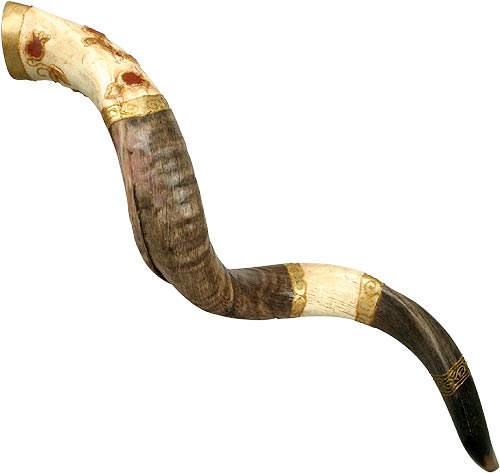
Here’s wishing a happy Rosh Hashanah to all who are celebrating.
 Darrell J. Pursiful