
Home » Posts tagged 'African'
Tag Archives: African
Worldbuilding: African Elves?
Black History Month seems as good a time as any to write a little about how African mythology intersects with the story world of Shadow of the King.
I’ll begin with a disclaimer: I feel it’s important to make a distinction between the “sacred” and the “spooky,” a piece of wisdom I learned from an excellent book called Iroquois Supernatural. “Spooky” is the realm of folk tales, ghost stories, and such. They’re the things that even a lot of outsiders know if they know anything about the mythology of a different culture.
By contrast, “sacred” has to do with matters of the the deepest cultural significance—either positively or negatively. This is why I won’t be writing about a particular cannibalistic spirit whose name in Algonquian cultures must never be spoken. As an outsider, I strive never to encroach upon the sacred, and I strive to understand where those boundaries lie. So even though I know a little about African spirits such as loa and orishas, I consider them off limits. Even if I knew a considerable amount about these figures from Vodun, Santería, and other religious traditions based on African spirituality, as an outsider to these cultures I place them in the category of Not My Story to Tell.
The spooky is another matter. When it comes to African myths about “little people,” forest spirits, and the like, I feel these creatures need to be in a story set in North America precisely because people of African descent are my neighbors, and they have been telling their stories on this continent for centuries. For them to be absent seems to me the height of colonialist whitewashing.
So, how much African-inspired lore will you find in Shadow of the King? One fairly central item of worldbuilding, and some background stuff that you’re likely to miss.
First, the background stuff. There are, of course, African legends about the kind of creatures that populate Saynim, the “faeryland” from which Rune, my protagonist, hails. There are the Yumboes, diminutive Senegalese creatures who love nothing more than feasting and dance; the Bori of Hausa legend, whose myths early on became intermingled with those of the Muslim Jinn; and the Iwin, a Yoruba word that can be translated “ghost” or “faery,” sprites who live in rocks, forests, and hills.
There are also the Bisimbi, or “Cymbees” as they are called in the South Carolina Low Country. Enslaved Africans in that part of the world believed that their local springs and pools were inhabited by Cymbees just like the ones their forebears believed in across the sea. Cymbees live in rocks, gullies, streams, waterfalls, and pools that they adopt as territorial guardians. For the first African Americans, the presence of these spirits in this new world was culturally significant because it meant that they might also make their way here despite the hardships they faced. An old Kongo proverb states, “Where your ancestors do not live, you cannot build your house.” But the Cymbees were here, they believed, and so there was reason to find courage.
A central conceit of Shadow of the King is that European elves, dwarves, and the like have immigrated to their analog of North America just like European humans did in our world. They were here bit a bit earlier, and though their relationship with the Indigenous population was not perfect, the Indigenous mythical creatures fared better than their mortal counterparts. Likewise, African elves and such eventually journeyed across the sea as well and established their own faery kingdoms, mainly in the Southern Lowlands. Rune would have encountered merchants and diplomats from these realms quite regularly while growing up along the Mother of Rivers (i.e., the Mississippi).
Furthermore, it is simply a fact that persons from all over the so-called Old World lived in Europe since before the fall of the Roman Empire. (This YouTube video provides an excellent summary of the evidence.) They lived in England before England existed as a country. And their legends about jinn and peris certainly influenced aspects of European faery mythology. So when Rune’s ancestors sailed to his world’s analog of North America, there’s no reason they weren’t in the company of African or mixed-race compatriots.
All this means that whenever you read about a crowd of Saynim folk, feel free to assume that some of them are of African descent. And although there are no explicitly named “Black elves” in Shadow of the King, that will change in future books. At the same time, there are numerous African Americans from the mortal realm who play important roles in Rune’s story. Some aspects of their stories are also Not Mine to Tell, but they’re there, and they help make Rune the person he is becoming.
Now, about that major piece of worldbuilding. Human souls work differently than the souls of elves, goblins, etc. in Saynim. Most Saynim folk have souls that might be described as “simple.” As embodiments of the elemental forces of nature, their will is not quite as free as ours and their motivations are not quite as conflicted. But humans are different. Their souls are complex. They have “too many moving parts,” as one character notes. This makes humans unpredictable and perhaps dangerous.
There may be other spiritual traditions with similar concepts, but I first learned of it while studying African spiritualities. You may be most familiar with ancient Egyptian conceptualizations of the soul comprising several parts: the ba, the ka, the shadow, the name, etc. In fact, many spiritualities across Africa have similar ideas about humans’ psychic complexity. Some of those parts persist on earth after death, either for good or for ill. Some of them go on to whatever afterlife a given culture believes in. All of them reflect some aspect of that person’s character or essence.
I hope that in Shadow of the King I have pulled back the curtain on a world as big and diverse as the one we live in. I’d be honored if you’d give it a read and, if you have something constructive to add, teach me how I can do better.
Cymbees: African Water Spirits
 Cymbees are water spirits that hail from western and central Africa. They live in unusual rocks, gullies, streams, springs, waterfalls, sinkholes, and pools, which areas they effectively “adopt” as territorial guardians. They are said to be able to influence the fertility and well-being of people living in their territory. At the same time, they can and will cause trouble if they are not treated with respect.
The word “cymbee” is a phonetic spelling of the Kikongo word simbi (pl. bisimbi), heard among enslaved Africans in the American South in the 1800s. The same sort of being is called a kilundu or kalundu in the Kimbundu language of Angola.
There are several firsthand reports of a belief in cymbees in North America, especially in the South Carolina Lowcountry. The region around Lake Moultrie was apparently home to a large concentration of cymbees.
Robert Wilson, a white Charlestonian born in 1838, compared cymbees to the kelpies or undines (i.e., merfolk) of European mythology. Another white observer, Henry Ravenel, described them as “guardian spirits of the water.” He goes on to say,
I have never been able to trace the word to any European language and conclude it must be African. If anyone disturbs the spring, the Cymbee would be angry. If it was destroyed or much injured from any cause, the Cymbee would leave it, and the waters would dry up. The Cymbees were proportionate in size to the spring. (“Recollections of Southern Plantation Life” The Yale Review [summer 1936] 776)
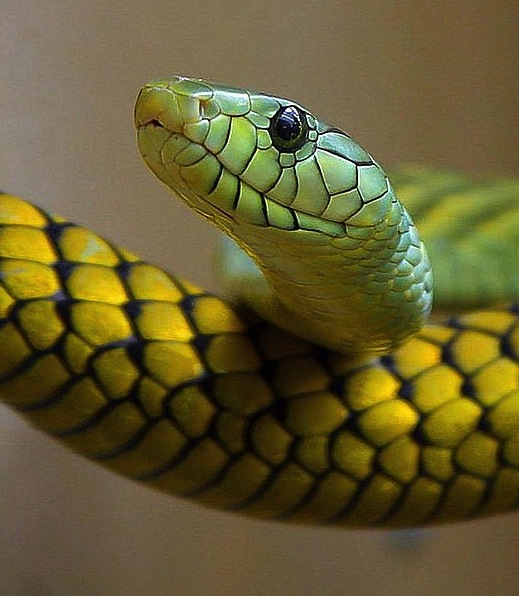
Each fountain or spring has its own cymbee, each having a different size, appearance, and habits. Some like to appear at noon; others at night. Some have a human appearance (though they may be web-footed like a goose); others take the form of snakes; others still are described as a kind of mermaid. Yet others might assume the form of a gourd or even of wood or pottery. As Ravenel explains, their size is relative to that of their domain—the larger the spring, the taller and more robust the cymbee.
Although they were often creatures to be feared, cymbees also fulfilled an important cultural role among enslaved Africans. As Ras Michael Brown explains, cymbees also served the people of the early Lowcountry as spiritual benefactors.
Brown argues that nature spirits allowed those who were either strangers to the area or lacked ties with named ancestors to “still have access to the agents of Other Worldly powers and to feel attached to the land where they lived” (“West-Central African Nature Sprits in the South Carolina Lowcountry,” Paper presented at the Southeastern Regional Seminar in African Studies, Fall 2000 Meeting, University of Tennessee, Knoxville).
The existence of cymbees in the Lowcountry reveals the concerns of slaves over maintaining community as well as their spiritual and material survival. As such, they were vital features of the cultural landscape.
 Darrell J. Pursiful