
Home » Posts tagged 'Cymbee'
Tag Archives: Cymbee
Cymbees: African Water Spirits
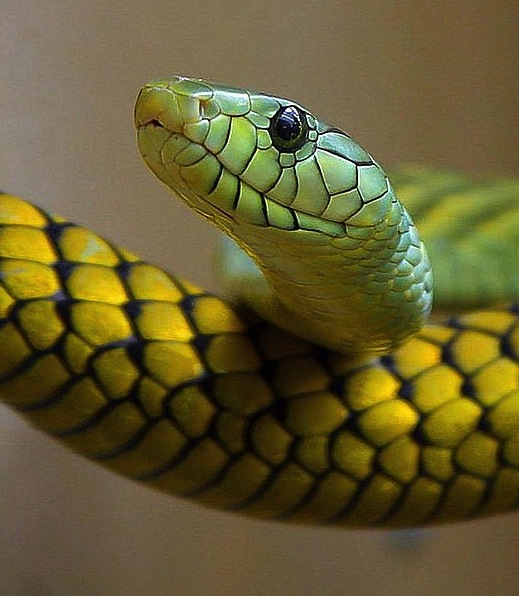 Cymbees are water spirits that hail from western and central Africa. They live in unusual rocks, gullies, streams, springs, waterfalls, sinkholes, and pools, which areas they effectively “adopt” as territorial guardians. They are said to be able to influence the fertility and well-being of people living in their territory. At the same time, they can and will cause trouble if they are not treated with respect.
The word “cymbee” is a phonetic spelling of the Kikongo word simbi (pl. bisimbi), heard among enslaved Africans in the American South in the 1800s. The same sort of being is called a kilundu or kalundu in the Kimbundu language of Angola.
There are several firsthand reports of a belief in cymbees in North America, especially in the South Carolina Lowcountry. The region around Lake Moultrie was apparently home to a large concentration of cymbees.
Robert Wilson, a white Charlestonian born in 1838, compared cymbees to the kelpies or undines (i.e., merfolk) of European mythology. Another white observer, Henry Ravenel, described them as “guardian spirits of the water.” He goes on to say,
I have never been able to trace the word to any European language and conclude it must be African. If anyone disturbs the spring, the Cymbee would be angry. If it was destroyed or much injured from any cause, the Cymbee would leave it, and the waters would dry up. The Cymbees were proportionate in size to the spring. (“Recollections of Southern Plantation Life” The Yale Review [summer 1936] 776)
Each fountain or spring has its own cymbee, each having a different size, appearance, and habits. Some like to appear at noon; others at night. Some have a human appearance (though they may be web-footed like a goose); others take the form of snakes; others still are described as a kind of mermaid. Yet others might assume the form of a gourd or even of wood or pottery. As Ravenel explains, their size is relative to that of their domain—the larger the spring, the taller and more robust the cymbee.
Although they were often creatures to be feared, cymbees also fulfilled an important cultural role among enslaved Africans. As Ras Michael Brown explains, cymbees also served the people of the early Lowcountry as spiritual benefactors.
Brown argues that nature spirits allowed those who were either strangers to the area or lacked ties with named ancestors to “still have access to the agents of Other Worldly powers and to feel attached to the land where they lived” (“West-Central African Nature Sprits in the South Carolina Lowcountry,” Paper presented at the Southeastern Regional Seminar in African Studies, Fall 2000 Meeting, University of Tennessee, Knoxville).
The existence of cymbees in the Lowcountry reveals the concerns of slaves over maintaining community as well as their spiritual and material survival. As such, they were vital features of the cultural landscape.
Interview: Tradition
Into the Wonder: Thank you for agreeing to meet with me, Mr. Fountain.
Mr. Fountain: My pleasure. Can I offer you something to eat?
ITW: I think I’ll pass. You’ve lived in the United States for some time, I take it?
Mr. F: There was no such thing as “the United States” when I got here. Just a jumble of colonies up and down the coast.
ITW: And you came over because…?
Mr. F: Where I come from, we have a saying: “Where your ancestors do not live, you cannot build your house.”
ITW: I’m sorry. I don’t think I follow.
Mr. F: Let’s just say there were plenty of folk arriving on these shores that could use an ancestor or two.
ITW: You’re an ancestral spirit?
Mr. F: Oh, maybe not in any literal sense. But yes, that’s an apt description. You might say I’m a symbol of the past. A lot of culture got lost in the Middle Passage. If I can help folk remember the old ways, get in touch with who they are, where they come from…well, that just does my heart good.
ITW: That’s very commendable.
Mr. F: There’s a reason for tradition, young man.
ITW: Yes, sir.
Mr. F: You don’t want to throw it away on a whim. Might just throw away something you need if you’re not careful. Sit up straight, son! Have some respect for yourself.
ITW: Yes, sir.
Mr. F: That’s better. So many folk these days suffer from a lack of proper upbringing. I could tell you about a pooka I know, but I won’t belabor the point.
ITW: Of course not. But speaking of pookas, it seems like there are a lot of different types of fae. Do you all get along.
Mr. F: Son, you really are new to all this, aren’t you?
ITW: Well, it’s just that…
Mr. F: Let me tell you, most of us get along just fine if we’re left alone. You start trying to get us organized and before long you’re going to have a goat rodeo on your hands. That’s why there’s no central government among Our Kind. Whenever one of our chiefdoms grows too big, it either splits up or they find a way to share power so no one faction can lord it over the others.
ITW: You’re talking about the faery Courts?
Mr. F: That’s more of a Eurocentric thing, but you’ve got the idea. The nunnehi have a different arrangement, but it serves the same purpose. I’m not sure what the jogaoh do; I’ve never traveled that far north. Personally, I try to ignore all of them.
ITW: And they don’t object?
Mr. F: They know better than that. I have something of a reputation, you might say.
ITW: You seem very passionate about your beliefs.
Mr. F: Have you ever met one of Our Kind who wasn’t passionate about something?
ITW: Not really, but I’ve only met a few.
Mr. F: Well, let me tell you. You don’t want to push a fae’s buttons. Ever.
ITW: No, I don’t believe I do…. Thank you once again for your time, Mr. Fountain. This was very helpful. I wish there were a way I could repay you.
Mr. F: Don’t worry, son. I’ll think of something.
 Darrell J. Pursiful