
Home » Articles posted by Darrell J. Pursiful (Page 128)
Author Archives: Darrell J. Pursiful
Sunday Inspiration: Appearances
All that is gold does not glitter,
Not all those who wander are lost;
The old that is strong does not wither,
Deep roots are not reached by the frost.
From the ashes a fire shall be woken,
A light from the shadows shall spring;
Renewed shall be blade that was broken,
The crownless again shall be king.
—Bilbo Baggins (via J. R. R. Tolkien)
Daoine Sídhe: Celtic Fae Nobility
The daoine sídhe (Scots Gaelic, daoine sith) are said to be the descendants of the Tuatha Dé Danann (“People of the Goddess Danu”), a race of deities that figures prominently in Irish mythology.
These gods are, in fact, common to various Celtic cultures. Danu herself was known as Dôn in Wales, for example. Both names go back to a Proto-Celtic form Danona. Likewise, the earliest Celts worshipped deities named Lugus (Lugh, Lleu), Noudans (Nuada, Nudd), Ogmios (Ogma, Eufydd), etc. They arrived in Ireland in the distant, mythic past. Some legends say they arrived in flying ships. At any rate, they brought with them several powerful magical artifacts: the Lia Fail or “Stone of Destiny” that helped select successive kings of Ireland, the spear of Lugh, the sword of Nuada, and the cauldron of the Dagda. After defeating the indigenous Fomorians, they became the undisputed rulers of Ireland.
It is said that only iron weapons could injure them. The Tuatha Dé Danann were eventually defeated by the Iron-Age Milesians—the ancestors of the contemporary Irish—and driven to the Otherworld, which homeland they access via the ancient burial mounds that dot the Irish countryside. They continue to live, it is said, as invisible beings. In Irish thinking, the Otherworld is closer to this world at dawn and dusk. This is thus a special time at which sightings of these fae are more likely.
The descendants of the Tuatha Dé Danann are known by a bewildering diversity of names, including:
- Daoine sídhe or aes sídhe, both meaning “people of the mounds.” The simple term sídhe is also commonly seen.
- “Still-moving people” or “people of peace,” alternate interpretations of the term daoine sídhe.
- Daoine uaisle, meaning “lordly ones” or “gentry.”
- Cloan ny moyrn (“children of pride/ambition”) or adhene (“themselves”), names favored on the Isle of Man.
- The Fair Folk, the Good Folk, or the Good Neighbors.
All of these terms are euphemisms to avoid using the straightforward Gaelic term siabhra (Irish) or siabhrach (Scottish) “faery.” Use of this term is thought to be far too forward for mortals to use with impunity lest the sídhe take notice of the perceived slight.
By all accounts, the daoine sídhe are powerful magicians. In early Irish manuscripts, they are described as “gods and not gods.” They are generally described as stunningly beautiful, although they can also be hideous monsters. It is likely a duine sídhe can look like whatever he or she wants to. In addition, these fae are often accomplished shapeshifters.
Cymbees: African Water Spirits
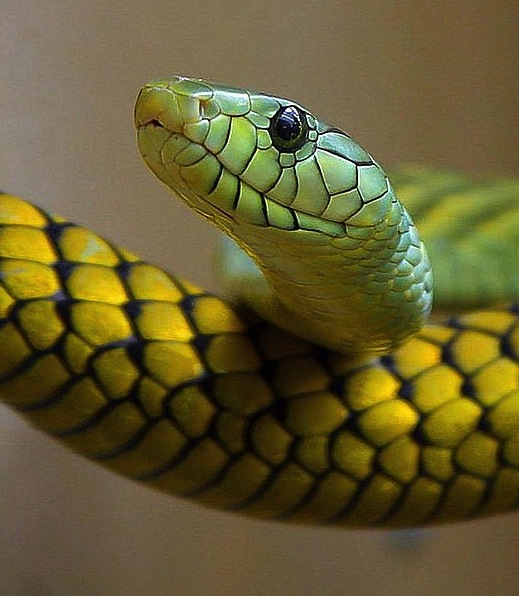 Cymbees are water spirits that hail from western and central Africa. They live in unusual rocks, gullies, streams, springs, waterfalls, sinkholes, and pools, which areas they effectively “adopt” as territorial guardians. They are said to be able to influence the fertility and well-being of people living in their territory. At the same time, they can and will cause trouble if they are not treated with respect.
The word “cymbee” is a phonetic spelling of the Kikongo word simbi (pl. bisimbi), heard among enslaved Africans in the American South in the 1800s. The same sort of being is called a kilundu or kalundu in the Kimbundu language of Angola.
There are several firsthand reports of a belief in cymbees in North America, especially in the South Carolina Lowcountry. The region around Lake Moultrie was apparently home to a large concentration of cymbees.
Robert Wilson, a white Charlestonian born in 1838, compared cymbees to the kelpies or undines (i.e., merfolk) of European mythology. Another white observer, Henry Ravenel, described them as “guardian spirits of the water.” He goes on to say,
I have never been able to trace the word to any European language and conclude it must be African. If anyone disturbs the spring, the Cymbee would be angry. If it was destroyed or much injured from any cause, the Cymbee would leave it, and the waters would dry up. The Cymbees were proportionate in size to the spring. (“Recollections of Southern Plantation Life” The Yale Review [summer 1936] 776)
Each fountain or spring has its own cymbee, each having a different size, appearance, and habits. Some like to appear at noon; others at night. Some have a human appearance (though they may be web-footed like a goose); others take the form of snakes; others still are described as a kind of mermaid. Yet others might assume the form of a gourd or even of wood or pottery. As Ravenel explains, their size is relative to that of their domain—the larger the spring, the taller and more robust the cymbee.
Although they were often creatures to be feared, cymbees also fulfilled an important cultural role among enslaved Africans. As Ras Michael Brown explains, cymbees also served the people of the early Lowcountry as spiritual benefactors.
Brown argues that nature spirits allowed those who were either strangers to the area or lacked ties with named ancestors to “still have access to the agents of Other Worldly powers and to feel attached to the land where they lived” (“West-Central African Nature Sprits in the South Carolina Lowcountry,” Paper presented at the Southeastern Regional Seminar in African Studies, Fall 2000 Meeting, University of Tennessee, Knoxville).
The existence of cymbees in the Lowcountry reveals the concerns of slaves over maintaining community as well as their spiritual and material survival. As such, they were vital features of the cultural landscape.
Interview: Kindreds
Into the Wonder: Your friend, Danny, thought I would like to interview you, Bryn. I hope that’s all right.
Bryn: Any friend of Danny’s is a friend of mine.
ITW: He speaks very highly of you.
B: Pooka and huldra, field and forest. We make a pretty good team.
ITW: And yet you seem so different. And not just your personalities. The more I learn about Your Kind, the more I’m amazed at how different you all look.
B: Part of that is magic. We can pretty much look however we want. And then, a lot of us are really into body modification.
ITW: You mean like piercings and tattoos?
B: Piercings, tattoos, hooves, antlers… The sky’s the limit, really. And, of course, the different kindreds all have their own particular look, if you know what I mean.
ITW: Kindreds? You mean different types of fae?
B: Presactly. Our Kind live all over the world, and we’re just as diverse as you people. Topsiders, I mean. And most of us value our heritage. Oh, not that I would think any less of Danny, for instance, just because he’s a pooka. But we all have our own ways, our own magics. It’s something to take pride in, you know?
ITW: And somehow, you all manage to get along?
B: Well, I’d say most of us at least try to stay out of each others’ way. There are some of Our Kind who are best left alone. Know what I mean? There’s no need to go asking for trouble.
ITW: So, some fae are more…agreeable…than others?
B: Isn’t it like that among you people?
ITW: Touché.
B: I think I like you, sweetie. You’re real easy to talk to.
ITW: Erm…thanks.
B: Is something the matter?
ITW: No, it’s just…well…
B: It’s the tail, isn’t it?
ITW: I’m so sorry. I didn’t mean to stare.
B: Aw, you’re blushing! How cute! But it’s okay. Really. It’s just part of who I am. Nothing to be embarrassed about.
ITW: You’re very kind. I think that’s enough for now, though. This has been very enlightening. Shall I see you to the door?
B: Such a gentleman!
ITW: I’m a married man, Bryn. I’d appreciate if you’d stop batting your eyes at me.
B: Sorry. Force of habit.
ITW: Now you’re blushing.
Top TenEleven Cool Old Guys
Today is my birthday, and I’ve been thinking about the kind of old guy I want to become, because it’s happening faster than I would have imagined twenty years ago! In chronological order, here are some cool old guys from whom I could stand to learn a thing or two:
1. Yoda. He’s short. He’s not that handsome. But he’s got that whole “power of the force” thing going, and could kick some serious heinie in his (relatively) younger days. Plus, I think I edited something he wrote once.
2. Melchizedek. According to rabbinic tradition, he is the patriarch Shem under an assumed name. In any case, he is the ultimate mysterious stranger, “without father or mother or genealogy, without beginning of life or end of days,” who arrives out of nowhere to bless Abram and show him hospitality.
3. Nicholas of Myra. Lover of children, giver of gifts, exiled and imprisoned for his faith. He once even punched out an Arian heretic. According to some, he spends his retirement years distributing toys to good little girls and boys.
4. Atticus Finch. Loving father, brilliant lawyer, champion of justice.
5. Sherman Tecumseh Potter. Ex-cavalryman and exemplary army surgeon. Beloved father-figure to everyone under his command.
6. Emmett Lathrop “Doc” Brown. Inspired though eccentric scientist and inventor. If you’re going to build a time machine, why not put it in a Delorean? He realized his dream of living in the Old West, where men were men and women looked like Mary Steenburgen.
7-8. Arva S. Pursiful Jr. and Darrell T. Pursiful. What can I say? My father is and my paternal grandfather was a cool old guy. Devoted husbands, fathers, and grandfathers; among the top in their chosen professions; able to know when to be serious and when to joke around. They’ve given me some mighty big shoes to fill.
9. Albus Percival Wulfric Brian Dumbledore. Flawed yet honorable. He never stopped learning. He never stopped risking something big for something good.
10. Johnny Cash. An almost perfect synthesis of Saturday night and Sunday morning.
11. Leroy Jethro Gibbs. Just because I wish I could pull off that head slap thing he does and/or magically appear behind someone who’s talking about me.
Tolkien’s Dragons
Anne Marie Gazzolo, guest author at Mythic Scribes, has written a very informative article on dragons in the imagination and writings of J. R. R. Tolkien. Here is a sample:
The great worms will ever live in the world of Faërie, and we can enjoy them from the safety of our favorite reading place. But as we shiver in delighted terror, let us not forget what they can also teach us.
In presenting Smaug as the personification of the destructiveness of avarice, Tolkien shows us the ugliness of materialistic greed. The dragon jealously guards his treasure but does not enjoy it, cannot possibly use it, and does not even know what has true value and what is just a trinket. Even so, he does not wish to share his amassed wealth with anyone. His overreaction after discovering that the cup Bilbo stole is missing is almost as bad as Gollum’s regarding the Ring, and it grows much worse.
Sunday Inspiration: Writing
You must not believe all that authors tell you about how they wrote their books. This is not because they mean to tell lies. It is because a man writing a story is too excited about the story itself to sit back and notice how he’s doing it.
—C. S. Lewis
Watch a Danish Archer Outshoot Legolas
This video filled me with wonder. What was ancient and medieval battlefield archery like? If Lars Andersen is any indication, maybe a lot faster and more rip-roaring than we may have envisioned.
Pookas: Shapeshifting Irish Tricksters
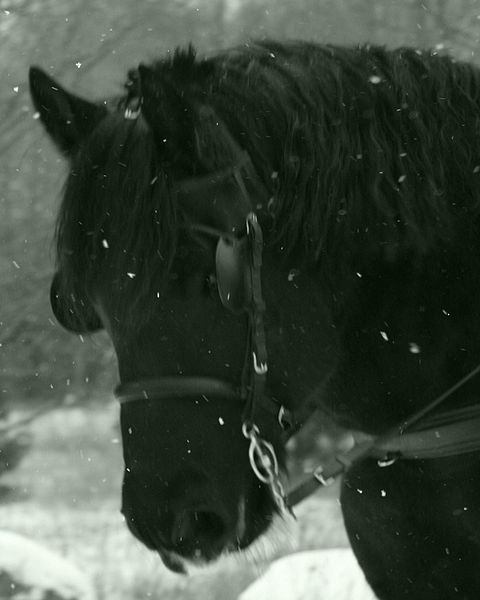 The word “pooka” (or phouka, puka, etc.) derives from Gaelic púca, meaning “spirit, ghost, or goblin.” Originally an earth-spirit associated with fields and herds, these beings are best known as trickster figures, either malevolent or simply mischievous. The worst among them have been accused of crimes including child molestation, kidnapping, and murder.
Pookas often pass through the mortal realm invisibly, but they are also accomplished shapeshifters. A pooka’s animal form is almost always a type of animal that lives in close proximity to humans: cats, dogs, horses and ponies, goats, cattle, rabbits, etc.—another indication of their original agrarian connection. In Waterford and Wexford, however, they have been known to take the form of a huge eagle. No matter the form, its fur or feathers are almost always dark.
As an agricultural spirit, pookas are associated with Samhain, the Gaelic harvest festival when the last of the crops are brought in. The pooka is acknowledged to have a right to anything that remains in the fields after November 1, “the pooka’s day.” Thereafter, pookas might render crops inedible or unsafe—perhaps by spitting or defecating on them. In some locales, reapers leave a small share of the crop to placate the hungry creature.
Pookas can also be helpful to farmers. In at least one story, pookas helped a poor farmer by milling his grain for him in the dead of night.
The Border Region has a variety of pooka known as a brag. These beings are noted for their kindness to animals. They still enjoy playing tricks on humans, however.
Plato or Dumbledore?
DISCOVERY: that the addition of “Harry” to almost any Plato quote makes it seem legitimately like a nugget of wisdom out of the mouth of Albus Dumbledore.
“Death is not the worst that can happen to men, Harry.”
“Harry, good actions give strength to ourselves and inspire good actions in others.”
“He who commits injustice is ever made more wretched than he who suffers it, Harry.”
“Harry, how can you prove whether at this moment we are sleeping, and all our thoughts are a dream; or whether we are awake, and talking to one another in the waking state?”
“Harry, astronomy at all events compels the soul to look upwards, and draws it from the things of this world to the other.”
“He was a wise man who invented beer, Harry.”

