
Home » Articles posted by Darrell J. Pursiful (Page 129)
Author Archives: Darrell J. Pursiful
Percy Jackson Confession
Adrian Murdoch speaks for many:
The Percy Jackson novels by Rick Riordan are essential reading for any classicist. I claim to buy them for the kids – they are nominally aimed at children – but instead devour them myself as soon as they are published.
Indeed.
This Must Be Commonwealth Week
Yesterday’s statistics: About one third of activity on this blog was generated by Canadians! Since I grew up in Michigan (where I could practically see Canada from my house), I’m quite honored. So now maybe I’ll also have to develop a subplot involving wendigos or maybe a pagwadjinini or two. 🙂
Chupacabra Sighting?
I’m going to vote No, but have a look and see…
G’day, y’all!
Roughly a third of my page views yesterday came from Australia! Admittedly, in absolute terms, this is still quite a low number, this blog being barely two weeks old and all, but still worth noting, I think.
Keep it up, Oz, and I may just have to throw a slightly misplaced yowie, mimi, or grimmacha into the Wonder!
World Builder’s Disease
This is kinda sorta me. Carl Sinclair has put his finger on an affliction that affects a lot of writers, especially of fantasy fiction: Tolkienitis. Having spent the past week roughing out half a dozen possible species of unicorns—with absolutely no plans for including unicorns anywhere in the “Into the Wonder” series—I am definitely somewhere on this spectrum.
What is World Builder’s Disease?
World builders disease is a terrible affliction for many writers and authors, mainly in Science Fiction and Fantasy, but it can certainly affect writers in many genres. The scientific medical term is Tol-kien-itis.What causes it?
It is caused by the constant building and tweaking of your world and setting. So much that you never actually get around to writing the book.J.R.R Tolkien had the worst case on record, spending much of his life (around 30 years) building the world, languages and setting for Lord of the Rings. He finally managed to finish his series, but his case was very severe.
I would only suggest that the proper clinical term should probably be Tolkien Syndrome on the pattern of Asperger Syndrome, Tourette Syndrome, etc.
Well done, Carl, and thanks for your honesty!
Sunday Inspiration: Choices
It is our choices, Harry, that show what we truly are, far more than our abilities.
—Albus Dumbledore (via J. K. Rowling)
By Way of Formal Introduction…
Some problems are worse than others. That’s pretty obvious, isn’t it? What a lot of people may not understand is that some problems are actually pretty cool. If I’m going to have a problem, I want it to be a cool one. Like, What am I going to do with all this money I’ve unexpectedly inherited? Or, my website has become so popular it keeps crashing the server! Or, I really feel self-conscious about being the only person in my class/office/whatever who hasn’t come down with the flu! See? Those are great problems to have.
Try this one on for size: I have a daughter who reads WAY above her grade level. Why is that a problem, you ask? Because even though she has the vocabulary and comprehension of a high-schooler, she is just not ready yet for some of the “grown-up” content that I know she’ll handle like a pro when she is a little bit older.
Mind you, this is a girl who doesn’t check out books from the library; she checks out WHOLE SERIES!
Now, for the last several years, my absolutely wonderful problem has been finding books that interest my sweet girl without talking down to her. My wife and I are constantly picking the brains of our friends who are teachers and librarians. (“Has she read X?” “Yeah, she read that when she was in fifth grade.” “Well, how about Y?” “I haven’t heard of that one. Let me write it down.”)
Eventually, I started supplementing whatever treasures we could find at the library with little stories of my own. And since I have several friends who appreciate good teen/young adult fiction and share my (and my daughter’s) love of the fantasy genre(s), I usually asked one or two people to read behind me to help clean up my messes.
Well, to make a long story short (if it isn’t already too late for that!), somebody thought I might be on to something with Children of Pride, my latest effort. It was suggested that I release it into the wild and see what happens. That’s what this web site is all about.
And while everything is being formalized, I’ll also keep providing “bonus material” related to faeries, mythology, and the growing universe of “Into the Wonder.”
Thanks for stopping by!
Nunnehi: The Fair Folk of the American Southeast
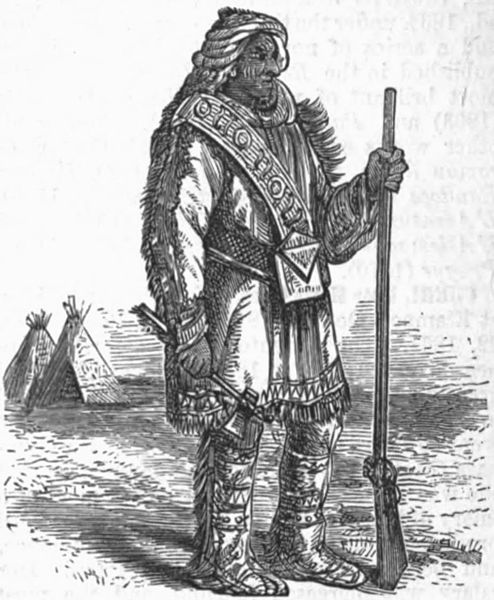 The nunnehi are the principal Fair Folk of the American Southeast. They are helpful spirit warriors who dwell in rocks and hills. They prefer to live on the tops of mountains and hills. Like the daoine sídhe of Ireland (and many other Old World fae), they are said to enjoy dancing and music. It is said that, the closer one came to singing nunnehi, the farther away they seemed to be. They were able to become invisible at will, but when they permitted themselves to be seen, they looked exactly like other Native Americans. They wore traditional Cherokee clothing and spoke the Cherokee language in the Overhill (i.e., Tennessee) dialect.
The Cherokee name for these beings can be rendered nunnehi, nvnehi, or gunnehi. Whatever the form, the name means “people who live anywhere.” The singular form is nayehi.
Although nunnehi is a Cherokee word, the Creeks had a legend of similar beings, said to have once inhabited the Ocmulgee Indian Mounds in Macon, Georgia. In Revolutionary times, the Creeks still claimed that, when forced to encamp there, they heard at dawn the sound of Indians singing and dancing, as if going down to the river to purify themselves and then return to the old townhouse (James Mooney, Myths of the Cherokee [Dover, 1995 (reprint)] 475). Robbie Ethridge writes,
James Adair, and eighteenth-century trader and writer, reported that every Indian knew of the Ocmulgee Old Fields. These old fields, too, were haunted. In fact, according to Adair, one could hear ghost warriors dancing at night. Adair claimed he never heard or saw the ghosts even though he had often camped there. His Chickasaw companions explained that was because he was an “obdurate infidel in that way.” (Creek Country [University of North Carolina Press, 2003] 52)
The Creek also describe an ancient battle in which their warriors emerged from a mound and defeated a Cherokee war party—an exact parallel to similar legends told by the Cherokees themselves about the nunnehi who lived beneath Nikwasi Mound near Franklin, North Carolina.
The nunnehi are generally quite hospitable to mortals, especially those who are in trouble. There are a number of stories of nunnehi helping lost travelers and returning them safely to their homes. In 1838, it is said, the nunnehi invited members of the Cherokee nation to retreat to their domain at Pilot Knob, North Carolina, and thus escape forcible deportation to Oklahoma. Other nunnehi are said to have migrated to Oklahoma as a sort of vanguard for humans forced to walk the Trail of Tears.
A Monster a Day from the Fairytale Traveler
Christa Thompson, aka the Fairytale Traveler, has been cataloging a monster a day in honor of Halloween. Some of my favorites so far:
The Pooka: a menacing shapeshifter (who can also be benevolent)
The Banshee: a harbinger of death.
The Headless Horseman: the terror of Sleepy Hollow.
The Dullahan: the original Irish headless horseman.
Fantasy: Urban or Contemporary?
Scott Eder has recently discovered that he is an author in the “contemporary fantasy” genre. Previously, he had been under the impression that what he wrote was “urban fantasy.”
In his guest post at Christine Amsden’s blog, he explains what he now perceives as the difference between the two.

