
Home » Mythology (Page 4)
Category Archives: Mythology
Paissas: Fair Folk of the Great Lakes Region

Ne-Sou-A-Quoit, a Fox chief (via Wikipedia)
In the Central Algonquian languages spoken around the Great Lakes, one finds reference to a faery creature called (in various forms) a paissa. There are numerous variations on this term based on which specific language one is dealing with, but the word is almost always pronounced something like pah-ee-sah, and the plural form is paissake (pronounced pah-ee-sah-kee or similar). I’m using the Sauk term for simplicity’s sake. Some of the variant forms are:
- Apa’iins or Pa’iins (Anishinaabe)
- Apayaciha (Fox)
- Pahiins (Ojibwe)
- Pa’is (Potawatomi)
- Paissa or Apayashiha (Sauk)
- Paisa (Illini)
- Páyiihsa (Miami)
- Piesiihia (Kickapoo)
In whatever form, the word simply means “small person.” It can refer either to a mythological being or to an ordinary human who is short of stature. For example, “Pa’is” is a common man’s nickname in Potawatomi, similar to “Shorty.”
Paissake are usually described as about two feet tall. In most stories, they are portrayed as mischievous but generally benign nature spirits. They may play tricks on people but are not truly dangerous. In other stories, however, paissake have more formidable magic powers. They are even able to pose a credible threat to humans and even to the semi-divine culture hero Wisahkeha (Wisake, Wisakechak, etc.)—but usually only if they are provoked.
It is very likely that “little people” in these cultures are actually more than one type of faery creature. According to one online source, the Anishinaabe and Cree languages, the cognate term apa’iins is used to refer to at least three different types of being:
- The apa’iins properly so-called: a dangerous trickster spirit, sometimes with great magical powers.
- A generally benevolent child-sized creature called either a memekwesiw (Cree) or a memegwesi (Ojibwe)
- A tiny, insect-like faeries called wiings.
These “little people” don’t fit neatly in Mason Winfield’s “two-tribe” model of benevolent and powerful “Healers” and mischievous if not malevolent “Tricksters.” In broad terms, however, the model may still work. On the one hand, “paissa” occasionally refers to powerful eldritch beings. On the other hand, the term “paissa” can refer—and more often does—to mischievous but benign creatures. There are still two tribes, but rather than “Healers” and “Tricksters,” it seems to be more “Dangerous Tricksters” and “Benign Tricksters.
Cannibal Dwarves: Hostile Little Folk of the Great Plains

The San Pedro Mountains Mummy, claimed by some to be the remains of a Nimerigar (Wikipedia)
For the most part, the Fair Folk of North America are more congenial than their European counterparts. Though exceptions certainly exist, they are more likely to be friendly to mortals than the average sídhe or pisgy, for example.
One clear exception is found among the peoples of the Great Plains. The little folk of that vast region between the Rocky Mountains and the Mississippi River are most often depicted as a race of dangerous cannibals. These “cannibal dwarves” or “wild people” are known to virtually every tribe in the region—and even into the Rocky Mountains. They are called by a multitude of names, including:
- Gada’zhe, mong-thu-jah-the-gah, or ni’kashinga man’tanaha (Omaha-Ponca)
- Hecesiiteihi (Arapaho)
- Mi’-a-gthu-shka or mialuka (Osage)
- Nimerigar (corruption of Shoshoni nemetakah, numu-tuhka)
- Nirumbee or awwakkulé (Crow)
- Nunnupi or nunumbi (Comanche)
- Vo’estanehesano (Cheyenne)
Cannibal dwarves are dangerous and aggressive by nature. Like the faeries of Europe, they sometimes kidnap children or use their magical powers to harm people. They hunt with bows and poisoned arrows, and are able to inflict wounds without breaking the skin—also a point in common with their European cousins. They have their own villages, trails, and other places. They can only be seen, however, when they want to be or are taken unawares.
Descriptions of these little folk vary somewhat from community to community. In Arapaho legend, they are immensely strong. According to the Omaha, they are tiny one-eyed cyclopes. The Crow see them with pot bellies and no necks. In other Siouan traditions (Osage, Omaha, and Kansa, for example), they sometimes have wings.
Whatever the particulars, these beings are usually said to be the size of children (generally 2–4 feet tall), dark-skinned, and extremely aggressive. They usually have squat necks and sharp teeth. Some storytellers say they have the power to turn themselves invisible, while others say they are hard to spot simply because they move with incredible speed. Some suggest that their warlike temperament comes because they must be killed in battle in order to reach their dwarfish afterlife. Others say that they are gluttons who habitually kill more than they can eat just because they can.
These beings are almost always hostile to human beings. There are some Crow legends, however, in which a nirumbee helps a mortal, especially during a sacred fast or in return to a kindness done to them. Furthermore, they are said to have played a major role in shaping the destiny of the Crow nation through the dreams of the Crow chief Plenty Coups in the early twentieth century. They thus can be seen as imparting spiritual wisdom despite their overall hostility to humans.
Faeries and Pixies of Exmoor
The Faery Folklorist offers numerous tales of the Fair Folk of Exmoor and nearby areas in the West Country of England. The common name for such beings in this part of England is either pixie (in Devonshire) or pisgy/piskey (in Cornwall).
I think it’s about time more attention was paid to the extraordinary fairy folk and pixies of Exmoor! These wonderful little characters are often sadly overlooked and overshadowed by their more famous relatives, the Piskies of Cornwall and Pixies of Dartmoor. Below you will find a beginners guide to the fairies and pixies of Exmoor, including their habits and habitations, and an insight into their curious behaviour.
Enjoy!
Two Flavors of Vermont Faeries
New England Folklore has a post up about two faery-type entities from the Abenaki folklore of Vermont:
One of them is called simply “the swamp spirit” or “swamp creature.” The swamp spirit was seldom seen, but could often be heard crying from the swampy areas where it lived. Lone travelers were the most likely to hear the creature’s cries…. [I]t liked to lure children into swamps where it either kept them forever or just outright killed them.
The Manogemassak [or “little people”] live in rivers and tend to avoid humans as much as possible. This is easy for them to do because of their unique anatomy. The Manogemassak are incredibly narrow, and their faces are described as being as thin as an axe blade. They are so thin that they can only be viewed in profile, not when faced head on. This makes it quite hard for humans to see them.
Of course, both now and in times past, the Abenaki are not limited to the borders of Vermont, but if you’re ever in the Green Mountain State, you might want to think twice about hiking in the swamp.
A Scientific Theory of the Origin of Dragons
I’ve just stumbled upon a scholarly article on the origin of dragon-lore in early human cultures: Robert Blust, “The Origin of Dragons,” Anthropos 95 (2000): 519–36.
This is far more highbrow than many of my readers will appreciate, but it’s the sort of thing that stokes my imagination as I think through how I want magic, dragons, and other mythological creatures to “work” in my writing. Here’s an intriguing paragraph from near the beginning:
[T]he idea of the dragon arose through processes of reasoning which do not differ essentially from those underlying modern scientific explanations. Far from being the product of a capricious imagination, the dragon was mentally constructed in many parts of the world as a by-product of 1. meticulously accurate observations of weather phenomena, and 2. an earnest but unsuccessful attempt to grasp the causality of natural events, particularly those relating to rainfall. The dragon thus stands as one of the supremely instructive examples of convergent evolution in the symbolic life of the mind.
By the way, dragons will make their first appearance in the Into the Wonder series with its fourth book, The River of Night, which is currently in the hands of my beta readers. 🙂
Another Kelpie Sighting
The Faery Folklorist provides an in-depth article about the water horses of Loch a Gharbh-bhaid Beag (which, if you haven’t guessed, is in Scotland).
Many a Scottish loch lays claim to a water-horse, but how many can say they have a whole herd living beneath the still dark surface? Loch a Gharbh-bhaid Beag in the North West Highlands is said to be home to not one Each Uisge, but a whole herd! If you’ve not heard of the infamous water-horse, you can read more about them here in a previous blog. Unusually, this particular story has a reasonably happy ending with no deaths or gore, which does make a change from the usual ending of the water-horse dragging it’s victim into the deep murky waters to their doom.
Miniature Mischief Makers? Marvelous!
Via mental_floss:
Humans have always looked for an excuse when something goes wrong, and traditionally, mythical creatures have often provided the perfect scapegoat. The milk has curdled? Must be a brownie. Tools gone missing? Blame the knockers. Someone drank all your wine? Cellar must be infested with clurichauns.
Folklore around the world provides us with a host of these small fairy-like creatures, frequently treading a fine line between the malevolent and benevolent, and worryingly quick to take offense. So next time you break a vase or lose your keys, here are a sampling of miniature mischief-makers to take the blame.
If Friday the 13th brings you some bad luck, at least now you’ll know whom to blame. 🙂
Dogmen and Cynocephali
 There are a cluster of mythological or cryptozoological creatures that seem to straddle the line between humanoids and canines. Dogs (descendants of ancient wolves) were the first animals humans ever domesticated, so you can see why they would figure heavily in our folklore. After thousands of years, they have become familiar to us while still remaining alien. The idea of creatures that blend human and canine characteristics can be especially unnerving or disconcerting.
In this post, I won’t try to deal with werewolves and other human–canine shape-shifters. If you want to know a little about those sorts of creatures, I’ve already written a little about them here. Instead, I’ll be dealing with non-shape-shifting creatures that combine in their natural (or supernatural?) form a blending of human and canine characteristics.
Dogmen
We can divide the canine–humanoid population into two broad groups, one more dog-like in overall body shape and one more human-like. Those in the first group have come to be called “dogmen,” especially among cryptozoologists. “Dogmen” possess what might be called a traditional “wolf-man” appearance. They have the overall build of a large dog or wolf, with digitigrade posture, a bushy tail, and often a muscular torso with forelegs longer than hind legs.
They are more often than not associated with modern-day sightings of unusual creatures rather than ancient myths or folklore, though they do sometimes show up in world mythology. For example, the sa’lawiya is a type of ghoul or jinn in the folklore of the Arabian peninsula. They have a form similar to a greyhound, slender and long-legged, but with an ash-gray mane. They enjoy frightening camels away from their grazing area.
The gizotso or “man-wolf” of Basque folklore might be something similar, though I’m not in a position to state that with certainty.
Cynocephali
Cynocephalus simply means “dog-head.” It is a term applied to a number of dog-headed humanoids described in European sources as far back as ancient Greece. Unlike dogmen, cynocephali are generally human (or humanoid) from the neck down but possess dog-like or wolf-like heads. While dogmen are said to sometimes walk upright, cynocephali seem to be strictly bipedal and have a plantigrade posture. Furthermore, the generally do not have tails.
These creatures are usually said to inhabit far-off lands such as Ethiopia or India. They also seem to come in a number of different breeds or species.
African Cynocephali
The dog-headed humanoids of Africa are sometimes called cynoprosopi (“dog-face”). At least some of them have beards, and they are all covered in black fur. Despite their animalistic appearance, they are described as a tribe or tribes of more or less human “barbarians.” The dogmen of Libya, for example, were said to fight with the Libyan army, apparently as a sort of auxiliary force. Discussing the cynocephali inhabiting the lands south of Egypt, Aelian states,
After traversing the Egyptian oasis one is confronted for seven whole days with utter desert. Beyond this live the human Kynoprosopoi along the road that leads to Ethiopia. It seems that these creatures live by hunting gazelles and antelopes; further, they are black in appearance, and they have the head and teeth of a dog. And since they resemble this animal, it is very natural that I should mention them here [in a book on Animals]. They are however not endowed with speech, but utter a shrill squeal. Beneath their chin hangs down a beard; we may compare it with the beards of Drakones, and strong and very sharp nails cover their hands. Their whole body is covered with hair—another respect in which they resemble dogs. They are very swift of foot and know the regions that are inaccessible: that is why they appear so hard to capture.
Asian Cynocephali
Both European and Chinese writers spoke of tribes of cynocephali inhabiting Central Asia. For example, the medieval traveler Giovanni da Pian del Carpine reports a tribe of cynocephali living north of Lake Baikal that was encountered by the army of Ogedei Khan. In the an Old English document called The Wonders of the East, similar creatures are called Conopenae. They are described as having a horse-like mane, tusks, and breath “like the blaze of a fire.” They are described in some sources as “hairy giants.” They are sometimes called hemicynes or “half-dogs” and said to inhabit the regions of the extreme north.
Perhaps it is cynocephali of this species that were said to travel with the Germanic Lombards as they invaded western Europe. In his History of the Lombard People, Paul the Deacon writes,
They pretend that they have in their camps Cynocephali, that is, men with dogs’ heads. They spread the rumor among the enemy that these men wage war obstinately, drink human blood and quaff their own gore if they cannot reach the foe.
Indian Cynocephali
The most advanced cynocephali were those that Ktesias called Calystrians, which inhabited the mountains of India. According to Ctesias’s Indica fragment:
On these [the Indian] mountains there live men with the head of a dog, whose clothing is the skin of wild beasts. They speak no language, but bark like dogs, and in this manner make themselves understood by each other. Their teeth are larger than those of dogs, their nails like those of these animals, but longer and rounder. They inhabit the mountains as far as the river Indos. Their complexion is swarthy. They are extremely just, like the rest of the Indians with whom they associate. They understand the Indian language but are unable to converse, only barking or making signs with their hands and fingers by way of reply, like the deaf and dumb. They are called by the Indians Kalystrii, in Greek Kynocephaloi. They live on raw meat and number about 120,000…
The Kynokephaloi living on the mountains do not practise any trade but live by hunting. When they have killed an animal they roast it in the sun. They also rear numbers of sheep, goats, and asses, drinking the milk of the sheep and whey made from it. They eat the fruit of the Siptakhora, whence amber is procured, since it is sweet. They also dry it and keep it in baskets, as the Greeks keep their dried grapes. They make rafts which they load with this fruit together with well-cleaned purple flowers and 260 talents of amber, with the same quantity of the purple dye, and 1000 additional talents of amber, which they send annually to the king of India. They exchange the rest for bread, flour, and cotton stuffs with the Indians, from whom they also buy swords for hunting wild beasts, bows, and arrows, being very skilful in drawing the bow and hurling the spear. They cannot be defeated in war, since they inhabit lofty and inaccessible mountains. Every five years the king sends them a present of 300,000 bows, as many spears, 120,000 shields, and 50,000 swords.
They do not live in houses, but in caves. They set out for the chase with bows and spears, and as they are very swift of foot, they pursue and soon overtake their quarry. The women have a bath once a month, the men do not have a bath at all, but only wash their hands. They anoint themselves three times a month with oil made from milk and wipe themselves with skins. The clothes of men and women alike are not skins with the hair on, but skins tanned and very fine. The richest wear linen clothes, but they are few in number. They have no beds, but sleep on leaves or grass. He who possesses the greatest number of sheep is considered the richest, and so in regard to their other possessions. All, both men and women, have tails above their hips, like dogs, but longer and more hairy. They are just, and live longer than any other men, 170, sometimes 200 years.
This same advanced species is apparently found in Southeast Asia and even on islands in the Bay of Bengal. Marco Polo reported a tribe of barbarians with heads like big mastiff dogs living in the island of Angamanain (Andaman Islands). He said they grew spices but, unlike their Indian cousins, were very cruel.
Scottish Cynocephali
The wulver of the Shetland Islands are quite different from most dogmen in that they are a relatively gentle species. In Jessie Saxby’s Shetland Traditional Lore, she explains,
The Wulver was a creature like a man with a wolf’s head. He had short brown hair all over him. His home was a cave dug out of the side of a steep knowe, half-way up a hill. He didn’t molest folk if folk didn’t molest him. He was fond of fishing, and had a small rock in the deep water which is known to this day as the “Wulver’s Stane.” There he would sit fishing sillaks and piltaks for hour after hour. He was reported to have frequently left a few fish on the window-sill of some poor body.
North American (or maybe Japanese?) Cynocephali
The Buddhist missionary Hui-Shen of the late fifth century AD described an island of dog-headed men located to the east of Fusang, a legendary land that is identified by scholars as either Japan or somewhere in North America.
North American (for sure!) Cynocephali
According to cryptozoologists, similar creatures still inhabit parts of North America, though they usually describe them as being a type of sasquatch or bigfoot, just with an unusual skull or facial structure. Whatever may be said for the merits of such accounts, they seem universally to describe a purely animalistic creature with none of the tokens of human culture (clothing, tool use, etc.) found in Old World accounts.
In Search of Yokai
The Fairytale Traveler is on the hunt for these diverse Japanese creatures:
Every culture has their own share of myths, stories, and legendary creatures. One particularly intriguing set of creatures, Yokai, originate in Japan and are monsters and spirits that have supernatural powers. The Japanese Yokai are known to range from simply mischievous to outright malicious, and some are even known to occasionally bring good fortune to those nearby. They can take the form of animals, humans, or even inhabit inanimate objects. I’ve rounded up some intriguing Japanese Yokai and the places in Japan where you might be able to find them.
Lamiak and Mairuak: the Fair Folk of the Basque Country
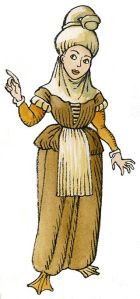 The lamia (plural lamiak) is a nymph-like being of the Basque country of northern Spain. They are associated with rivers and caves. Though their origin is within the Basque culture, but they are found in other parts of northern Spain. For example, they are similar in several ways to the mouras encantadas of neighboring Galicia. They are very beautiful and usually have long hair, which they love to comb with golden combs. Like the damas de agua of central Spain, lamiak often have animalistic traits: most often, webbed feet like a duck.
In Navarra and the Basque country, the term lamia is also commonly used for a sea nymph or mermaid. At the same time, some lamiak function as domestic spirits, helping those who leave them offerings with farm or household chores.
The masculine counterpart of the lamia is the mairu (plural mairuak). They are often described either as giants or as human sized but possessing immense strength. In this, they are comparable to the spriggans of Cornwall. It is said that mairuak built the dolmens of the Basque region. Their wives and sisters are also noted builders, as certain bridges in the Basque country were reputedly built by lamiak.
Other forms of lamia include lamina and amilamia. Other forms of mairu include maire, maide, and mainde.
 Darrell J. Pursiful