
Home » Uncategorized (Page 8)
Category Archives: Uncategorized
Uncanny Georgia: Like-a-Bear
The nokos oma (“like-a-bear”) is an obscure creature from Muskogee folklore. It is described in Bill Grantham’s Creation Myths and Legends of the Creek Indians (University Press of Florida, 2002):
Like-a-Bear was about the size of an ordinary black bear but always carried its head near the earth and had immense tusks that crossed each other. The Oklahoma Seminoles described this being as about two feet tall and smelling worse than a skunk. (36)
So, apparently you don’t want to startle it. Either it’s as big as a regular bear and it may well gore you with its tusks, or it’s tiny but stinks to high heaven.
Uncanny Georgia: The Ishkitini
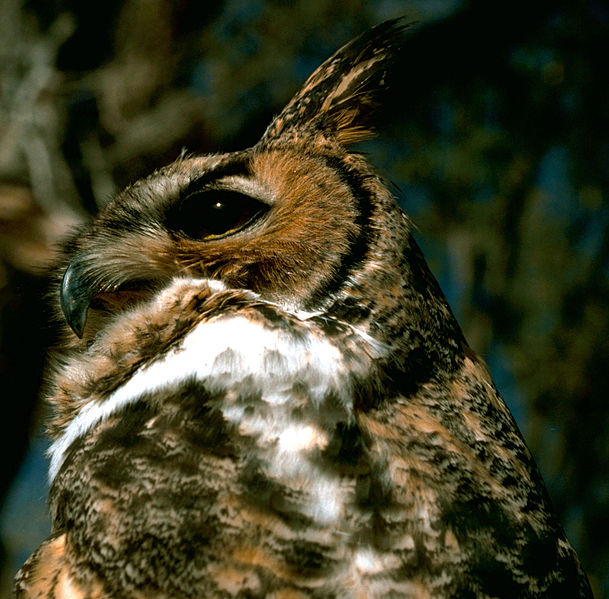 The origins of the legend of the ishkitini are hard to pin down. Apparently, it was first described in Choctaw legend, but it was also known among the Creeks and Seminoles. It is a given that the Creeks and related peoples of Georgia would have believed in such creatures. Ishtikini, stikini, stigini, etc. are all variations of the same word.
Ishkitinis are malevolent shape-shifters. Although they might take on the shape of any sort of wild predator—wolves, coyotes, bears, etc.—they strongly favor owls. In fact, their name means “horned owl.”
These creatures are classified as “witches.” In much Native American lore, a “witch” is not a human practitioner of magic but rather an inhuman monster that is able to pass as human. By day, ishkitinis look like ordinary humans. By night, however, they prey upon their neighbors. The Seminole version of the legend is the most disgusting. According to this version, ishkitinis change their shape by vomitting up their souls—along with their internal organs.
In some stories, mentioning these creatures by name puts one at risk of becoming one. Therefore, stories about ishkitinis are only told by certain medicine men and women. In other communities, however, they are more of a bogeyman figure casually discussed to frighten children.
An ishkitini appears in The Devil’s Due, though he is never identified as such. One character describes him as “a pooka with a bad attitude.”
Uncanny Georgia: The Ghosts of Fayetteville
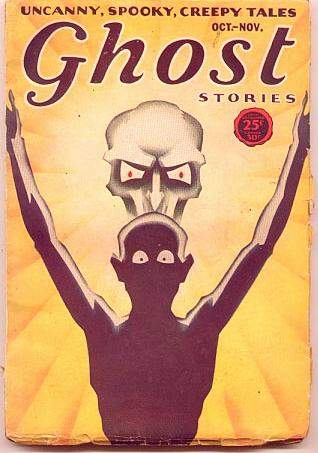 I’m not a big fan of ghost stories, but I thought I’d include at least one on my tour of “uncanny Georgia.” This one has to do with the Woolsey Road Bridge in Fayetteville, which is just south of Atlanta. According to StrangeUSA.com,
In the early 1920’s the sheriff of Woolsey, use to kill black people and he would dump there bodies into the swamp by his house. It is said if you park by the bridge and walk to the edge of the swamp that you can see the ghost of the people that were killed carrying lanterns through the swamp.
Like many ghost stories, this one involves the spirits of murder victims continuing to haunt the place where they were killed and/or buried. As brief as it is, I think this story intrigues me because there is more than one type of “ghost” to contend with: there are the ghosts of those who were murdered and there are also the “ghosts of the past”—the history of hatred and racially-motivated violence—that the story forces hearers to deal with.
Review: Conjure Woman’s Cat
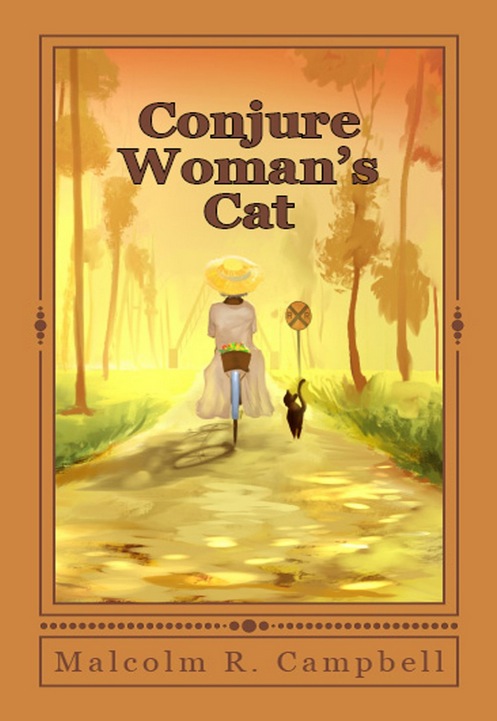 Conjure Woman’s Cat by Malcolm R. Campbell explores the life of a close-knit African American community in the 1950s Florida panhandle through the eyes of Lena, the feline assistant to Eulalie, a “conjure woman” or folk-healer and magician. When an act of injustice provokes Eulalie to use her mystical powers to settle the score, it threatens to expose her own closely held secrets.
The novella’s tone and themes are similar in many ways to To Kill a Mockingbird, but with a heavy dose of magical realism. The story is engaging, with complex and believable characters, but I found it at least as fascinating as an account of traditional Southern black culture. There is even a glossary at the end of folk magic, Florida history, and mid-twentieth century blues performers. The glossary is quite interesting, but not at all necessary for enjoying the story.
Conjure Woman’s Cat deals with mature themes, but does so with discretion and sensitivity. There is a bit of rough language, but nothing middle schoolers old enough to be assigned To Kill a Mockingbird haven’t heard before.
April 2015 Biblical Studies Carnival
Jeff Carter has the honor of providing this month’s carnival. Well done!
Don’t You Wish You Could Be This Happy?
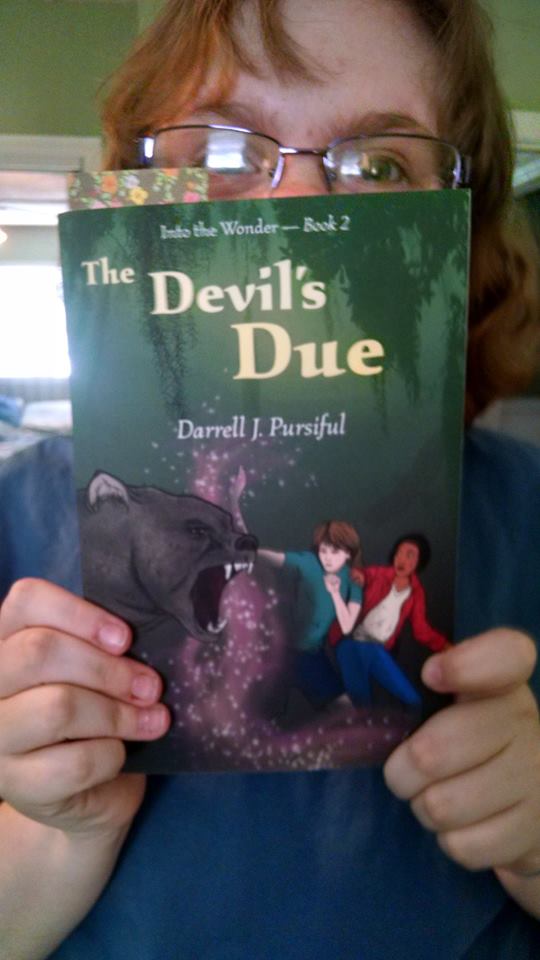
You can! Order The Devil’s Due today!
Hillel and Shammai Animation
Here’s a brief summary not so much of the substance of the disagreements between these two great religious scholars, but how those disagreements were depicted in the Mishnah. The point of the video is to find some wisdom about how people can disagree today without becoming disagreeable.
Merry Christmas
Christ is born! Glorify him!
 Darrell J. Pursiful