
Recent Comments


The Anatomy of a Dragon
The British Library has compiled a treasury of medieval images of dragons in honor of Saint George’s Day.
Dragons are near-ubiquitious in medieval manuscripts. They take pride of place in bestiaries and herbals, books of history and legend, and Apocalypse texts, to name a few. They serve as symbols, heraldic devices, and even as ‘just’ decoration, and their physical characteristics can vary widely. Cinematic and literary depictions of dragons today are fairly consistent; they are almost always shown as reptilian, winged, fire-breathing creatures (in a word, Smaug). But this was by no means a constant portrayal in the medieval period.
Let’s have a look at a very common medieval trope – of the dragon as the nemesis of a saint or angel. Below we can see dragons facing off against St George (again), St Margaret, and the Archangel Michael. All these examples are drawn from late 15th century manuscripts, but their dragons are very different, and range from a lizard-y animal with duck-like feet to a winged leonine creature and a demon.
Robert E. Howard
Be sure and read Philip Overby’s tribute to Robert E. Howard.
Faeries and Folklore at Fantasy Faction
Leo Elijah Cristea has started a new series of posts on “Faeries and Folklore,” so, obviously, I’m going to link to it!
Sunday Inspiration: Laughter
A day without laughter is a day wasted.
—Charlie Chaplin
“Original and Unique”
Thanks to Bella, a real-live teenager, for reviewing Children of Pride!
I loved how quickly I got to know the characters and I was attached to them right away! I liked the writing style and l liked the way the scary and intense parts were balanced with the funny parts.
Oxford City Council, You’re a Bunch of Idiots
Through centuries and across countries, it has remained a staple of traditional Easter celebrations.
But that rich history, it seems, has been rather lost on one council bureaucrat – who forced a church to cancel its Passion play because he apparently thought it was a sex show.
The performance, telling the story of the crucifixion of Christ, had been planned for Good Friday by St Stephen’s House Theological College and Saints Mary and John Church in Oxford.
That was until an official at the local Labour council refused to rubber-stamp the event, forcing the church to scrap it at short notice.
Oxford City Council banned the re-enactment of the crucifixion of Jesus Christ…wrongly believing the play was a sex show and could cause ‘grave offence’
Actors had planned to walk through the streets of Oxford on Friday to re-enact the lead up to the crucifixion of Jesus Christ has they had done previously in 2012.
The worker in question apparently did not know that a Passion play was a religious affair – and thought it was an obscene production.
Last night ministers, MPs and religious groups criticised the ‘unbelievable’ actions of Oxford City Council, saying it showed Christians were becoming increasingly marginalised in society.
A Passion play is a dramatic performance of the Passion of Christ, depicting the trial, crucifixion and death of Jesus. The name comes from the Latin verb ‘pati’, meaning ‘to suffer’.
The Oxford performance was previously held in 2012, without a licence, when an audience of some 200 watched Mischa Richards, playing Jesus, haul a wooden cross from Cowley Road Methodist church to Saints Mary and John.
This year, the organisers decided to stage a repeat, but were told they must apply for a council licence – and were astonished when they were turned down.
A church source told MailOnline: ‘A council official didn’t read the paperwork properly and didn’t realise it was a religious play, so told us we needed an events licence when we didn’t.
‘If they’d told us 24 hours earlier, we would have had time to apply for and get one, but we ran out of time. It’s frustrating because we didn’t need one in any case – they just hadn’t read what the play was about.’
SS Mary and John vicar, Adam Romanis, said: ‘It’s very upsetting because so many people were looking forward to it.
‘Someone said to me: “You can’t hold a crucifixion these days without a licence”.’
Sunday Inspiration: Opportunity
Opportunity is missed by most people because it is dressed in overalls and looks like work.
—Thomas Edison
“Shockingly Good”
Thanks to J. Hearne for his glowing review of Children of Pride!
This book is a shockingly good first offering in the world YA fiction. I could not possibly recommend it more highly if you’re looking for intelligent, witty, and carefully crafted storytelling in the YA world. It does not fall into the trap of repetition and derivative adaptation as so many books in the genre do, but rather is bold enough to carefully undermine the tropes so common to the genre.
“A Welcome Change”
Thanks to SingingOwl for her review of Children of Pride!
I enjoyed the lighthearted tone of “Children of Pride.” It is a great read for children to teens, especially junior high age. The up-to-date descriptions of fantasy characters like elves, fairies and dwarves were a welcome change from some more ponderous fantasy works.
Five Helpful Clans of Little Folk
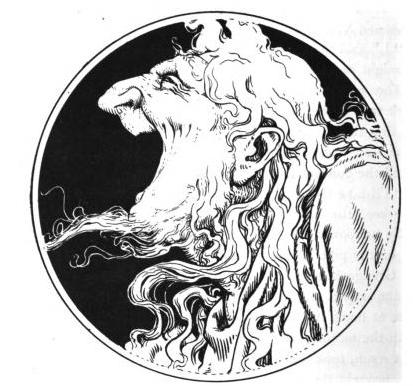 Not all faery beings can be imposing sídhe lords and ladies, sinister jinn, or wild, unpredictable satyrs. In world mythology, some of the inhabitants of the Otherworld are humble, unassuming, and even quite helpful to mortals. Today, I’ll highlight five types of little folk that you probably wouldn’t mind dropping by. They are all good with chores and domestic tasks of various sorts, and are usually happy to help mortals out for a modicum of remuneration. (Offerings of food or milk or cream usually does the trick.) All of these beings are all found in Scotland, Ireland, or surrounding regions.
Brùnaidh/Grogan
A brownie is called a brùnaidh in Scots Gaelic and grogan in Irish. These are domestic spirits who attach themselves to a house or family and often perform domestic chores when no one is looking. The house elves of Harry Potter are modeled largely on brownies.
Uruisg/Fenodyree
The uruisg (or urisk) is very much like a brownie, but is set apart by having goat-like hooves. They are called fenodyrees on the Isle of Man. The are said to have a mischievous nature and also tend to be inclined to perform farming or agrarian tasks. They are thus somewhat similar to a pooka.
Kilmouli
Kilmoulis are faery millers, an ugly form of brownies said to haunt mills. They also hail from the Border counties. They have enormous noses but no mouths, and therefore they have to inhale their food through the nose. Kilmoulis work hard, but also enjoy tricks and pranks.
Gruagach
Gruagachs (the Gaelic plural is technically gruagaichean) are field-folk native to Scotland. Their name literally means “long-haired one.” They love to help mortals with household tasks. Female gruagachs herd and protect cattle, and are also associated with water. They are described as having long blonde hair and wearing a green dress. Sometimes they are said to be attractive; more often, however, they are grotesques hags—although extremely kind-hearted.
Male gruagachs have thick fur, although occasionally they are described as handsome youths dressed in green and red. They commonly work as farm hands shredding and thrashing grain.
Clurichaun
A clurichaun (Irish clobhair-ceann) is thought by some to be a variant form of the leprechaun who goes out to drink after finishing his daily work. They are always drunk. If treated well, a clurichaun will protect a mortal’s wine cellar.
 Darrell J. Pursiful