
Recent Comments


“Shockingly Good”
Thanks to J. Hearne for his glowing review of Children of Pride!
This book is a shockingly good first offering in the world YA fiction. I could not possibly recommend it more highly if you’re looking for intelligent, witty, and carefully crafted storytelling in the YA world. It does not fall into the trap of repetition and derivative adaptation as so many books in the genre do, but rather is bold enough to carefully undermine the tropes so common to the genre.
“A Welcome Change”
Thanks to SingingOwl for her review of Children of Pride!
I enjoyed the lighthearted tone of “Children of Pride.” It is a great read for children to teens, especially junior high age. The up-to-date descriptions of fantasy characters like elves, fairies and dwarves were a welcome change from some more ponderous fantasy works.
Five Helpful Clans of Little Folk
 Not all faery beings can be imposing sídhe lords and ladies, sinister jinn, or wild, unpredictable satyrs. In world mythology, some of the inhabitants of the Otherworld are humble, unassuming, and even quite helpful to mortals. Today, I’ll highlight five types of little folk that you probably wouldn’t mind dropping by. They are all good with chores and domestic tasks of various sorts, and are usually happy to help mortals out for a modicum of remuneration. (Offerings of food or milk or cream usually does the trick.) All of these beings are all found in Scotland, Ireland, or surrounding regions.
Brùnaidh/Grogan
A brownie is called a brùnaidh in Scots Gaelic and grogan in Irish. These are domestic spirits who attach themselves to a house or family and often perform domestic chores when no one is looking. The house elves of Harry Potter are modeled largely on brownies.
Uruisg/Fenodyree
The uruisg (or urisk) is very much like a brownie, but is set apart by having goat-like hooves. They are called fenodyrees on the Isle of Man. The are said to have a mischievous nature and also tend to be inclined to perform farming or agrarian tasks. They are thus somewhat similar to a pooka.
Kilmouli
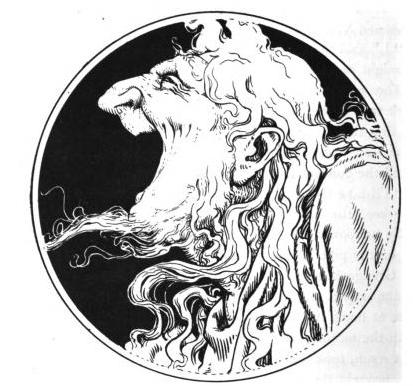
Kilmoulis are faery millers, an ugly form of brownies said to haunt mills. They also hail from the Border counties. They have enormous noses but no mouths, and therefore they have to inhale their food through the nose. Kilmoulis work hard, but also enjoy tricks and pranks.
Gruagach
Gruagachs (the Gaelic plural is technically gruagaichean) are field-folk native to Scotland. Their name literally means “long-haired one.” They love to help mortals with household tasks. Female gruagachs herd and protect cattle, and are also associated with water. They are described as having long blonde hair and wearing a green dress. Sometimes they are said to be attractive; more often, however, they are grotesques hags—although extremely kind-hearted.
Male gruagachs have thick fur, although occasionally they are described as handsome youths dressed in green and red. They commonly work as farm hands shredding and thrashing grain.
Clurichaun
A clurichaun (Irish clobhair-ceann) is thought by some to be a variant form of the leprechaun who goes out to drink after finishing his daily work. They are always drunk. If treated well, a clurichaun will protect a mortal’s wine cellar.
Chozen: A Passover Parody
For those of you who aren’t sick to death of the music from Frozen—and its various covers and parodies—here’s one for Passover:
April Spotlight
Philip Overby’s April Fantasy Writer Spotlight falls on T. L. Bodine, whose newest book is Tagestraum.
Everything You Ever Wanted to Know about Thor’s Hammer
Dan McCoy has the scoop at Norse Mythology for Smart People, and he deserves a link purely on the name of his website!
Thor’s hammer was certainly a weapon – the best weapon the Aesir had, in fact – but it was more than just a weapon. It also occupied a central role in rituals of consecration and hallowing.
The hammer was used in formal ceremonies to bless marriages, births, and probably funerals as well.[4] In one episode from medieval Icelandic historian Snorri Sturluson’s Prose Edda, Thor once killed and ate his goats, then brought them back to life by hallowing their bones with his hammer[5] (talk about having your cake and eating it, too). The medieval Danish historian Saxo Grammaticus records that huge hammers were kept in one of Thor’s temples in Sweden, and that periodically the people would hold a ritual there that involved beating the hammers against some kind of drum that would resound like thunder.[6] This could have been a ceremony to bless and protect the community and ward off hostile spirits.
There’s lots, lots more.
Game of Thrones for Geologists
This would have been a cool way to learn about geology back in my college days! A group of geologists who are also fantasy enthusiasts have reconstructed a geological history of Westeros, the setting of George R. R. Martin’s Game of Thrones. By looking at the observations of characters in the novels themselves, place names, and even fan wikis, they have reconstructed 500 million years of geological history, which they share in a series of blog posts under the name “A Geology of Game of Thrones.”
I love it when fantasy fiction is (or can be shown to be) scientifically coherent within its own premises.
Sunday Inspiration: Mystery
The most beautiful thing we can experience is the mysterious. It is the source of all true art and science. He to whom this emotion is a stranger, who can no longer pause to wonder and stand rapt in awe, is as good as dead: his eyes are closed.
—Albert Einstein
Who Doesn’t Need a Few Pterosaur Facts?
The American Museum of Natural History is putting together a first-of-its-kind pterosaur exhibit called “Pterosaurs: Flight in the Age of Dinosaurs.” Mark Norell, chair of the museum’s paleontology division, was instrumental in putting the exhibit together. He offered the fine folks at mental_floss an early look, and Erin McCarthy has posted a run-down of ten interesting facts you might not have known about this fascinating creatures.
Five Fantastic Beasts of North America
J. K. Rowling’s Fantastic Beasts and Where to Find Them is going to become a movie trilogy. The movies, billed as an “extension” of the wizarding world rather than a true prequel to Harry Potter, will no doubt feature Newt Scamander, renowned magizoologist, in his quest to describe and catalogue the many magical creatures that live just beyond the reach of Muggle science.
I enjoyed the Fantastic Beasts book quite a bit, and it will be interesting to see what sort of narrative Rowling manages to weave around it. At the same time, I must confess I was a bit disappointed with Rowling’s treatment of the fantastic beasts of the New World. It seemed several really obvious creatures from Native American mythology as well as later folklore were passed over in favor of made-up beasties which, though clever, didn’t quite resonate with me the way the dragons, unicorns, hippogriffs, and other European creatures did.
Here, then, are five fantastic beasts I wish Newt Scamander had encountered in his travels through North America.
1. The Horned Serpent
 Horned serpents are powerful magical beings in many Native American mythologies. I’m thinking particularly, however, about the uktena of Cherokee folklore. These malevolent and deadly monsters inhabit deep underwater pools as well as the high mountains.
An uktena is as large around as a tree trunk. Its scales glitter like sparks of fire. It has horns on its head, naturally, and a bright, diamond-like crest on its forehead. This crest is greatly prized, as one who can retrieve it is supposedly imbued with the power to become a great wonder-worker. This is a dangerous quest, however, because the uktena’s dazzling appearance draws people toward the creature when they should be running away.
2. The Water Panther
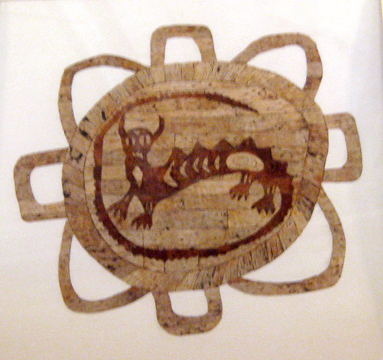 The mishipeshu or mishibijiw is a figure found in the folklores of Algonquian-speaking peoples throughout North America. It is called by various groups the water panther, underwater panther, or great lynx.
This fantastic beast is essentially a cross between a large cat (a cougar or wildcat) and a dragon. It is covered in scales, with dagger-like spikes on its back and tail. The Iroquois have their own version of this creature that actually breathes fire!
The water panther is a powerful underworld being, master of all water creatures, including snakes. In the Great Lakes region, it is said to guard great treasures of copper.
3. The Thunderbird
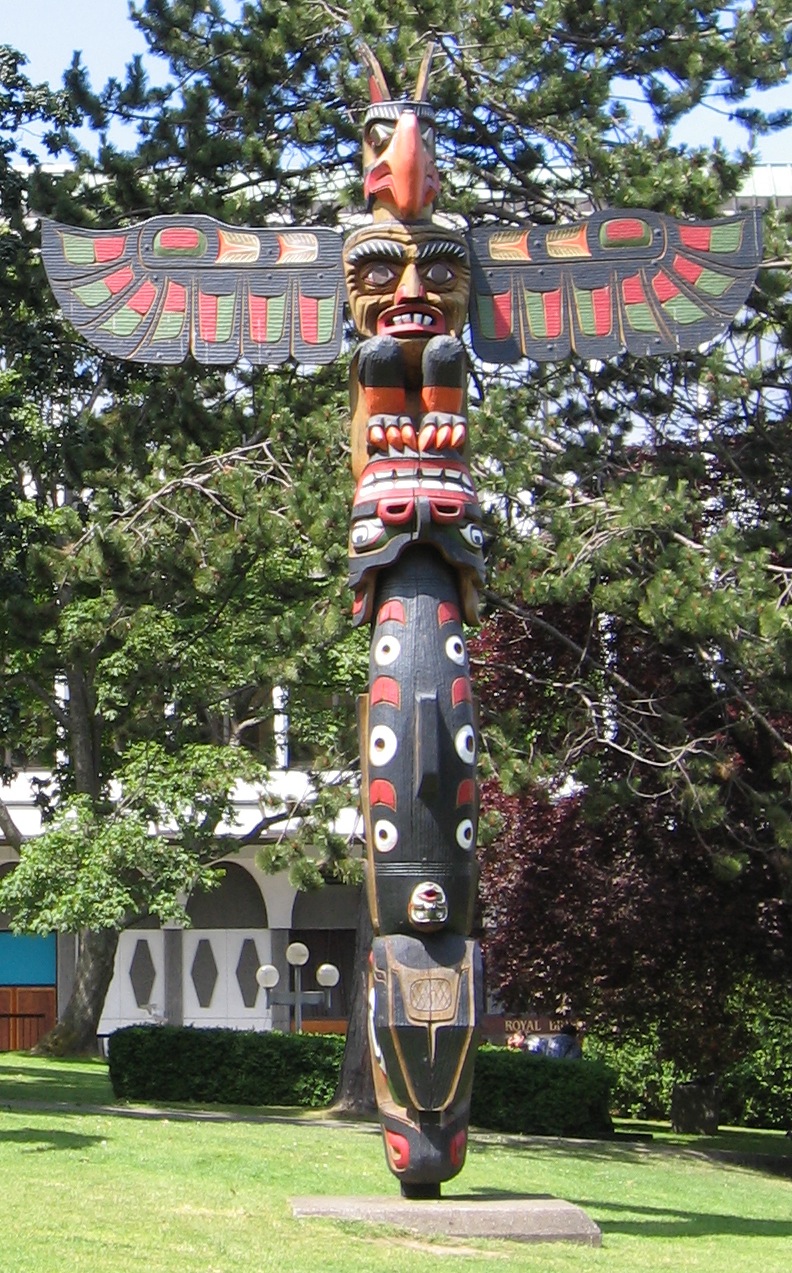 According to many Northwestern tribes, thunderbirds are formidable creatures large enough to carry a killer whale in its talons as an eagle carries a fish. It is essentially a huge predatory bird of supernatural origins, perhaps related to the eagle or the vulture. The thunderbird is responsible for the sound of thunder and, in some cases, lightning as well.
Native American groups have different traditions regarding these creatures. In some tribes, they are considered extremely sacred forces of nature. In others, they are considered powerful but otherwise ordinary members of the animal kingdom.
4. The Jackalope
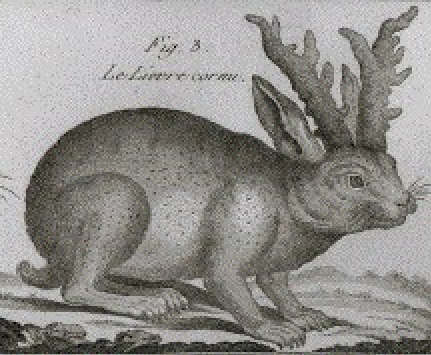 The first three fantastic beasts come from mythology. This one doesn’t have quite such a lengthy pedigree, although I think it would be a perfect fit in any revised edition of Fantastic Beasts and Where to Find Them. The jackalope is a rabbit- or hare-like creature from the American West, but is distinctive in that it possesses antlers like antelope. Although reportedly a shy creature, it is also said to be quite aggressive when threatened.
Jackalopes are also known for their uncanny ability to mimic the sounds of the human voice. They are especially vocal before thunderstorms, and it is theorized that this is because they only mate when lightning flashes.
Some reports suggest the jackalope is near extinction.
5. The Jersey Devil
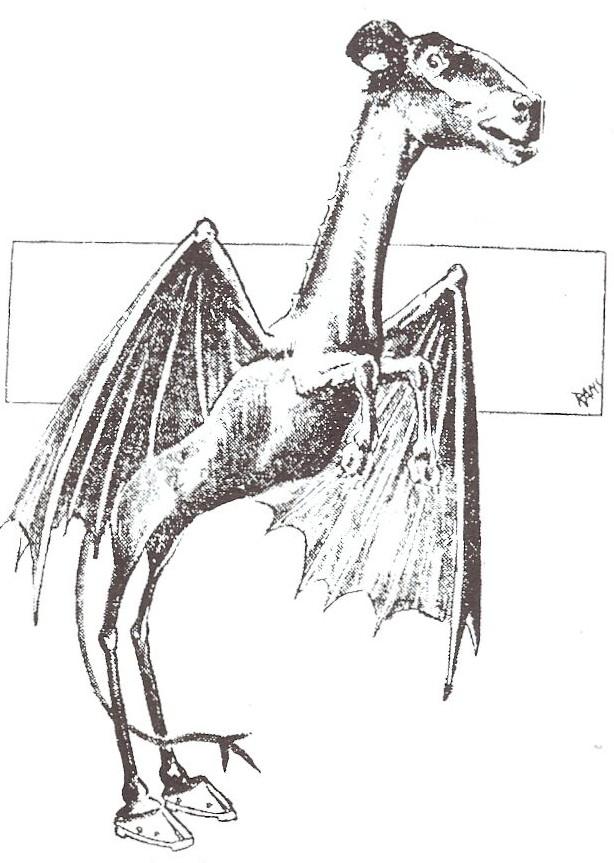 The origins of the Jersey Devil lie in colonial times, although sightings of the creature continue to this day. It is a creature of the Pine Barrens region of New Jersey, but it has also been sighted in adjacent parts of New York and Pennsylvania. Although descriptions vary, certain features seem to be most prevalent: bat-like wings, hooves, tail, bipedal posture, glowing eyes, and an elongated head like a horse’s (or perhaps a dog’s). It is an omnivorous creature that has been sighted scavenging in trash cans as well as preying on smaller farm animals such as goats.
The Jersey Devil makes a number of discrete vocalizations, including a piercing scream and a dog-like bark.
Based on the legends concerning the origins of this creature, I suspect Newt Scamander would theorize that this is not an ordinary beast but rather the product of some sort of Dark magic.

