
Recent Comments


Vampire Vednesdays: Cihuatéotl

Like the previously described tlahuelpocmimi, these creatures (plural cihuateteo) are female vampire-like creatures from Aztec folklore. Their name translates to “divine mother,” likely a euphemism meant to avert their attention. They range from very beautiful to hideous in appearance, with skeletal faces and skin as white as chalk, but almost always are seen in a flowing shroud-like garment.
Cihuateteo are created when a woman dies in childbirth, and they have an irrational desire to seek vengeance by stealing the life of women and children. They hunt either alone or in packs, demons of the night who haunt crossroads, cause madness, and induce men to adultery. The association with crossroads may be a European innovation, as crossroads have been associated with witches at least as far back as Hecate in Greek mythology.
These beings servants of Tlazolteotl, the goddess of evil, lust, and sorcery. They are considered minor deities and have their own feast days on the Aztec calendar. The male counterparts of the cihuateteo are the macuiltonaleque, men who died in battle and now wander battlefields as cadaverous figures dressed in the garb of ancient warriors.
In some accounts, they mate with human men and give birth to vampiric children. In any event, they are known to incite murder, lasciviousness, and drunkenness.
Finally, cihuateto tend to live in the jungle and always keep to dark places. During the day, they often take refuge in funeral caves.
Vampire Vednesdays: Obayifo

Obayifos (called asiman by the Dahomey people) are “living vampires” created when an evil spirit takes possession of a person and causes him or her to commit evil deeds. Obayifo is an Akan word often translated “witch” or “sorcerer.” Though originating in Africa, they are also found in South America and the Caribbean, especially Jamaica.
These creatures have shifty eyes and an obsession with food, especially cacao beans. When it comes to blood, they are picky eaters: they won’t eat blood that tastes bitter, so it’s a good idea to eat a diet rich in things like garlic if you want to be unappetizing to an obayifo. They feed on fear and despair but will also steal the blood of children. Strangely enough, they also like fruits and vegetables. When deprived of blood, they’ll simply suck the juice from fruits and vegetables to hold their hunger in check until they can feed again.
Obayifos are averse to the holy in the form of West African sacred symbols and spiritual practitioners. They emit a telltale light from the armpits and anus. They often hunt by transforming into a ball of blue light, in which form they can fly through the air. In some stories, they achieve this form by sloughing off their skin and reclaiming it later.
Finally, these creatures are able to possess a mortal victim and bend it to their will.
Only a person of great holiness can discern the true identity of an obayifo.
Vampire Vednesdays: Mosquito Folk

These creatures of the Pacific Northwest are called ts’iihchuk by the Haida people. The Twilight saga notwithstanding, there are precious few “vampire” myths in North America, and no Native American vampire-like creature bares the slightest resemblance to Edward Cullen and company. In their true form, they are vaguely insect-like, with spindly limbs and huge, black eyes. They are masters of disguise, however, and easily blend in with the human population.
Mosquito folk are so-called because they suck blood and other bodily fluids out of their victims by means of a thorn-like proboscis that normally hides within their mouths. They can do this with incredible speed. A common story tells of a mosquito person insinuating itself into a gathering where adults are passing around a baby to play with and admire. The mosquito person sucks out the infant’s brain so quickly that no one notices, and when it passes the baby on to the next person, it is already dead.
These creatures serve as a reminder that vampire-like creatures don’t always easily fit into the living-or-undead paradigm. The most that can be said of mosquito folk is that they used to be human, but their evil deeds turned them into eldritch horrors. But did this transformation happen in life or only at death? Or was the transformation what killed them?
Monsters of this nature are the least like popular conceptions of “vampires.” Within their own cultural contexts, they are often called “witches” or “ogres” instead. But they are in some sense driven by an insatiable, demonic hunger, and thus by the broadest of definitions might justifiably be called “vampiric.”
A similar creature is known among the indigenous peoples of the South American rainforests, and both creatures have sometimes been compared to the Puerto Rican “vampiro de Moca,” perhaps a relative of the chupacabra.
Sunday Inspiration: The World
Here is the world. Beautiful and terrible things will happen. Don’t be afraid.
—Frederick Buechner
Characters of Color: Easy Mode
Excellent advice from Colette Aburime about writing people of color.
When you write with racial and ethnic diversity, you hear a lot about what to avoid. Now, it’s not without good reason. The road to good representation is paved with harmful stereotypes and worn-out depictions of People of Color. Advice-givers, like me and the rest of the folks at WritingwithColor, put up caution signs and leave the rest of the journey up to you.
Still, there are some do’s that make for both good writing and good representation.
Writers tend to think big. Our craft demands that we keep our brains fired up with ideas.
I’m asking you to think small.
This is the kind of article I wish I’d had years ago, though I think I somehow stumbled through writing some African American secondary characters in Into the Wonder. I look forward to the next installments!
Vampire Vednesdays: Vetaal

A vetaal (also baital, betal, vetala, etc.) is a hostile spirit of the dead from Indian folklore. Much like the ancient Mesopotamian edimmu, it is created when someone dies without the proper funeral rights. With no body of its own, it possesses the corpses of humans or animals in which to move about and feed on the blood of humans. Any corpse so possessed ceases to decompose for as long as the vetaal is present. Vetaals can also possess living creatures. They must remain within a corpse during the day, and reveal a monstrous visage with weird, glowing blue eyes when they feed. They have amazing physical strength and a paralyzing bite.
Vetaals have an uncanny knowledge of the past, present, and future, and sorcerers may seek to capture them and turn them into slaves for divinatory purposes.
Despite their evil nature, vetaals have also been known to guard the village where they spent their physical life and even to befriend humans and assume a mentoring role over them.
Vetaals can be appeased with gifts or scared away with certain arcane spells, but they are especially vulnerable to silver weapons. The only way to get rid of them for good is to perform the proper funerary rites on their behalf.
Vampire Vednesdays: Tlahuelpuchi
This “living vampire” is called tlahuelpuchi or tlahuihpochtli in the Nahuatl language, a term meaning either “glowing haze” or “illuminated youth.” They are so-called because they emit a telltale light when they hunt in their shapeshifted form. In Spanish, this is rendered as “luz que se mueve,” “luminosidad andante,” or similar. The plural form is tlahuelpocmimi. In Spanish, they are sometimes simply called brujas or “witches.” Another term describing a similar creature is tlaciques (both singular and plural).
Tlahuelpocmimi hail from central Mexico, specifically the small state of Tlaxcala. They are associated with the Aztec god Tezcatlipoca, the “smoking mirror,” god of the nocturnal sky, ancestral memory, time, and change through conflict.
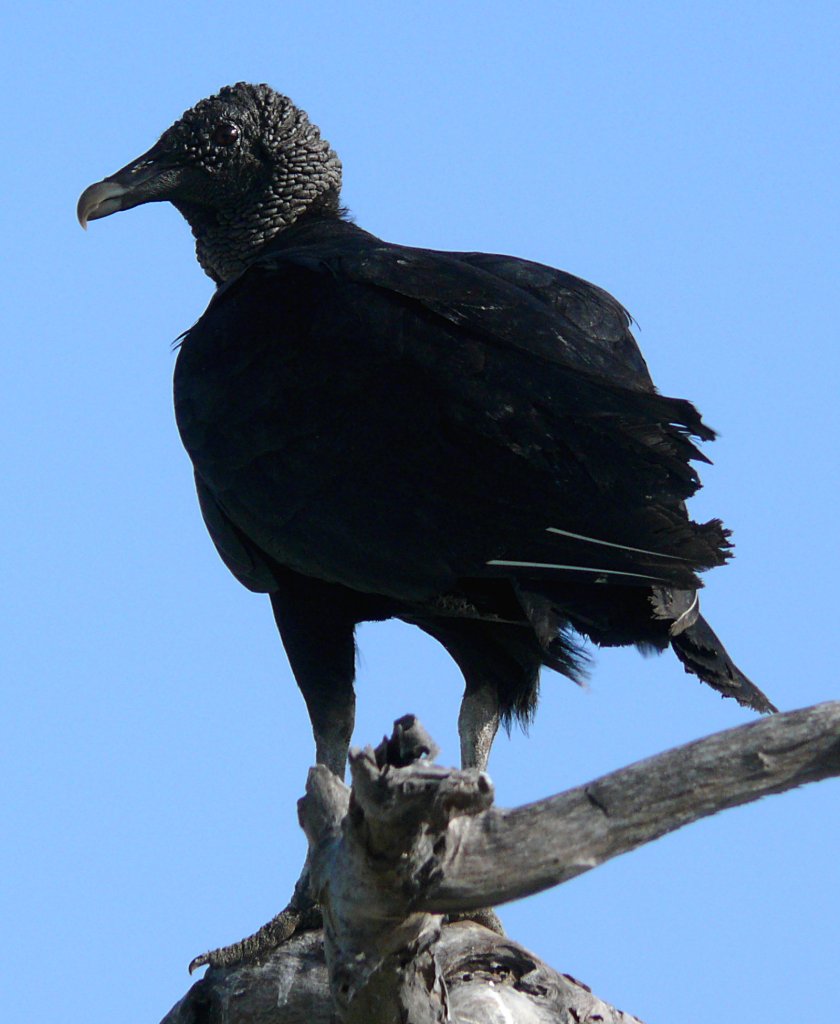
They can be of either sex, though females are more powerful than males. They are adept shapeshifters, usually attacking in the form of a vulture or wild turkey. They also sometimes enter a victim’s house in the form of a mist. It is said that when they shapeshift, they leave the lower part of their bodies behind.
Tlahuelpocmimi are victims of a curse. They grow up normally until their monstrous nature becomes evident at the onset of puberty. They live with their human family, which guards their secret out of shame and fear, and many believe that if a family member destroys them, then they will become the next to inherit the family curse.
These vampire-like creatures have their own society parallel to that of humans. They form pacts with one another so as not to infringe on each other’s hunting grounds. They also forge pacts with shamans not to turn on them. In fact, they sometimes do a shaman’s bidding in exchange for this protection.
These creatures possess many of the weaknesses associated with classic vampires, and it’s not clear whether or not this is the result of cultural cross-pollination from Europeans. They are, for example, averse to the holy and to objects of silver (some say any metal). They are repelled by garlic, onions, and mirrors. Like other vampires, these creatures cannot normally cross a threshold unbidden. If, however, they first fly over the house in the shape of a cross, this impediment is removed.
Tlahuelpocmimi are driven to feed on children, and some say they must feed at a regular interval (once per month, once per week, etc., depending on the source) or die. When they feed, they always kill their victims.
The Prehistoric World Is Moving into D&D 5e Territory
I have previously opined that the prehistoric world was somewhat “Tolkienesque,” with multiple humanoid species interacting with each other in a variety of ways. In a recent Discover article, Bridget Alex surveys how things have changed even in recent years.
When I first wrote about extinct hominins and fantasy fiction, the newly discovered “hobbit” (Homo floresiensis) was all the rage. The very next year saw the discovery of H. naledi in South Africa, and an article published just this year concludes that remains found in the Philippines come from an otherwise unknown species dubbed H. luzonensis.
If we can assume some late surviving members of H. erectus on the margins (they were contemporary with us but geographically separated), that brings us to seven hominin species fighting, trading, and in at least some instances interbreeding with each other from roughly 300,000 to 30,000 years ago.
So it’s no longer just humans, elves, dwarves, and halflings. Now we’ve got to add gnomes, orcs, and…I don’t know, tieflings?—with no guarantees somebody won’t find yet another extinct hominin species tomorrow.
The prehistoric world is quickly gaining the appearance of a D&D campaign with no restrictions on character race.
Sunday Inspiration: Responsibility
We live in a world in which we need to share responsibility. It’s easy to say it’s not my child, not my community, not my world, not my problem. Then there are those who see the need and respond. I consider those people my heroes.
—Fred Rogers
Vampire Vednesdays: Edimmu
I thought I’d take the Wednesdays leading up to Halloween to talk about various vampire-like creatures in world mythology. “Vampire” is a slippery term in the modern world, however. Strictly speaking, vampires come from eastern Europe. Period.
But there are, however, creatures from around the world that might be considered “vampire-like”—if only because popular culture has made “vampire” a point of reference that most people understand.
When I say “vampire-like,” I’m describing a creature that possesses certain points of affinity with the classic eastern European vampire. Some are drinkers of blood—though others are cannibals or else consumers of human life force, breath, or qi. Some are undead—but others are still among the living, and some are eldritch horrors in human form. None of them live up to every vampire trope, but all of them live up to a few of them, enough that we might reach for the language of vampirism to describe their basic nature.
We’ll begin today with the edimmu. These creatures barely conform to most people’s understanding of the term “vampire,” though some consider them among the earliest examples of a vampire-like monster.
In ancient Mesopotamia, these creatures were classified as utukku or rabisu, words that refer to a class of spirits that have escaped the underworld, either demons or ghosts. More specifically, they were members of a subset of utukku comprised of the ghosts of those who died without proper funerary rites. Though first documented 4,000 or more years ago, they continued to be evoked in Syriac and Palestinian magical spells under the name of the sebitti or “seven maskim [ensnarers, evil spirits]” into the Christian era. These seven were apparently of a superior nature from rank and file edimmu, said to be the brothers of the fearsome goddess Lamashtu.
Edimmu are barely corporeal beings of living shadow. Their natural form is a moving shadow or an invisible, rushing wind. They can, however, fashion for themselves an ectoplasmic body, which often appears as a walking corpse or a winged demon. They are also sometimes able to take possession of a living host.
A fair number of scholarly articles identify the edimmu with a class of spirits known as “watchers,” “vigilant ones,” or “wakeful ones” (Aramaic iyrin; Greek egregoroi; Slavonic grigori), known mainly from Jewish apocalyptic writings. By late antiquity, the watchers were described in several Jewish sources. In 1 Enoch, for example, one learns that their great appetites, including for human flesh, makes them violent.
Some edimmu feed on the life energy of humans, but others are overtly blood-drinkers. This penchant for blood is attested from the oldest Akkadian records down to the Dead Sea Scrolls. Not content to harass human beings, these horrific creatures also seek to destroy the works of human civilization, scorching the land and killing animals as well as people. At the same time, they sometimes entice the devotion of humans by divulging to them arcane knowledge. There are a few stories in which they seduce human women.
 Darrell J. Pursiful