
Recent Comments


Shadow of the King: First 300 Words
[Subject to further revision, here’s the opening for the project I’ve been slogging through.]
Why, Rune wondered, were fallowmen so keen on eating breakfast foods at all hours of the night?
He sat at the far end of the counter. With his back to the wall, he could see everything in the diner. He had chosen not to mask his appearance. People saw him as he was: a slender young man with hair the color of cornsilk neatly combed and pulled back in a ponytail. His ears weren’t pointed, exactly, but the cartilage bent in obtuse angles at their tops.
Two men sat at the counter. Two others, a man and a woman, ate pancakes and gushed about the concert they had just come from. Rune took it all in, sipping his tea and pretending to read yesterday’s newspaper.
Outside, the city was dark. The streets were empty.
Three people were working at the diner: a waitress, a fry cook, and a manager helping both as needed.
It was the waitress that Rune had come for. She looked just like his client had described: average build, mid-twenties, mousy brown hair, not a great beauty but pretty enough by this world’s standards. She wiped down tables, lost in thought.
Rune wondered what was on her mind. Was she wrapped up in her work? Worrying about bills? She had a small child; was she thinking about her? Was she worried she was being watched? Is that why she seemed so jumpy?
Other people’s emotions were a puzzle to Rune. That’s what made this job different…and dangerous. How would she react? And how much did she know? Even fellowmen—or women—could be dangerous if they understood the Covenant, and Jo Ellen Hollart was sure to know something. A bit of iron or a hawthorn switch could turn even a simple job into a disaster.
Sunday Inspiration: When to Speak
Wise men speak because they have something to say; Fools because they have to say something.
—Plato
Sunday Inspiration: Excellence
Excellence is to do a common thing in an uncommon way.
—Booker T. Washington
Sunday Inspiration: You Belong to Me
One doesn’t ask of one who suffers: What is your country and what is your religion? One merely says, You suffer, this is enough for me, you belong to me and I shall help you.
—Louis Pasteur
Certain Dark Things by Silvia Moreno-García

I’m not sure what put me on a vampire kick, but here we are. Silvia Moreno-García’s Certain Dark Things presents an interesting take on the vampire mythos. The premise of the story is that the mundane world learned that vampires were real some fifty years ago. At that point, the various nations took steps to either contain the monsters or expel them outright. For various reasons, many of these banished bloodsuckers ended up in Mexico, where the anti-vampire laws were more lenient than most places, and European-style vampires are now running Mexico’s drug cartels in competition with the tlahuelpocmimi, the indigenous vampires of Aztec culture.
The story begins as Atl, the last surviving member of a powerful family of tlahuelpocmimi, is on the run after a deadly altercation with the Necros, vampires of the clan that had recently massacred her family. She flees to Mexico City, the lone ostensibly vampire-free stronghold in the country, where she meets a street kid named Domingo. The novel plays out as Atl and Domingo evade hostile forces both human and superhuman in a quest to find a place of refuge. As might be expected, the two grow in affection for each other, though there remains the nagging sense that their relationship might bring complications to Atl—and prove deadly for Domingo. You see, Moreno-García humanizes her vampires, but they’re still ultimately monsters. At one point, an ancient vampire warns Domingo, “We are our hunger.” Indeed.
The novel is well written, the characters believable, the near-future world fascinating. I especially appreciate how Moreno-García played with varying vampire legends from around the globe. There are ten known vampire species in this world: European, African, Indian, Chinese, and of course Mexican. Three of them are most involved in the plot, although about half of them at least get a mention at some point. (She describes all ten in an appendix, but I found this a bit of a letdown. If you’re not going to put them in the story and you don’t have plans for a sequel, why the info dump?)
Moreno-García takes some liberties with vampire mythology—they’re all living members of a distinct human species, and as much as possible their special powers and weaknesses are described in scientific terms—but she does this creatively, not haphazardly. She has obviously done her research, and it shows.
If you like vampire stories at all, you owe it to yourself to give Certain Dark Things a look.
Sunday Inspiration: The Mind
The mind is not a vessel to be filled, but a fire to be kindled.
—Plutarch
What’s in a Name?

After months of hemming, hawing, backpedaling, and cursing the darkness, I am 95% sure that the title of my current work in progress will be Shadow of the King. Here’s a night shot of the protagonist’s new hometown to celebrate.

Sunday Inspiration: Perspective
All of us are together on this small Earth, yet each person thinks that he’s at the center of it.
—Albert Einstein
Kiss of the Butterfly by James Lyon
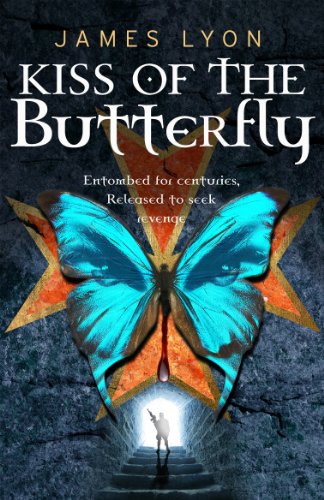
A few years ago I re-read Bram Stoker’s Dracula and wistfully thought, “I miss the days when vampires were the bad guys.” Don’t get me wrong, I love a sympathetic villain with a tortured soul as much as the next guy, but I’m kind of a purist when it comes to my folkloric creatures. Do interesting things with them, turn their mythology on its head if you like, but first show me that you’ve done your homework. You want to write about vampires? Fine. Just don’t make them sparkle.
So I leaped for James Lyon’s Kiss of the Butterfly the day I found out about it. Lyon has a PhD in Balkan History, and the tale he weaves about the restless dead drinks deep from the well of Slavic, and especially South Slavic, vampire lore. If you’re going to tell a fresh vampire story these days, you could do worse than to take the reader back to the source. I knew a little about pre-Lugosi, pre-Stoker vampires, but was still blissfully ignorant of many of the twists and red herrings you get when your protagonists are going up against the Real Deal.
Lyon sets his story against the backdrop of the breakup of Yugoslavia in the early 1990s. Into this war-torn region comes American grad student Steven Roberts, looking for a dissertation topic in Slavic ethnography but growingly afraid that his mentor, the mysterious Professor Slatina, has something far more momentous in mind for his protégé.
There is much to appreciate in this brief novel. The slow-burn start that puts all the pieces on the table before the fangs ever come out. The political commentary about war, violence, depravity, and demagoguery. The frank, if a bit wooden, philosophical musings about good and evil, God and faith, and, of course, the devil.
Kiss of the Butterfly is not, however, a perfect book. To be honest, the ending was a bit of a letdown. Without spoiling the plot, certain expectations are raised near the end of the second act that are never met. The ending is therefore a bit frustrating. What do you mean we don’t get to read the scene where X happens?
The book ends as if it’s the first volume of a series, but since it was published in 2013, I’m not looking for one—nor can I imagine a sequel that wouldn’t have to tread a whole lot of the ground covered in this book.
If you like vampire stories, however, you definitely owe it to yourself to read this novel. And if you don’t like vampire stories, maybe you’ll appreciate a look at where the cultural fascination with these bloodsuckers all began.
Sunday Inspiration: Kindness
Let no one ever come to you without leaving better and happier. Be the living expression of God’s kindness: kindness in your face, kindness in your eyes, kindness in your smile.
—Mother Teresa
 Darrell J. Pursiful