
Recent Comments


Sunday Inspiration: For Others
Life’s most persistent and urgent question is, “What are you doing for others?”
—Martin Luther King Jr.
Fell Beasts Are Here!
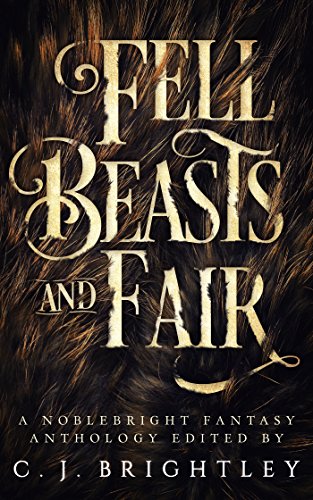 The Fell Beasts and Fair anthology is now available in both paperback and electronically in a variety of formats:
- Amazon: https://www.amazon.com/dp/B07B2LYZKY
- Kobo: https://www.kobo.com/us/en/ebook/fell-beasts-and-fair
- B&N/Nook: https://www.barnesandnoble.com/…/fell…/1128058686…
- Smashwords: https://www.smashwords.com/books/view/796148
- iBooks: https://geo.itunes.apple.com/us/book/fell-beasts-and-fair-a-noblebright-fantasy-anthology/id1352902231?mt=11
I must say, I was very impressed with all of the contributions, and every one of them is different. With some anthologies, you get the impression that one or two of the stories got included just to make up the page count. That is definitely not the case here! As far as I’m concerned, there isn’t a story in the collection that isn’t worth the read. Here are a few of my favorites to whet your appetite:
- Cloudy with a Chance of Dropbears by W. R. Gingell asks us to ponder what happens when a leprechaun accountant uncovers shady business in the land of Faerie.
- Boirdeleau, WI (Population 3,017) by Aimee Ogden features the oldest member of a small midwestern community, a local celebrity who also happens to be a millennia-old mummy.
- Necessary Threads by Lora Gray is a Bigfoot story with heaping side orders of suffering and compassion.
- Road Trip by Aaron DaMommio tells the story of a zombie apocalypse. The heroes’ secret weapon: they have their very own werewolf!
- The Unanswered Riddle by Tom Jolly is about a sphinx that’s on the fritz.
- Like Sand in Your Teeth by April Steenburgh is a love story about selkies and sacrifice.
- When Gracie’s Father Fought by Anthony Eichenlaub features a faery child and explores what it really means to be a dad.
If you enjoy fantasy fiction, I’m confident you’ll find something to your taste in this anthology!
Fell Beasts Are Coming!
Fell Beasts and Fair, an anthology of noblebright fantasy short stories to which I am a contributor, is live on Amazon in paperback. The ebook goes live tomorrow. I have finished reading the collection, and am thoroughly impressed with this collection of stories—and a little bit self-conscious to be included!
Here’s a run-down of the table of contents:
- Cloudy with a Chance of Dropbears by W. R. Gingell
- Don’t Wake the Dragon by M. C. Dwyer
- Blanche, Bear-Wife by Alena Sullivan
- A Midsummer Night’s Bedtime Story by Charles D. Shell
- Love and Room for Monsters by Amanda Nargi
- Inheritance of Nightmares by Beth Powers
- Angus McCarn and the Tale of Two Tales by Rollin Jewett
- Everything Mimsy by Samuel Marzioli
- Boirdeleau, WI (Population 3,017) by Aimee Ogden
- The Gallows Maiden by Francesca Forrest
- The Boy Who Didn’t Believe in Halloween by Tom Howard
- Siphoning the Flames of Life by Kelly A. Harmon
- Winter Horses and Other Unknowables by Leslie J. Anderson
- Last Knight and the Burning Sands by Chloe Garner
- Necessary Threads by Lora Gray
- Pinecones by C. A. Barrett
- The Pooka’s Day by Darrell J. Pursiful
- Road Trip by Aaron DaMommio
- The Dove of Assisi by Troy Tang
- The Unanswered Riddle by Tom Jolly
- The Lady and the Unicorn by Terri Bruce
- Like Sand in Your Teeth by April Steenburgh
- When Gracie’s Father Fought by Anthony Eichenlaub
It’s a big collection, and well worth a read!
Sunday Inspiration: Imagination
The power of Imagination. If you can think it, you’ve created it. When you’ve created it, you can give it as a gift. You are a magician.
—Anne Scottlin
Sunday Inspiration: Play
We don’t stop playing because we grow old; we grow old because we stop playing.
—George Bernard Shaw
Sneak Preview: The Pooka’s Day
The release of Fell Beasts and Fair is now two weeks away! I’m about 2/3 of the way through the anthology, and every story has been a winner. You can pre-order your (electronic) copy today—see my previous post for details.
To whet your appetite, here’s a snippet from my contribution, “The Pooka’s Day.”
***
Danny stopped cold as the end of the woman’s walking stick poked him in the chest.
“We don’t want any trouble,” she whispered. “You can just move along.”
He should have heard them coming—five of them all told, but he hadn’t been paying attention. Too much on his mind. He just charged across the cow path on his way back to the creek, and there they were.
As it was, he barely had time to throw on a decent husk. He was pretty sure they didn’t notice, though, when his ears and nose shortened to more human proportions and the glow faded from his amber eyes.
Whoever these people were, their leader meant business. One of the others sucked in a labored breath. Two more, children, whimpered in the dark.
“M-miss Claudia?” a different woman whispered, “Lige… he ain’t looking so good.” This woman was helping the only man in the group to stand. Danny sniffed the air. Amid the soil and grass and growing things was the unmistakable iron scent of blood. He spied a ripped and bloody trouser leg.
The first woman’s eyes blazed. She and her friends were dressed in dingy, patched clothes barely fit for a brownie. That and their dark skin was all he could make out.
He raised his hands. “Whatever you say, ma’am.” He wasn’t in a mood for any mischief. Well, that wasn’t entirely true. He still had three more farms to case before daybreak. But he didn’t have time for anybody else’s mischief. Not tonight. Not with him liable to show up at any minute.
“And not one word, you hear?” The rumble in her voice demanded Danny’s full cooperation.
He was about to say something when he caught the sound of dogs barking.
“Lord have mercy!” the other woman gasped. The younger child, no more than four years old, started to cry, but his big sister slapped a hand across his mouth.
The first woman spun and raised her stick horizontal to the ground.
“Head for the woods,” she ordered. “Go!”
Four shadows stumbled past.
“Those are my woods!” Danny’s throat went dry. Something settled in the pit of his stomach. He was fairly sure he shut the door…
“You want to make something of it, mister?”
“You don’t understand. You ain’t got no business poking around over there. It could be… dangerous.”
“It’s about to be dangerous right here, now that those slave catchers have caught up with us.”
Slave catchers! It suddenly made sense. He’d stumbled upon a group of runaways. Seems he’d overheard something about a new law the deathlings had passed. Folks at the Crawford farm were talking about it. Even in a free state like Indiana, runaway slaves could be rounded up and sent back down south.
There was no way they were going without a fight.
Two hound dogs burst into view. The woman, Claudia, held out her walking stick with her right hand and angled her body away from them. She let a worn leather satchel slip off her shoulder to the ground. Danny dropped to a crouch.
“If you know what’s good for you, mister, you’ll stay nice and still till I say differently.”
“But—”
“Shh!”
The dogs bounded forward.
The woman uttered a word. The nearest dog flew backward with a yelp.
Magic! Danny stood mystified as the woman trained her walking stick on the second dog. She blasted it just as she had the first one.
“You’re a witch?”
“Later,” she said. She held her walking stick upright. “They’re coming.”
Claudia was right; Danny heard the sound of approaching footsteps.
She began to chant a singsong tune.
“You find ‘em, boys?” a man said. He lumbered into view on the edge of the corn field—big and swaggering, with a shotgun in one hand and a lantern in the other. “Chief? Banjo? Here, boys!”
Something told Danny Chief and Banjo were taking the rest of the night off.
Two more shadows joined the first. The woman kept chanting. Her voice was barely audible beneath the cold autumn breeze.
The three men trudged forward a few more steps, but slowly. The closer they came, the slower they got.
The first man toppled to his knees by the time he came even with the first of the unconscious dogs. The second brought his shotgun to his shoulder… but wobbled backward with the effort. A minute later, all three lay on the grass, mumbling and snoring.
“That was some mighty slick conjuring,” Danny said.
“Not now,” the woman hissed. She had spun around to see where her friends had gone. She gave an exasperated sigh. “They were right there!” she said.
“Uh oh!” Danny said. The others were nowhere to be seen—and Danny had a sinking feeling he knew where they had gone.
Sunday Inspiration: Love
The beginning of love is to let those we love be perfectly themselves, and not twist them to fit our own image. Otherwise we love only the reflection of ourselves we find in them.
—Thomas Merton
Fell Beasts and Fair
Fell Beasts and Fair is an anthology of noblebright fantasy short stories now available for pre-order. I’m honored to have been chosen as a contributor. My story, “The Pooka’s Day,” describes how Danny and Claudia first met. You don’t need to know anything about Into the Wonder to follow the plot, however.
You can check out the official announcement on the Spring Song Press website. Here’s the blurb:
In this exciting collection of noblebright fantasy, fresh new fantasy voices and award-winning authors explore grief and hope, sacrifice and heroism. Rediscover the best aspect of classic fantasy – the noblebright ideals that made heroes heroic, even when the world grew dark around them.
Thieves, dragons, nightmares, fairy warriors, pookas, enchanted bear-men, and other magical creatures will delight you in these unique tales of possibility, courage, and hope.
This anthology features stories from:
Leslie J. Anderson, C.A. Barrett, Terri Bruce, Aaron DaMommio, M.C. Dwyer, Anthony Eichenlaub, Francesca Forrest, Chloe Garner, W.R. Gingell, Lora Gray, Kelly A. Harmon, Tom Howard, Rollin Jewett, Tom Jolly, Samuel Marzioli, Amanda Nargi, Aimee Ogden, Beth Powers, Darrell J. Pursiful, Charles D. Shell, April Steenburgh, Alena Sullivan, and Troy Tang.
Edited by Robert McCowen and C. J. Brightley.
- Amazon: https://www.amazon.com/dp/B07B2LYZKY
- Kobo: https://www.kobo.com/us/en/ebook/fell-beasts-and-fair
- B&N/Nook: https://www.barnesandnoble.com/…/fell…/1128058686…
- Smashwords: https://www.smashwords.com/books/view/796148
- iBooks: https://geo.itunes.apple.com/us/book/fell-beasts-and-fair-a-noblebright-fantasy-anthology/id1352902231?mt=11
- Direct from the editor (ebook): https://gum.co/uEqjx
- Direct from the editor (paperback + free ebook): https://gumroad.com/l/bzdba (releases a week later)
Sunday Inspiration: Simplicity
Any intelligent fool can make things bigger, more complex, and more violent. It takes a touch of genius—and a lot of courage—to move in the opposite direction.
—E. F. Schumacher
How to Speak with a Wakandan Accent
According to Charles Pulliam Moore at io9, there’s a good reason there are a variety of “Wakandan” accents in the new Black Panther movie. Pragmatically, it’s because the cast comes from a variety of backgrounds and couldn’t help but bring their native idiolect into their respective roles. Beth McGuire, the dialect coach on the film, does a great job of explaining that at the linked article.
But there’s also an in-story explanation that actually makes some sense:
In both Marvel’s comics and movies, a significant part of the lore about Wakanda focuses on the fact that the country was never colonized—something that might make one assume there would be a singular Wakandan accent. But because the MCU’s depiction of Wakanda is so deeply rooted in much of the iconography and traditions of real-world African cultures, it makes sense that there would be a multiplicity of accents.
What’s more, Black Panther actually goes out of its way to emphasize the fact that modern-day Wakanda began as a coalition of multiple tribes who seized the opportunity to unite and grow together around the impact site of the vibranium mound. Respect for tradition and history is a central element to the MCU’s Wakandan society, and it stands to reason that the different accents unique to each tribe would still very much be a part of modern Wakanda.
So, linguistics and superheroes! Yay!
 Darrell J. Pursiful