
Recent Comments


Uncanny Georgia: Oba

Igbo man with facial scarifications (“ichi”), early 20th century
For the last installment in this series, I’d like to direct your attention to a ghost story that is told on St. Simons Island, as it is recounted at The Moonlit Road:
Near the mouth of Dunbar Creek on Georgia’s St. Simons Island, there’s a section of swampy marshland where some fishermen refuse to cast their lines. In the daytime, it doesn’t look any different from the other vast marshes stretching across Georgia’s coastal islands. Elongated white herons call to one another over the endless plain of reeds and mosquito infested marsh grasses. Fiddler crabs scurry across the sands. Unseen creatures plop into the black waters.
But when night falls, it is said that one can hear a different sound entirely. Swamps are known to make strange sounds at night. But if you listen closely, you may hear what sounds like the faint rattling of chains drifting across the marsh, followed by an eerie chant: “The water brought, us the water will take us away.”
If you think your ears are deceiving you, think again. For the old timers in the area will tell you that what you’re hearing is the brave warrior Oba, leading his people on their final march home….
Uncanny Georgia: Plat-Eyes
The plat-eye is another Gullah monster, a kind of ghost or haint that can pass through gates without opening them. Plat-eyes operate much as bogeymen; serving as a warning to children against wandering and getting lost in the woods. They are shape-shifters, but not very accomplished ones: you can spot them from their mistakes. In human form, for example, they often have only one eye. An article in the Augusta Chronicle describes them thusly:
Long before interstate highways and jet travel, back roads of the Deep South were dangerous for solitary travelers.
Besides Indians, wild animals and cold-blooded highwaymen, other terrors lurked among the remote hills and swamps – fanciful terrors that belong more in the realm of folklore than history.
One of the most dreaded creatures was the “plat-eye,” a much-feared spirit that supposedly haunted and tormented its victims unmercifully before driving them either to insane asylums or early graves. To meet up with this loathsome creature meant doom for the unlucky traveler. That’s why in the old days folks tried their best to avoid certain hollows, woods and swamps when going cross-country.
The website The Moonlit Road elaborates:
Like many other Southern folktales, the “plat-eye” stories were brought over by African-Americans who had been sold into slavery in the 18th and 19th centuries. They are especially prevalent in the coastal Gullah communities of Georgia and South Carolina. In these tales, the plat-eye is typically an evil spirit who has not been properly buried, and now stands guard over buried treasure deep in a forest or swamp.
Plat-eye stories became especially prevalent after the Civil War, when rumors thrived that plantation owners had buried their Confederate money to keep it away from the Union army. In some of these stories, a slave was beheaded and buried with the treasure. His restless spirit would then become the guardian of the loot.
The Moonlit Road has also made available a plat-eye story for you to read (and hear). In this tale, the plat-eye takes the form of a ghostly dog, not too different from the grims and barghests of England.
Uncanny Georgia: Haints

Photo from Karri_and_Steve via TripAdvisor.com
“Haint” (or “hant”) is most likely related to the word “haunt.” In Gullah folklore, a haint is a frustrated spirit caught between life and death that looks for a place to haunt. In other words, they’re pretty much the same as restless or wandering ghosts from many other cultures.
There are some distinctive features, however. For one thing, haints are unable to cross water. This gives rise to perhaps the most notable feature of haint-lore: painting one’s shutters, window frames, door sills, etc., blue in hopes of tricking the haint into avoiding the house, thinking it is prevented from getting in.
This practice is evident, for example, on St. Simons Island, and the color used is darker than the traditional “haint blue” one sees further up the coast. See, however, this post that suggests what is traditionally called “haint blue” is not the ghost-repelling color of Gullah folklore! (The blue window pictured above is from St. Simons.) The practice is also slightly different. In South Carolina, the idea seems to be that either (1) the blue color makes the haint fly up through a porch ceiling thinking it is ascending to the sky (and thus leaving the house alone), or (2) that there is something about the color blue that is itself repulsive to haints.
In any event, driving away haints by means of the color blue is a practice first brought to North America from Angola in the 1700s. “Haint blue” (whatever its authentic hue) is often seen in areas that were strongly influenced by African folklore, including coastal Georgia, coastal South Carolina, New Orleans, and the Caribbean.
Uncanny Georgia: Boo Hags
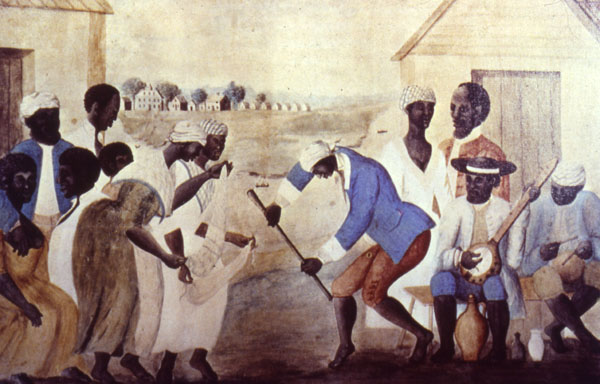
“The Old Plantation,” South Carolina, abt. 1790
The boo hag is a variant on the widespread belief in hags: evil spirits that torment a person in his or her sleep. It is part of the culture of the Gullah (or Geechee) people of the Sea Islands mainly off the coast of South Carolina and Georgia. (Take time to watch this 6-minute video introduction to Gullah culture.)
A boo hag is an undead creature somewhat like a vampire that can become invisible by shedding its skin. The hag then slips into a victim’s skin while he or she is sleeping and gives that person nightmares.
A hag lives a normal life during the day but sheds its skin in order to haunt people at night. It is usually female.
So, how does this creature “work”? According to one source,
One of the beliefs that Gullahs hold is that people have both a soul and a spirit. They believe that souls leave human bodies upon death, and, if it’s a good soul, it ascends to Heaven. The spirit of a person has a different function. A good spirit stays behind to watch over the deceased’s family, guiding and protecting them, if needed.
A bad spirit, on the other hand, is a “boo hag.” The boo hag uses witchcraft to manipulate people and steal energy from the living while they sleep. Gullahs sometimes bid each other good night, saying “don’t let de hag ride ya!”
Boo hags are a little like vampires in that they are undead beings that feed off of living humans. They are skinless, and bright red in color, with bulging blue veins. To survive in the world of the living, they’ll steal a living person’s skin, and wear it like clothes so that they can move amongst the living without suspicion. At night, though, they shed the skin, and go looking for a victim to “ride.”
Boo hags are crafty. They can get into your house through very small openings—a slightly open window, or even a crack in a wall. Once inside, they’ll sit on a sleeping victim’s chest, and steal their breath, or, more specifically, their energy. A boo hag will “ride” its victim all night long, then sneak away before dawn to return to its skin. If it can’t get back to its skin before the sun comes up, it will be destroyed.
There are some warning signs to let you know that a boo hag is close. First, the air will become very hot and damp. Second, the air will smell like something is rotting.
But if you’ve woken up exhausted after a full night’s rest, you may have been visited by a boo hag.
Sweet dreams!
Uncanny Georgia: The Altamaha-ha

Image from Cryptidz.wikia.com
The Altamaha River drainage system is the largest in the United States east of the Mississippi. The river itself is formed by the confluence of the Ocmulgee and the Oconee Rivers just a few miles downstream from Lumber City, Georgia.
This river is also the home of the Altamaha-ha, Georgia’s answer to the Loch Ness Monster, an aquatic creature that purportedly lives in the marshes at the mouth of the Altamaha River near the city of Darien.
According to ExploreSouthernHistory.com,
The region where the Altamaha-ha is usually seen is a beautiful and mysterious estuary known for its vast marshes, multiple river channels and abandoned 18th and 19th century rice fields and canals. It seems appropriate that the beastie inhabits the waters around Darien, a town founded by Scot Highlanders from the shores of Loch Ness in Scotland.
The earliest sightings of “Altie,” as the creature is known, date back to the 1830s. It is described as a thirty-foot long (or longer) creature with seal-like flippers.
A few years ago, the Darien Chamber of Commerce commissioned artist Rick Spears to create a life-size model of the creature:
Spears says he had to extrapolate the creature’s appearance based on limited descriptions. “You don’t have any hard evidence like fossils, which can indicate the placement of muscles. They say it undulates up and down, but fish and reptiles move from side to side, so it’s mammalian,” he says. “And some people say it breathes steam or warm air, which suggests that it has lungs. Things like that have a basis in reality.”
Sunday Inspiration: Beauty
Beauty is not in the face; beauty is a light in the heart.
—Kahlil Gibran
Uncanny Georgia: The Screven Spook Light
We’ve now covered much of Georgia and many of its monstrous and supernatural creatures. Now, we’ll take a trip down the Altamaha River to the Atlantic Ocean, ending our tour next week in the Sea Islands.
Today, we’ll look at the “Screven spook light,” a phenomenon found in Screven, Georgia. Here’s the low-down from The Haunted Highway:
Arnold Böcklin, Das Irrlicht, 1862
Nestled between the small town of Jesup, and the even smaller town of Screven, is a long, curvy dirt road, GA 38, better known to locals as Bennett Road. The reason that this dirt road is significant to others is the fact that if you follow it deep into the woods, you will eventually arrive at Milligan’s Crossing. A quaint little railroad crossing with no lights or crossing arms. This stretch of track is part of the old Seaboard Coast Line. The impressive characteristic of this small crossing in the middle of the woods is the fact that for over a century, it has been haunted by none other that what the locals in this area call the “Spook Light”. There are many stories that accompany the light’s existence, but the most popular is the one told of a flagman who was hit and decapitated by an oncoming train as he was walking along the tracks with his lantern. He is said to walk the tracks to this day, swinging his lantern from side to side, in search of his lost head. Although this is just a theory, there has never been a scientific explanation for this eerie light, which predates the Civil War. It is usually seen near, or after midnight, coming from the direction of Jesup, sometimes after a rainstorm. It appears as a big bright ball of light that hovers just over the tracks and floats from side to side getting brighter then dim then bright again, and sometimes disappearing and reappearing again. From personal experience, I can attest that it does favor the motion of a swinging lantern, and the light is almost so bright, that it surpasses description. It is truly a sight that one must see for himself in order to appreciate.

Screven is located in Wayne County, Georgia. That gives it a fond place in my heart. I grew up in Wayne County, Michigan, while my wife is from Wayne County, Kentucky. When we were dating and first married, we liked to play “My Wayne County,” in which we noted all the ways that the Detroit area was different from rural Kentucky. Neither of us ever mentioned eerie swamp lights, however.
Uncanny Georgia: The Atcukliba
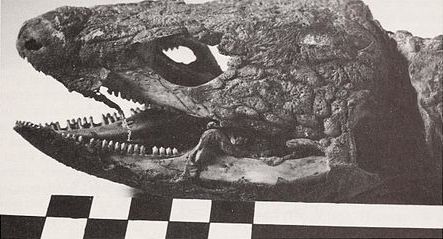 Here’s one last creature from Bill Grantham’s Creation Myths and Legends of the Creek Indians (University Press of Florida, 2002):
There was also a monster lizard that lived in hollow trees like a bear and was called Atcukliba, which was the same name used to refer to a “small, inoffensive striped lizard” found on trees. (37)
In standardized spelling, this would be vcoklepv (pronounced roughly uh-choo-glee-buh). If you’re walking in the woods and your Creek hiking partner says he sees an atcukliba, it would be a good idea to clarify whether he’s talking about the “small, inoffensive” kind or the “monster” kind. It might be important.
Tolkien’s Kullervo to Be Published
Via PBS:
A 1914 manuscript that formed the early basis for J.R.R. Tolkien’s works of epic fantasy will be widely published for the first time this summer.
“The Story of Kullervo,” which Tolkien wrote while at Oxford University, has previously only been published in the journal “Tolkien Studies: Volume 7.” It will be widely distributed for the first time in the U.K. on Aug. 27 and in the U.S. on Oct. 27.
The book follows the story of an orphan seeking revenge on the dark magician who killed his father. Tolkien based the book on the Finnish epic poem “The Kalevala,” which was published in English for the first time in 1888.
Uncanny Georgia: Daughters of the Sun
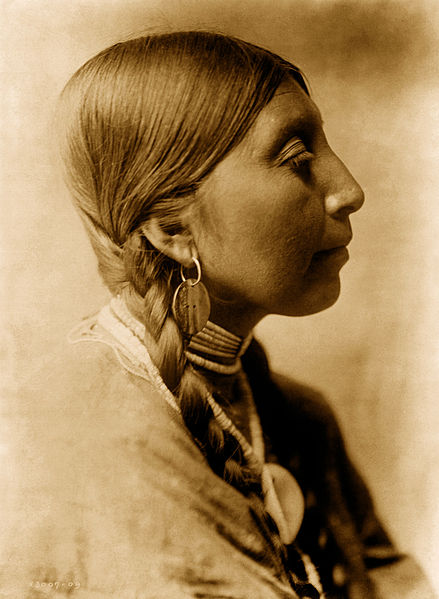 Here’s a fun one. According to a legend from southern Georgia, a Creek hunting party once got lost in the Okefenokee Swamp. At the height of their desperation, they were rescued by a group of beautiful women. According to an early 19th-century report:
[They] being lost in inextricable swamps and bogs and on the point of perishing, were unexpectedly relived by a company of beautiful women, whom they call daughters of the Sun, who kindly gave them such provisions as they had with them, consisting of fruit and corn cakes. (Jedidiah Morse, The American Universal Geography [J. T. Buckingham, 1805] 726)
Having rescued, cared for, and fed their guests, the women then warn them to flee as fast as possible “because their husbands were fierce men and cruel to strangers” (Morse, 726). These husbands were said to be of gigantic stature. They are hairy, aggressive, barely civilized wild men.
For their part, however, the “daughters of the sun” are beautiful nymph-like beings with dark eyes and musical voices. They often appear in thin, clouded forms, and have been compared to angels.
Despite their brutish husbands, the daughters of the sun dwell in an inaccessible island paradise. Morse continues to describe their settlements,
situated on the elevated banks of an island, in a beautiful lake; but that in their endeavours to approach it they were involved in perpetual labyrinths, and, like enchanted land, still as they imagined they had just gained it, it seemed to fly before them.… When [the hunters] reported their adventures to their countrymen, the young warriors were inflamed with an irresistible desire to invade and conquer so charming a country, but all their attempts had hitherto proved fruitless, they never being able again to find the spot. (726–27)
The idea of beautiful, helpful women married to terrible ogres seems to be an almost universal trope in fairy tales. This is but another variation on that theme.
 Darrell J. Pursiful