
Recent Comments


Sunday Inspiration: The Pen Is Mightier…
I have always had more dread of a pen, a bottle of ink, and a sheet of paper than of a sword or pistol.
—Alexandre Dumas
Bori: Jinn of the Hausa People
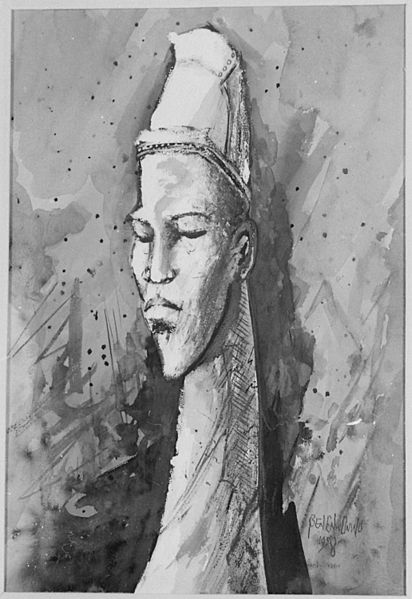
Ben Enwonwu, Head of Hausa, 1958
Bori are a type of supernatural being found among the Hausa of northern Nigeria.They are frequently identified as jinn, but are in fact are a distinct kindred that existed in Nigeria long before Islamization. They are called aljanu (“jinn,” singular, aljan) or iskoki (“winds,” singular, iska).
Bori are revered for their healing powers—though they also inflict diseases. Although they can be benevolent toward humans, their presence is deeply dreaded. They are dangerous spirits, and no one treats with them unless the bori itself thrusts it upon them.
As with other intermediate spirits from West Africa such as abosom, loa, and orishas, bori often deal with the mortal world through “riding” willing human hosts, almost always women. Among the Hausa, a particular dancing-rite is involved in inducing the bori to enter them to grant them immunity to diseases.
Some bori are Muslims (called Farfaru); others are pagans (called Babbaku). The name of their city is Jangare, where they live in twelve “houses” divided by family, ethnicity, and occupation.
100 Years Ago, Middle Earth Was Born
A century ago today [24 Sep 2014], Russian forces were beginning the 133-day siege of Przemyśl and the German army took Péronne. Meanwhile, in a Nottinghamshire farmhouse, a young man wrote a poem about a mariner who sails off the earth into the sky. The Voyage of Éarendel the Evening Star deserves its day in the spotlight alongside war commemorations. It was the founding moment of Middle-earth.
Neither elves nor hobbits were yet in JRR Tolkien’s mind. But the star mariner is remembered in The Lord of the Rings, as Eärendil, forefather of kings, whose light in a phial wards off Mordor’s darkness. In the vast backstory of The Silmarillion, he carries the last Silmaril, a jewel preserving unsullied Edenic light, seeking aid against the primal Dark Lord.
Happy New Year!
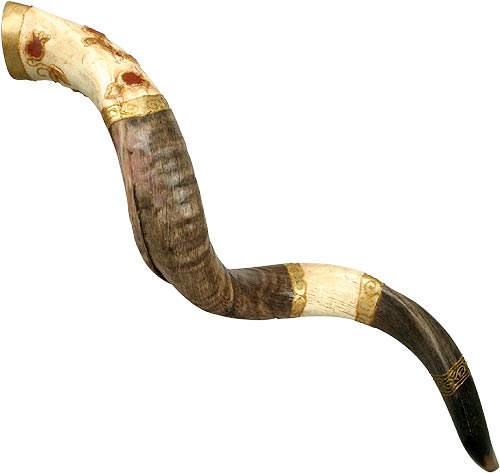
Here’s wishing a happy Rosh Hashanah to all who are celebrating.
Magnus Chase
Rick Riordan has announced the title of his Norse mythology series: Magnus Chase and the Gods of Asgard. Book titles will be forthcoming, but…
And yes, I know what you’re wondering. Chase . . . hmm, where have I heard that name before? Isn’t that Annabeth’s last name? Yes, it is. And no, that’s not simply a coincidence. Beyond that, I’m afraid I’ll have to leave you guessing.
I know an eighth-grader who dressed as Annabeth for “spirit week” on Monday who may soon be jumping up and down.
Cernunnos: The Antlered God
The horned or antlered human is a very old symbol found in many parts of the world from prehistoric times. At the Welsh Mythology blog, Gwilym Morus-Baird takes a look at a particular Celtic representation of this figure and what it might mean: the ancient horned god Cernunnos.
Scholars have interpreted this figure [on the Gundestrup Cauldron] as being a representation of an old Celtic god called Cernunnos, which translates as the ‘horned one’. Its rather obvious why he’s called that, but this also gives us a clue as to what potentially conflicting elements have been harmonised in this symbolic figure. If this mythic symbol is an expression of the collective unconscious, according to Jung we should be able to perceive within it some conflicting influences that have been brought together in a more or less stable form.
The Boobrie
For some reason, horses and faeries often go together in Celtic folklore. Not only are faeries sometimes depicted riding ghostly horses with bells adorning their tack, there are also pookas and other creatures that often assume the form of a horse. And then there are water horses (or kelpies)—horses that live underwater, as the name might suggest. There are also, it turns out, faeries who turn into water horses.
The boobrie is such a faery, and Flossie Benton Rogers has provided us an introduction to these creatures over at her blog, Conjuring the Magic:
Not to be confused with a Kelpie, the Boobrie is a Scottish fae that possesses the wondrous ability to shapeshift into a water horse. Since the Boobrie salivates at the thought of cows and fat lambs—its favorite snacks, along with succulent otters, ships transporting barnyard animals along the coast of Scotland risk being accosted. Boobries can even gallop on top of the waves to reach their destinations and are often mistaken by sailors for ghost horses.
In addition to a water horse, the Boobrie can take the appearance of a black feathered waterbird, something akin to a fierce cormorant. This is perhaps the Boobrie’s default form. Its strange claws appear like the wizened hands of a demon, and its caw roars like the bellow of a bull. Some legends insist the bull is one of the Boobrie’s possible forms and that it can stray from the coast to nestle among thickets of purple heather. Whether or not this fae can hug the land, it’s a rare loch in Scotland without the menacing presence of a resident Boobrie. As a bird it loves flying low over the turbulent seacoast, its huge ebony wings casting sinister shadows on the moon spattered waters below.
Sunday Inspiration: Humanity
When we see others as the enemy, we risk becoming what we hate. When we oppress others, we end up oppressing ourselves. All of our humanity is dependent upon recognizing the humanity in others.
—Desmond Tutu
Fan Questions: Sídhe Politics
Dana, a faithful reader, asks:
What’s the relationship between Chief Matron and Primus, when they’re not married? and how much power (in a matrilinear society) does the Triad hold, especially in relation to the Primus?
Someone has been paying attention! In the Wonder, sídhe Courts are led by a Triad of (female) “Matrons” and by a (male) Primus, something like a chieftain or petty king. The Triad is related to the “triple goddess(es)” of Celtic mythology such as the Irish war-goddesses Badb, Macha, and Anu, but the idea goes back at least to Roman times, when unnamed “Matres” or “Matrones,” apparently goddesses associated with fertility and family life, were worshiped across northern Europe.
The Primus is a stand-in for fae kings like Finnvara, who is said to have ruled the daoine sídhe from Cnoc Meadha in County Galway.
As I’m imagining it, then, sídhe society is not strictly matriarchal, meaning women are in charge. Rather, it is matrilineal, meaning inheritance passes through the mother, not the father as in the ancient and medieval cultures of Europe. For a frame of reference, many Native American tribes (including the Cherokee) are matrilineal. A person belongs to the clan of his or her mother, and one’s “blood relatives” are counted exclusively in terms of one’s mother’s family.
In Cherokee and other Native American cultures, there is a balance of power between the sexes in which the men are in charge of hunting, war, and diplomacy while women are in charge of farming, property, and family. That isn’t a perfect model of what is going on among the sídhe, but it’s close: The Primus is something like the head of state, conducting diplomacy, leading in war, and generally ensuring that the Eldritch Law is upheld. Meanwhile, the Triad is more like the supreme court, resolving inter- and intra-clan conflicts and handing down decisions on how the Eldritch Law should be applied.
That perhaps explains how power is shared between the Triad and the Primus. Now, to the other part of Dana’s question:
Most of the time, the Primus will be the husband of the Chief Matron or ranking member of the Triad. She, in turn, is the ranking (female) member of the ruling house within each Court. This is what readers see with Crom Cornstack and his wife, Mara Hellebore. (Since inheritance passes from mother to daughter, women never take their husbands’ surnames!) As we will see below, it is also possible for the Primus to be the son-in-law or other close relation by marriage of the sitting Chief Matron.
But the situation is currently different in the Summer Court. The former Summer Primus was Vergosus Bright, who was married to Anya Redmane, the Chief Matron. But Vergosus faded in the 1970s. (The Fair Folk don’t die, as a general rule, but will “fade” when they have grown weary of this world.) Normally, the Primacy would then have fallen to the husband of Anya’s daughter—who would herself become next in line to fill the position of Chief Matron. (There would be a convocation of the house of Redmane to ratify the choice, but most of the time this is purely ceremonial.) Unfortunately, Anya did not have any daughters.
This caused the normal succession to shift to Anya’s cousin Martha and her husband, Ambicatus Bright (the brother of Vergosus—sídhe families tend to be somewhat inbred). Ambicatus would be elevated to Primus, and Martha would become Chief Matron, Anya retaining the powerful position of Chief Matron Emerita.
Here is where things got sticky, however. You see, Ambicatus was publicly humiliated when he fell victim to a rather elaborate prank. Although the perpetrator insists this was not his intention, the end result was that Ambicatus’s reputation was so damaged that it became unthinkable that he should ever serve as Primus. He and his wife went into self-imposed exile so as to avoid being the target of scorn and derision for the next several hundred years.
This left the Summer Court in a mess, as there were no other women of the Redmane line to whom to turn. (Nuala Redmane, the daughter of Martha and Ambicatus, was too tarnished by Ambicatus’s disgrace and only barely held on to her own seat on the Triad.)
At this point of social upheaval, the rival house of Fairchild, led by Dubessa Fairchild, compelled Anya and Nuala, the remaining members of the Triad, to offer Dubessa a seat on the Triad and to name her husband, Belas Wakefire, as the new Primus. This was at least somewhat tolerable in that both Dubessa and Belas had Redmane males in their respective family trees.
Backed into a corner, the Triad agreed to Fairchild’s demand. For the last forty years, the Summer Court has found a way to share power between these two influential families with only a minimum of open hostility.
The Nepalese Unicorn
Nepal’s Chitwan National Park is a royal hunting ground turned wildlife sanctuary. In this pristine forest landscape, filmmakers go out in search of the almost mythical greater one-horned rhino. This semi-aquatic beast, also known as the ‘unicorn’ rhino, is one of the rarest rhino species in the world.
No word on whether they’ve ever tried luring it out with young maidens.
(H/T: io9)
 Darrell J. Pursiful