
Home » Posts tagged 'Irish' (Page 2)
Tag Archives: Irish
Five Helpful Clans of Little Folk
 Not all faery beings can be imposing sídhe lords and ladies, sinister jinn, or wild, unpredictable satyrs. In world mythology, some of the inhabitants of the Otherworld are humble, unassuming, and even quite helpful to mortals. Today, I’ll highlight five types of little folk that you probably wouldn’t mind dropping by. They are all good with chores and domestic tasks of various sorts, and are usually happy to help mortals out for a modicum of remuneration. (Offerings of food or milk or cream usually does the trick.) All of these beings are all found in Scotland, Ireland, or surrounding regions.
Brùnaidh/Grogan
A brownie is called a brùnaidh in Scots Gaelic and grogan in Irish. These are domestic spirits who attach themselves to a house or family and often perform domestic chores when no one is looking. The house elves of Harry Potter are modeled largely on brownies.
Uruisg/Fenodyree
The uruisg (or urisk) is very much like a brownie, but is set apart by having goat-like hooves. They are called fenodyrees on the Isle of Man. The are said to have a mischievous nature and also tend to be inclined to perform farming or agrarian tasks. They are thus somewhat similar to a pooka.
Kilmouli
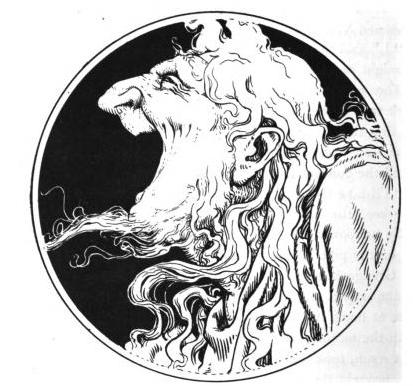
Kilmoulis are faery millers, an ugly form of brownies said to haunt mills. They also hail from the Border counties. They have enormous noses but no mouths, and therefore they have to inhale their food through the nose. Kilmoulis work hard, but also enjoy tricks and pranks.
Gruagach
Gruagachs (the Gaelic plural is technically gruagaichean) are field-folk native to Scotland. Their name literally means “long-haired one.” They love to help mortals with household tasks. Female gruagachs herd and protect cattle, and are also associated with water. They are described as having long blonde hair and wearing a green dress. Sometimes they are said to be attractive; more often, however, they are grotesques hags—although extremely kind-hearted.
Male gruagachs have thick fur, although occasionally they are described as handsome youths dressed in green and red. They commonly work as farm hands shredding and thrashing grain.
Clurichaun
A clurichaun (Irish clobhair-ceann) is thought by some to be a variant form of the leprechaun who goes out to drink after finishing his daily work. They are always drunk. If treated well, a clurichaun will protect a mortal’s wine cellar.
Portland, Oregon Has a Leprechaun Colony
“Ireland” may be the most popular first answer given when someone is asked about where leprechauns live, but Portland, Oregon, has its very own population of little green-clad Irishmen, too. And they’ve even got a dedicated area—Mill Ends Park—to prove it. Here are 11 fun facts about what has been described as “the only leprechaun colony west of Ireland.”
The Breastplate of Saint Patrick
Happy Saint Patrick’s Day to all who are observing it. Perhaps you’ll appreciate the discussion of the Lorica of Saint Patrick posted today at the Celtic Myth Podshow. A lorica (literally, “breastplate”) is a poetic prayer form especially associated with Ireland. It is a prayer of protection by which the pray-er claims divine protection from various threats and enemies, hence the “breastplate” imagery.
As with much early Irish Christian religiosity, this traditional prayer (not likely to actually go back to St. Patrick himself) is steeped in earlier pagan or druidic forms:
It is written in the style of a druidic incantation for protection on a journey. It is part of the Liber Hymnorum, a collection of hymns found in two manuscripts kept in Dublin. This beautiful prayer of St. Patrick, popularly known as “St. Patrick’s Breast-Plate”, is supposed to have been composed by him in preparation for this victory over Paganism. It’s fascinating to compare the structure of this prayer with many of the incantations found in the Carmina Gadelica as well as many of the meditations and rituals seen in Druidry, Wicca and Ceremonial Magic today.
The text of the prayer is included both in its most familar English form and in a more literal translation from Old Irish.
In the interest of full disclosure, I’m wearing green today only because it’s 38° F in Charlotte, where I’m currently away from home on business, and green is the color of the only clean long-sleeved shirt I have with me!
Interesting Facts about the Irish Language
Irish is a Celtic language, which means it is distantly related to Welsh. In distant prehistory, Irish and Welsh were married. Eventually, however, they got a divorce. In the settlement, Welsh got custody of most of the consonants while Irish got custody of most of the vowels.
Anyway, with Saint Patrick’s day coming up—and given the importance of Irish language and folklore to the faery mythology—I was pleased to see a Mental Floss article on “8 Fun Facts About the Irish Langauge” by Akira Okrent.
You might also appreciate this Beginner’s Guide to Irish Gaelic Pronunciation. Or just do what I do and find a computer to pronounce it for you.
Classic Irish Sagas
I don’t read Old Irish (the shame!), but it looks like the new archive Irish Sagas Online (University College Cork) also has scholarly articles in English as well as English translations of at least some of its content. It could be worth a visit for those of a historical bent. (H/T: Celtic Myth Podshow)
Brazil and Hy Breasail
Might the nation of Brazil have been named after a mythical Island in the North Atlantic? The Celtic Myth Podshow lays out the theory:
So how did the country called Brazil end up with it’s name ? One theory says that Brazil was initially colonized by people coming from Viana do Castelo (in northern Portugal), and that through the knowledge of legends from the Celts in Galicia, they would have been aware of the lost continent of Brazil. And not only Columbus, but other early explorers from England knew about the lost land of Brazil. According to”The Island of Brazil”, a contemporary account written by William of Worcester (and published in the late 18th century) recalled that when word of a “new land to the west” reached Bristol in the late 1470s this was presumed to be Brazil. In 1480, a Bristol merchant John Jay outfitted at great expense an 80-tonne ship to sail to the island of Brazil, described as “a name often given in medieval European tales to a land far to the west of Ireland”. Setting sail in July 1480 from Bristol, Jay’s ship voyaged west, intending to “traverse the seas.” But the journey ended in failure. English crews had yet to master the new methods of astronomical navigation devised in Portugal and Spain: open, oceanic voyaging – as opposed to island hopping by way of Iceland and Greenland.
In the Welsh and Cornish myths, Bresal was a High King who made his home in the Otherworld “which is sometimes called Hy- or I-Breasal in his honor”. Like in the Irish myth, “His world is visible on only one night every seven years”. Thus, it is clear that the Celts of Galicia, Cornwall, Wales, Ireland and sailors from England all knew of the legend of the lost land of Brazil. Would it then be unreasonable to assume that when Portuguese explorers reached South America they mistakenly thought they had landed on Breasal’s world and named the land they discovered “Brazil” in his honour?
A contradictory theory sets the name in a different context:
Of course, it is possible that the name of the country called Brazil is not connected with the Celtic myth – but in my opinion this theory is not convincing. In this account, the word “Brazil” is derived from the Portuguese and Spanish word “Brasil”, the name of an East Indian tree with reddish-brown wood from which a red dye was extracted. The Portuguese found a New World tree related to the Old World brasil tree when they explored what is now called Brazil, and “as a result they named the New World country after the Old World tree”.
Quite interesting.
Daoine Sídhe: Celtic Fae Nobility
The daoine sídhe (Scots Gaelic, daoine sith) are said to be the descendants of the Tuatha Dé Danann (“People of the Goddess Danu”), a race of deities that figures prominently in Irish mythology.
These gods are, in fact, common to various Celtic cultures. Danu herself was known as Dôn in Wales, for example. Both names go back to a Proto-Celtic form Danona. Likewise, the earliest Celts worshipped deities named Lugus (Lugh, Lleu), Noudans (Nuada, Nudd), Ogmios (Ogma, Eufydd), etc. They arrived in Ireland in the distant, mythic past. Some legends say they arrived in flying ships. At any rate, they brought with them several powerful magical artifacts: the Lia Fail or “Stone of Destiny” that helped select successive kings of Ireland, the spear of Lugh, the sword of Nuada, and the cauldron of the Dagda. After defeating the indigenous Fomorians, they became the undisputed rulers of Ireland.
It is said that only iron weapons could injure them. The Tuatha Dé Danann were eventually defeated by the Iron-Age Milesians—the ancestors of the contemporary Irish—and driven to the Otherworld, which homeland they access via the ancient burial mounds that dot the Irish countryside. They continue to live, it is said, as invisible beings. In Irish thinking, the Otherworld is closer to this world at dawn and dusk. This is thus a special time at which sightings of these fae are more likely.
The descendants of the Tuatha Dé Danann are known by a bewildering diversity of names, including:
- Daoine sídhe or aes sídhe, both meaning “people of the mounds.” The simple term sídhe is also commonly seen.
- “Still-moving people” or “people of peace,” alternate interpretations of the term daoine sídhe.
- Daoine uaisle, meaning “lordly ones” or “gentry.”
- Cloan ny moyrn (“children of pride/ambition”) or adhene (“themselves”), names favored on the Isle of Man.
- The Fair Folk, the Good Folk, or the Good Neighbors.
All of these terms are euphemisms to avoid using the straightforward Gaelic term siabhra (Irish) or siabhrach (Scottish) “faery.” Use of this term is thought to be far too forward for mortals to use with impunity lest the sídhe take notice of the perceived slight.
By all accounts, the daoine sídhe are powerful magicians. In early Irish manuscripts, they are described as “gods and not gods.” They are generally described as stunningly beautiful, although they can also be hideous monsters. It is likely a duine sídhe can look like whatever he or she wants to. In addition, these fae are often accomplished shapeshifters.
Pookas: Shapeshifting Irish Tricksters
 The word “pooka” (or phouka, puka, etc.) derives from Gaelic púca, meaning “spirit, ghost, or goblin.” Originally an earth-spirit associated with fields and herds, these beings are best known as trickster figures, either malevolent or simply mischievous. The worst among them have been accused of crimes including child molestation, kidnapping, and murder.
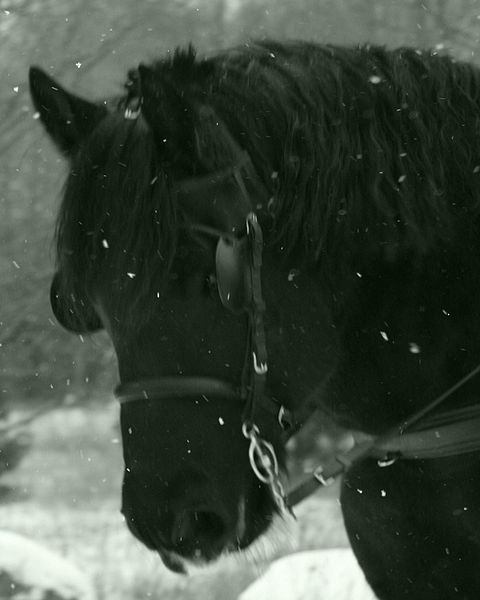
Pookas often pass through the mortal realm invisibly, but they are also accomplished shapeshifters. A pooka’s animal form is almost always a type of animal that lives in close proximity to humans: cats, dogs, horses and ponies, goats, cattle, rabbits, etc.—another indication of their original agrarian connection. In Waterford and Wexford, however, they have been known to take the form of a huge eagle. No matter the form, its fur or feathers are almost always dark.
As an agricultural spirit, pookas are associated with Samhain, the Gaelic harvest festival when the last of the crops are brought in. The pooka is acknowledged to have a right to anything that remains in the fields after November 1, “the pooka’s day.” Thereafter, pookas might render crops inedible or unsafe—perhaps by spitting or defecating on them. In some locales, reapers leave a small share of the crop to placate the hungry creature.
Pookas can also be helpful to farmers. In at least one story, pookas helped a poor farmer by milling his grain for him in the dead of night.
The Border Region has a variety of pooka known as a brag. These beings are noted for their kindness to animals. They still enjoy playing tricks on humans, however.
 Darrell J. Pursiful