
Recent Comments


Read Big. Read Real. Read Together
Wisdom from Pete Enns about how to address the decline of Bible-reading in churches. He doesn’t go into specifics, but he does set out the three main reasons behind this decline (as described by the folks at Biblica) and condenses these into a broad trajectory of action.
Bible reading is down because people read it
- in fragments,
- a-historically,
- in isolation.
In fragments, meaning in the verse level rather than in large sections. A focus on verses not only encourages prooftexting but prevents readers from seeing the larger points of biblical works–whether we are talking about a letter like Romans, or large narratives such as we find in the Old Testament…
A-historically, meaning without a feel for the historical context of the texts being read…
In isolation, meaning individual “devotions” rather than in groups. The idea here–completely correct, if you ask me–is that reading Scripture is mean to be a community task for mutual enlightenment and encouragement.
Sound advice.
A Walk in the Woods
[Well, for most of the eastern US, the weather outside is frightful. To pass the time as you bundle up and try to stay warm, here’s a 650-word “prequel” to Children of Pride, due to become available (hopefully) in about a month.]
“By oak, ash, and thorn!” Danny exclaimed. “It ain’t been this cold in twenty years.” He pulled his cloak tight as he crunched through the icy snow. His traveling partner, with his shorter legs, hurried to keep up. They walked in silence, saving their breath, through a wilderness of barren trees and snowdrifts: a stark vista in black and white spreading for miles beneath a steel-gray sky.
At the crest of a hill, Danny said, “You don’t reckon the Winter Court is up to something, do you?”
“Nah,” the second traveler shrugged. “Sometimes a cold snap is just a cold snap. If I was you, I’d be more worried about your own boss.”
Danny shivered, not entirely because of the cold. “You just had to go and say it, didn’t you, Bug?”
“Didn’t you tell me she gave you the winter off?” Bug said as if that proved his point. “So why, all of a sudden, are you on your way back to Bisgarra Verry?” Bug pulled a pointed ear back underneath his red knit cap.
“Hey, you may not know it, but I’ve gotten to be a pretty important guy at the Summer Court. Mrs. Redmane probably wants my opinion about—stop laughing!”
“I can’t help it, Danny. You crack me up sometimes! Look, you’re a nice enough guy. Best switcher I ever worked with. But you can drop the act. You’re scared of Mrs. Redmane, same as everybody. And you ain’t being called in ‘cause the Chief Matron of the Summer Court wants to have tea of a mangy pooka!”
“Yeah,” Danny said. “You’re right. But would it hurt you to be a little more diplomatic about it?”
“I’m a goblin,” Bug said. “I don’t do diplomatic.”
Danny rubbed his gloved hands together against the cold. “Winter’s got to be up to something, Bug. It ain’t been this cold in thirty years—at least.” The path opened on a patch of farmland.
“Maybe,” Bug agreed. “But that ain’t your problem.”
“Yet.”
“Yet. If Winter’s got a plan hatching, you can guarantee somebody’s keeping an eye on them. It’s the Summer Court that’s cut your vacation short. Go see what Mrs. Redmane wants.”
Danny sighed. “Probably just wants to give me a heads-up about my next assignment.” He smiled in spite of himself.
“This is your last one, ain’t it?”
Danny nodded. “Contract’s just about up. I reckon another couple months and I’m a free agent again. I swear, I can just about taste it, Bug.”
“That’s great, Danny. I’m happy for you. If you ever need somebody with my skills, I’d be happy to work with you again.”
“Thanks. That means a lot, coming from you.”
“The ring’s got to be around here somewhere,” Bug said.
Danny pulled off a glove. “Just keep watch for me.” He tilted his head toward the farmhouse in the distance. “We don’t need no Topsiders getting all curious.”
Bug nodded, and Danny summoned a ball of flame into his hand. He held it close to the ground around where he thought he remembered the ring being. Thankfully, the snow had heaped up into a bank ten or twenty feet away. The wind patterns had left the spot they were looking for almost clear, and Danny found what he was looking for soon enough.
It was a ring of mushrooms just wide enough across for two people to stand in. Danny smiled.
“One good thing,” he said. “They keep it pretty warm in Bisgarra Verry.”
“Then here’s to a toasty new year, Danny. Shall I?”
Danny nodded. Bug gestured toward the mushroom ring. Slowly, a swirl of sparkling light emerged. It grew until it became a column of white punctuated with gold and silver flashes.
“Thanks for walking with me,” Danny said.
“I appreciated the company. Now, go get ‘em!”
Danny winked, stepped into the vortex, and vanished.
La Befana: Italy’s Christmastide Gift-giver
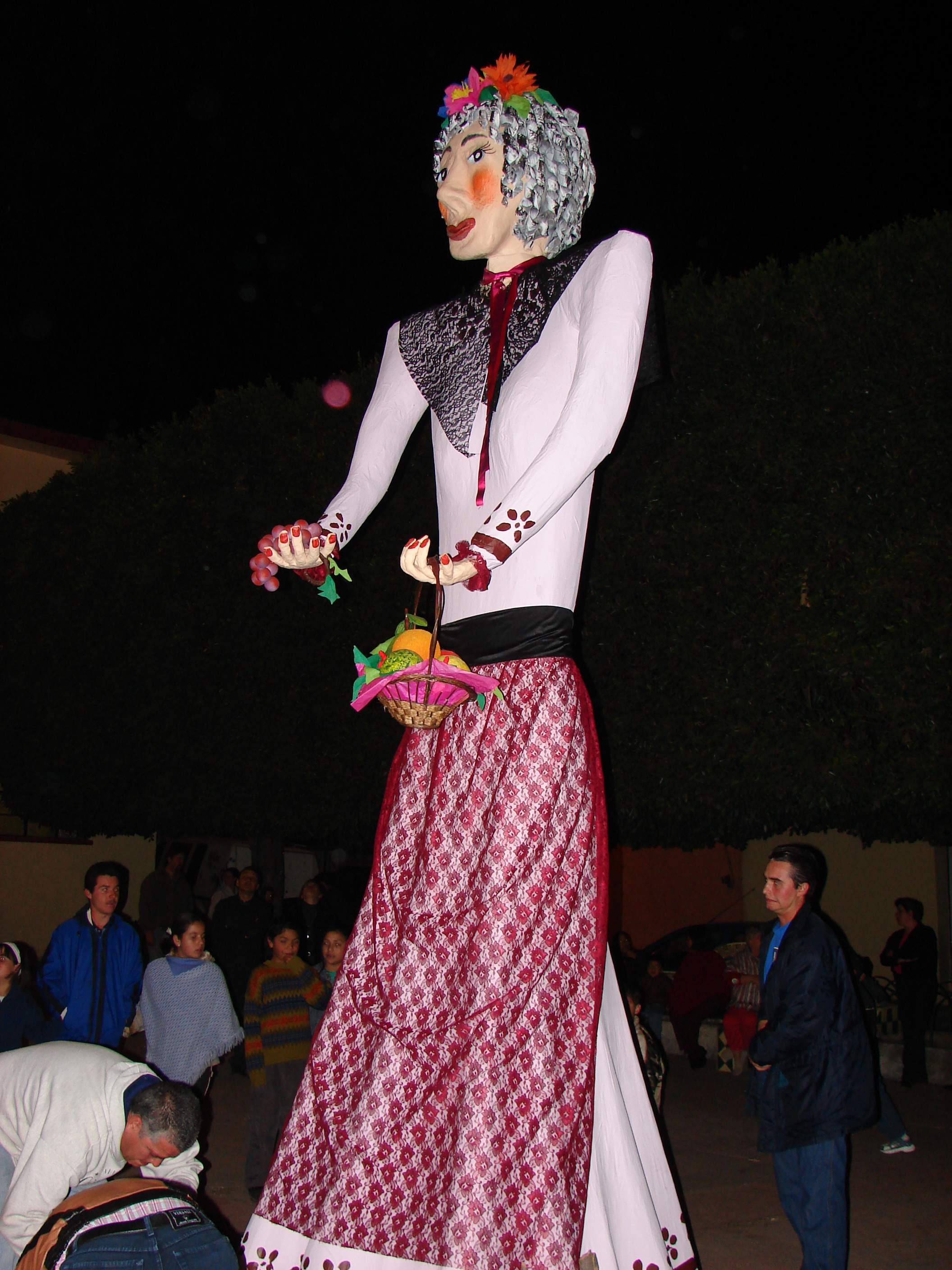 Tomorrow is the twelfth day of Christmas. That means that tomorrow night, Epiphany Eve, marks the yearly journey of La Befana, Italy’s answer to Santa Claus, as she brings gifts to children far and wide.
Where did La Befana (or simply Befana) come from? One possibility is that her origins lie in the ancient Roman goddess Strina or Strenia, who was associated with new-year gift-giving. Both Strina and La Befana are said to give gifts of figs, dates, and honey. Both, also, were/are celebrated with noisy, rowdy observances.
In folklore, La Befana showed hospitality to the three wise men on their journey to visit the Christ Child (which is the point of the Feast of the Epiphany, January 6). She passed up, however, the opportunity to see him for herself, protesting that she had too much housework to do. Later, she had a change of heart and tried to catch up with the wise men. Legend says she is still searching for the infant Jesus to this day.
La Befana’s name is a corruption of Epifania, the Italian rendition of Epiphany.
Like Santa Claus, La Befana enters houses via the chimney in order to fill children’s stockings with candy and presents of they are good or with a lump of coal if they were bad. She may be somewhat more lenient than Santa, however, because misbehaving children might find dark candy in their stocking. In Sicily, however, they might just find a stick!
Despite her Santa-like attributes, La Befana is often depicted in a decidedly witchy manner. She is said to look like an old lady riding a broomstick and wrapped in a black shawl. Like Clement Moore’s Saint Nicholas, she is covered in soot because of her chimney-based entrances. She is a friendly witch, however, often smiling as she carries her bag of treats.
Also unlike Santa, La Befana has a domestic streak. She might, in fact, sweep the floor before she leaves–interpreted by some to be sweeping away the problems of the old year.
Finally, this being Italy, it is traditional to leave her not milk and cookies but a glass of wine and a few morsels of food.
Tolkien’s Birthday
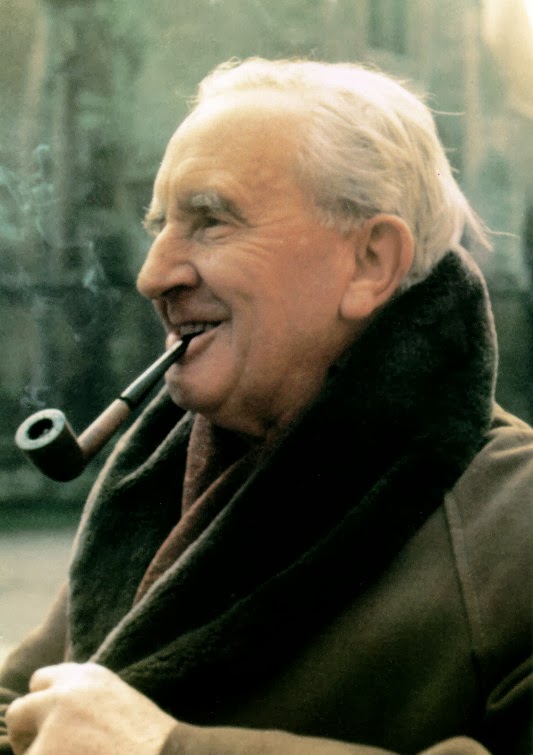
J. R. R. Tolkien was born on this date in 1892. Happy birthday, Tollers!
The Face of Bigfoot?
Monster-hunter Rick Dyer claims he shot and killed Bigfoot — because that’s what you do when you find a shy, rare creature — and is now touring the country with its dead body. Today he released this picture of his Bigfoot trophy.
Over at Cryptomundo, Craig Woolheater has been following the Dyer saga. He notes much more even-handedly than I would that this face doesn’t quite resemble other images that Dyer has released of this Bigfoot. Hmmm, could this be faked? Sorry, cryptid fans — I’m going to go with “yes.”
Read more at Cryptomundo and judge for yourself.

Creatures in the Mist by Gary R. Varner
One of my Christmas presents this year was a copy of Gary R. Varner’s Creatures in the Mist: Little People, Wild Men and Spirit Beings around the World, A Study in Comparative Mythology. At less than 200 pages, the book is only slightly longer than the title, and I’m finding a very good read about faeries, mermaids, giants, and other mythological creatures and their striking similarities across many lands and cultures.
Although Varner is an academic type, this book is written at a very accessible level. Despite a few editorial miscues, I’m finding it to be a very enlightening read. Varner highlights broad themes–for example, the connection between faeries and children, both positively via their associations with childbirth and negatively because of the whole child-stealing thing–that keep showing up in myths from all over the world.
I’m less than halfway through, but I can definitely see this being the sort of book I keep coming back to as I wonder about mythological creatures and their cultural significance.
Sunday Inspiration: Love
We are all a little weird and life’s a little weird, and when we find someone whose weirdness is compatible with ours, we join up with them and fall in mutual weirdness and call it love.
—Theodor (“Dr. Seuss”) Geisel
Update 12-27-13
As you may have gathered, Children of Pride was not ready for Christmas, as I had at one time hoped. It will almost surely be available some time in January. I’m just waiting for my crack design team to finish work on the cover, and I’d much rather wait a bit and get something we all like than try to rush the process. Creativity tends to work on its own schedule, no matter how much one might wish it were otherwise.
In other news, this morning I passed the 55,000 word mark on the first draft of The Devil’s Due, the sequel to Children of Pride. I’m having fun with this one, getting to show a little more of how magic works in the Wonder as well as some of the differences between the magic of the fae, little folk, and even human wizards and witches. I think those who enjoy Children of Pride (current count: one teenager and three very supportive editors/beta readers) will appreciate how the story expands in this second installment.
Brazil and Hy Breasail
Might the nation of Brazil have been named after a mythical Island in the North Atlantic? The Celtic Myth Podshow lays out the theory:
So how did the country called Brazil end up with it’s name ? One theory says that Brazil was initially colonized by people coming from Viana do Castelo (in northern Portugal), and that through the knowledge of legends from the Celts in Galicia, they would have been aware of the lost continent of Brazil. And not only Columbus, but other early explorers from England knew about the lost land of Brazil. According to”The Island of Brazil”, a contemporary account written by William of Worcester (and published in the late 18th century) recalled that when word of a “new land to the west” reached Bristol in the late 1470s this was presumed to be Brazil. In 1480, a Bristol merchant John Jay outfitted at great expense an 80-tonne ship to sail to the island of Brazil, described as “a name often given in medieval European tales to a land far to the west of Ireland”. Setting sail in July 1480 from Bristol, Jay’s ship voyaged west, intending to “traverse the seas.” But the journey ended in failure. English crews had yet to master the new methods of astronomical navigation devised in Portugal and Spain: open, oceanic voyaging – as opposed to island hopping by way of Iceland and Greenland.
In the Welsh and Cornish myths, Bresal was a High King who made his home in the Otherworld “which is sometimes called Hy- or I-Breasal in his honor”. Like in the Irish myth, “His world is visible on only one night every seven years”. Thus, it is clear that the Celts of Galicia, Cornwall, Wales, Ireland and sailors from England all knew of the legend of the lost land of Brazil. Would it then be unreasonable to assume that when Portuguese explorers reached South America they mistakenly thought they had landed on Breasal’s world and named the land they discovered “Brazil” in his honour?
A contradictory theory sets the name in a different context:
Of course, it is possible that the name of the country called Brazil is not connected with the Celtic myth – but in my opinion this theory is not convincing. In this account, the word “Brazil” is derived from the Portuguese and Spanish word “Brasil”, the name of an East Indian tree with reddish-brown wood from which a red dye was extracted. The Portuguese found a New World tree related to the Old World brasil tree when they explored what is now called Brazil, and “as a result they named the New World country after the Old World tree”.
Quite interesting.
 Darrell J. Pursiful