
Recent Comments


Huldras: Scandinavian Wood Nymphs
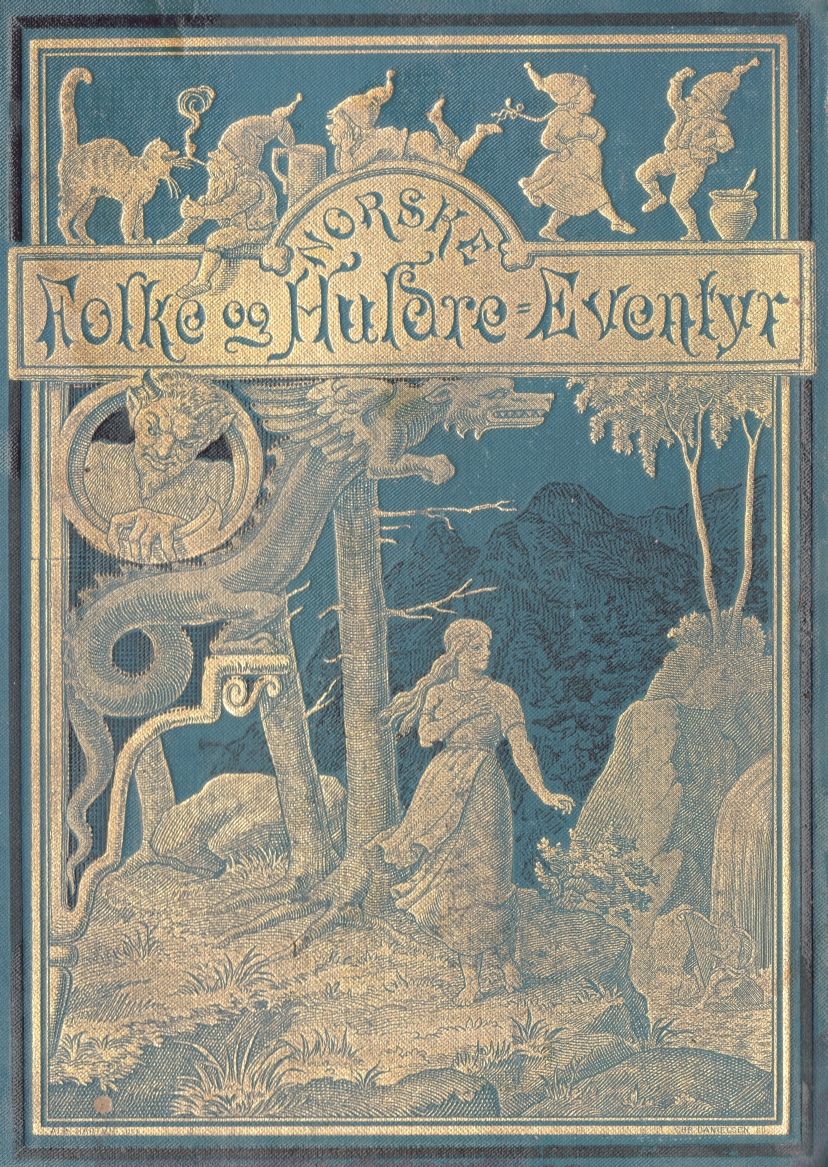 The word huldra comes a Scandinavian word “hidden” or “secret.” This word also lies behind the Icelandic term huldufólk, a euphemism used to avoid speaking directly about elves. Huldras are not the same as the bright and benevolent elves of Norse mythology, however. They are, in fact dangerous and seductive woodland sprites.
Huldras appear as stunningly beautiful women who are sometimes dressed in simple peasant garb. They are usually depicted with uncanny or animalistic features when viewed from behind, however. They might have a cow’s tail, for example, and in some stories, they have a hollow or bark-covered back.
In some legends, huldras lure men into the woods for romantic encounters. If a child results, they might reappear to the father to present him with their unearthly child. In other stories, they steal human infants and replace them with their own babies
Sometimes, it seems, a huldra finds true love with a mortal, but the glamour or illusion that conceals her inhuman aspects is broken at her wedding, either when she enters the church or when the priest places his hand on her. At the same time, other stories state that, once married to a Christian man, the huldra will loose her tail but retain her beauty.
Huldras can be fiercly vindictive if they are mistreated or betrayed. They are sometimes depicted with superhuman strength.
Huldras are known by other terms as well. In Norway, she might be called a skogsfru or skovfrue, “lady (or mistress) of the forest.” She might also be called a skogsrå (“forest-guardian”) or Tallemaja (“pine-tree Mary”) in Sweden or, among the Sámi, Ulda. She is likely related to the Germanic myth of Holda, a protectress of agriculture and women’s crafts.
The male counterpart of a huldra is called a huldu or (in Norway) a huldrekarl. By all accounts, the males are often just as seductive—and dangerous—as the females.
The Simonside Dwarves
The Fairytale Traveler gives us the run-down on the dwarves of England’s Simonside Hills. There have been legends—strongly influenced by Norse mythology, apparently—of nocturnal, not-very-nice dwarves in this northern part of England since at least the thirteenth century, and some believe they played a role in Tolkien’s depiction of the wicked dwarves of the Iron Hills.
The Evolution of Fantasy Fiction
Leo Elijah Cristea has traced the roots of fantasy fiction, the “Grandfathers of Fantasy” as he calls them, in a brilliant essay at Fantasy Faction. In a single post, he gathers up everything from mythology to faery tales to Poe and Lovecraft and Tolkien and Eddings, showing how they all relate to one another in a vast fantastical “tree of life.” One of my favorite sections:
The ancestor of fantasy is mythology; fantasy’s great-uncle, thrice-removed, is the art of faerie tale; but fantasy’s true grandparents are the fantasists who crafted dreams, speculative realities, and visions of distant worlds, whether by means of the gothic, the early fantastic, or uncanny commentary on the future. Fantasy’s grandparents are far, far older than Tolkien, Eddings, Brooks, or Martin.
Due to our unswervingly human need to label, there are more subgenres of fantasy than you could shake a whole forest of ancient oaken sticks at. Helpfully, our predecessors were quite happy to call anything that didn’t mimic whole reality, fantasy. They were right, too. Anything that doesn’t fit into the neat little frame, within which the finite possibilities of our world sit, is left out, branded fantasy. Of course (and this won’t be the first time I’ve flirted with the admission of stating that I believe in what should probably not be believed in) the small grey areas outside of this accepted, built and well-maintained frame are what fuel a fantasist’s speculation—or at least, that’s how it used to be.
Imagine living and writing in the times of Mary Shelley, or Poe, or John Polidori and his Vampyre, imagine not having all the facts staring at you, and imagine not seeing the world broadcast at you on the news every day. Imagine the itch to write, to learn, to dream, to explore—to speculate.
This is where fantasy proper first appeared.
It’s well worth the time to read it all.
Read Big. Read Real. Read Together
Wisdom from Pete Enns about how to address the decline of Bible-reading in churches. He doesn’t go into specifics, but he does set out the three main reasons behind this decline (as described by the folks at Biblica) and condenses these into a broad trajectory of action.
Bible reading is down because people read it
- in fragments,
- a-historically,
- in isolation.
In fragments, meaning in the verse level rather than in large sections. A focus on verses not only encourages prooftexting but prevents readers from seeing the larger points of biblical works–whether we are talking about a letter like Romans, or large narratives such as we find in the Old Testament…
A-historically, meaning without a feel for the historical context of the texts being read…
In isolation, meaning individual “devotions” rather than in groups. The idea here–completely correct, if you ask me–is that reading Scripture is mean to be a community task for mutual enlightenment and encouragement.
Sound advice.
A Walk in the Woods
[Well, for most of the eastern US, the weather outside is frightful. To pass the time as you bundle up and try to stay warm, here’s a 650-word “prequel” to Children of Pride, due to become available (hopefully) in about a month.]
“By oak, ash, and thorn!” Danny exclaimed. “It ain’t been this cold in twenty years.” He pulled his cloak tight as he crunched through the icy snow. His traveling partner, with his shorter legs, hurried to keep up. They walked in silence, saving their breath, through a wilderness of barren trees and snowdrifts: a stark vista in black and white spreading for miles beneath a steel-gray sky.
At the crest of a hill, Danny said, “You don’t reckon the Winter Court is up to something, do you?”
“Nah,” the second traveler shrugged. “Sometimes a cold snap is just a cold snap. If I was you, I’d be more worried about your own boss.”
Danny shivered, not entirely because of the cold. “You just had to go and say it, didn’t you, Bug?”
“Didn’t you tell me she gave you the winter off?” Bug said as if that proved his point. “So why, all of a sudden, are you on your way back to Bisgarra Verry?” Bug pulled a pointed ear back underneath his red knit cap.
“Hey, you may not know it, but I’ve gotten to be a pretty important guy at the Summer Court. Mrs. Redmane probably wants my opinion about—stop laughing!”
“I can’t help it, Danny. You crack me up sometimes! Look, you’re a nice enough guy. Best switcher I ever worked with. But you can drop the act. You’re scared of Mrs. Redmane, same as everybody. And you ain’t being called in ‘cause the Chief Matron of the Summer Court wants to have tea of a mangy pooka!”
“Yeah,” Danny said. “You’re right. But would it hurt you to be a little more diplomatic about it?”
“I’m a goblin,” Bug said. “I don’t do diplomatic.”
Danny rubbed his gloved hands together against the cold. “Winter’s got to be up to something, Bug. It ain’t been this cold in thirty years—at least.” The path opened on a patch of farmland.
“Maybe,” Bug agreed. “But that ain’t your problem.”
“Yet.”
“Yet. If Winter’s got a plan hatching, you can guarantee somebody’s keeping an eye on them. It’s the Summer Court that’s cut your vacation short. Go see what Mrs. Redmane wants.”
Danny sighed. “Probably just wants to give me a heads-up about my next assignment.” He smiled in spite of himself.
“This is your last one, ain’t it?”
Danny nodded. “Contract’s just about up. I reckon another couple months and I’m a free agent again. I swear, I can just about taste it, Bug.”
“That’s great, Danny. I’m happy for you. If you ever need somebody with my skills, I’d be happy to work with you again.”
“Thanks. That means a lot, coming from you.”
“The ring’s got to be around here somewhere,” Bug said.
Danny pulled off a glove. “Just keep watch for me.” He tilted his head toward the farmhouse in the distance. “We don’t need no Topsiders getting all curious.”
Bug nodded, and Danny summoned a ball of flame into his hand. He held it close to the ground around where he thought he remembered the ring being. Thankfully, the snow had heaped up into a bank ten or twenty feet away. The wind patterns had left the spot they were looking for almost clear, and Danny found what he was looking for soon enough.
It was a ring of mushrooms just wide enough across for two people to stand in. Danny smiled.
“One good thing,” he said. “They keep it pretty warm in Bisgarra Verry.”
“Then here’s to a toasty new year, Danny. Shall I?”
Danny nodded. Bug gestured toward the mushroom ring. Slowly, a swirl of sparkling light emerged. It grew until it became a column of white punctuated with gold and silver flashes.
“Thanks for walking with me,” Danny said.
“I appreciated the company. Now, go get ‘em!”
Danny winked, stepped into the vortex, and vanished.
La Befana: Italy’s Christmastide Gift-giver
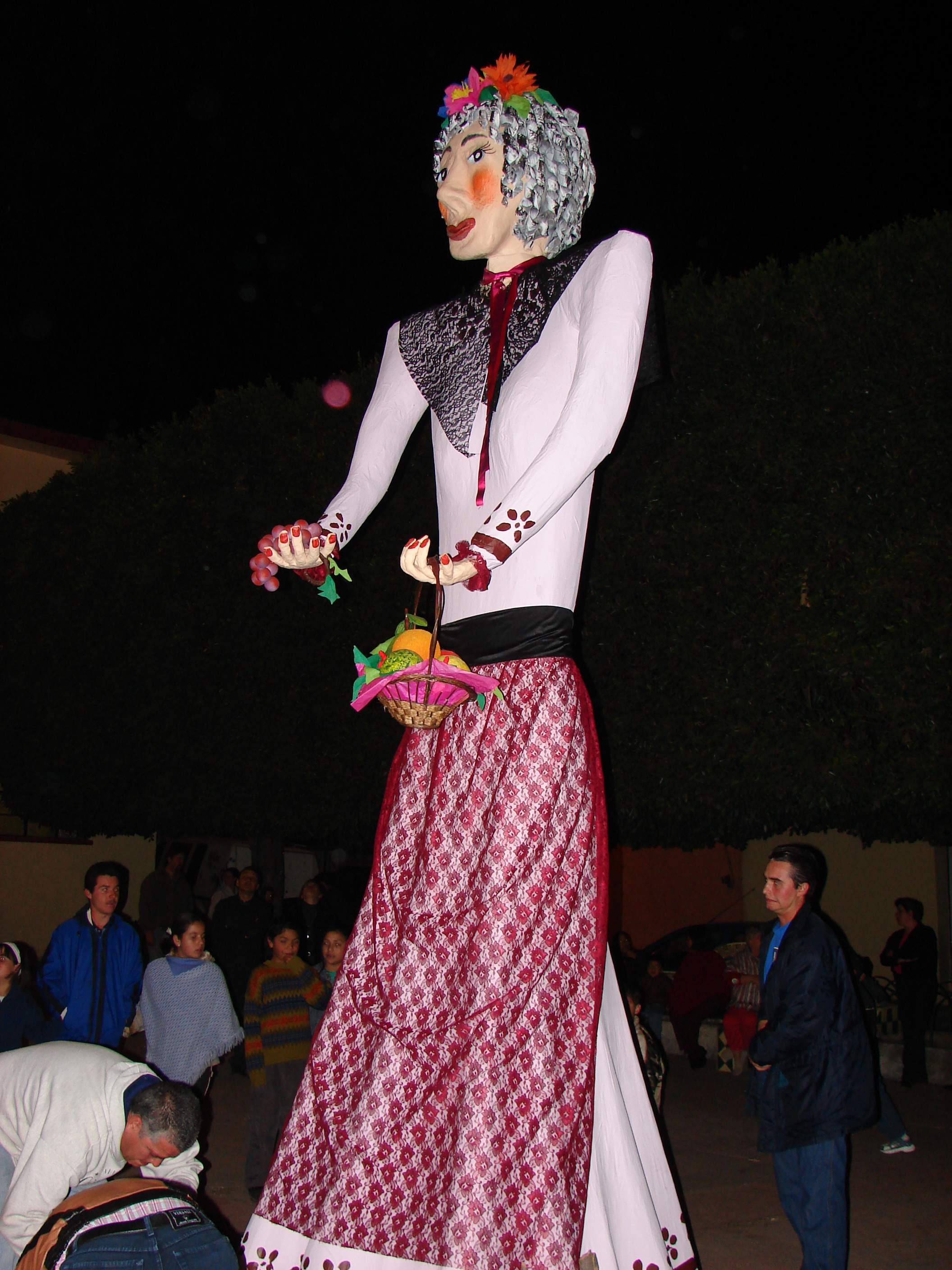 Tomorrow is the twelfth day of Christmas. That means that tomorrow night, Epiphany Eve, marks the yearly journey of La Befana, Italy’s answer to Santa Claus, as she brings gifts to children far and wide.
Where did La Befana (or simply Befana) come from? One possibility is that her origins lie in the ancient Roman goddess Strina or Strenia, who was associated with new-year gift-giving. Both Strina and La Befana are said to give gifts of figs, dates, and honey. Both, also, were/are celebrated with noisy, rowdy observances.
In folklore, La Befana showed hospitality to the three wise men on their journey to visit the Christ Child (which is the point of the Feast of the Epiphany, January 6). She passed up, however, the opportunity to see him for herself, protesting that she had too much housework to do. Later, she had a change of heart and tried to catch up with the wise men. Legend says she is still searching for the infant Jesus to this day.
La Befana’s name is a corruption of Epifania, the Italian rendition of Epiphany.
Like Santa Claus, La Befana enters houses via the chimney in order to fill children’s stockings with candy and presents of they are good or with a lump of coal if they were bad. She may be somewhat more lenient than Santa, however, because misbehaving children might find dark candy in their stocking. In Sicily, however, they might just find a stick!
Despite her Santa-like attributes, La Befana is often depicted in a decidedly witchy manner. She is said to look like an old lady riding a broomstick and wrapped in a black shawl. Like Clement Moore’s Saint Nicholas, she is covered in soot because of her chimney-based entrances. She is a friendly witch, however, often smiling as she carries her bag of treats.
Also unlike Santa, La Befana has a domestic streak. She might, in fact, sweep the floor before she leaves–interpreted by some to be sweeping away the problems of the old year.
Finally, this being Italy, it is traditional to leave her not milk and cookies but a glass of wine and a few morsels of food.
Tolkien’s Birthday
J. R. R. Tolkien was born on this date in 1892. Happy birthday, Tollers!
The Face of Bigfoot?
Monster-hunter Rick Dyer claims he shot and killed Bigfoot — because that’s what you do when you find a shy, rare creature — and is now touring the country with its dead body. Today he released this picture of his Bigfoot trophy.
Over at Cryptomundo, Craig Woolheater has been following the Dyer saga. He notes much more even-handedly than I would that this face doesn’t quite resemble other images that Dyer has released of this Bigfoot. Hmmm, could this be faked? Sorry, cryptid fans — I’m going to go with “yes.”
Read more at Cryptomundo and judge for yourself.

Creatures in the Mist by Gary R. Varner
One of my Christmas presents this year was a copy of Gary R. Varner’s Creatures in the Mist: Little People, Wild Men and Spirit Beings around the World, A Study in Comparative Mythology. At less than 200 pages, the book is only slightly longer than the title, and I’m finding a very good read about faeries, mermaids, giants, and other mythological creatures and their striking similarities across many lands and cultures.
Although Varner is an academic type, this book is written at a very accessible level. Despite a few editorial miscues, I’m finding it to be a very enlightening read. Varner highlights broad themes–for example, the connection between faeries and children, both positively via their associations with childbirth and negatively because of the whole child-stealing thing–that keep showing up in myths from all over the world.
I’m less than halfway through, but I can definitely see this being the sort of book I keep coming back to as I wonder about mythological creatures and their cultural significance.

